SC GOP will likely lose case, judge says in keeping US Senate candidate in the race, for now
Jul 31, 2026 | 4:58 pm ET

Description
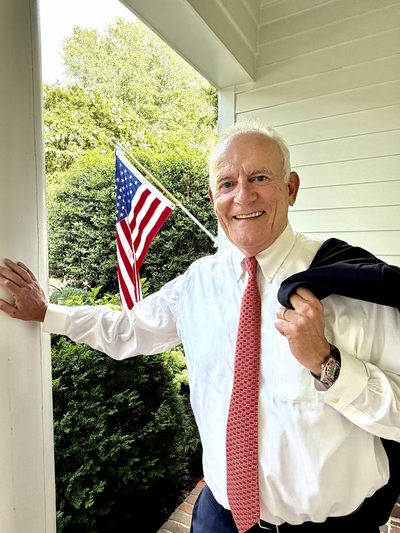
Danny Ford II can stay on the ballot for the U.S. Senate primary for the time being, a judge ruled Friday, July 31, 2026. (Stock photo by Yin Yang/Getty Images)
COLUMBIA — A decertified candidate for U.S. Senate should stay a choice for voters for the time being, a Richland County judge ruled Friday, just five days before early voting starts.
The decision came one day before the state’s deadline for mailing absentee ballots in the special GOP primary.
Danny Ford II, one of a dozen people who filed to run in the Aug. 11 primary, sued the Republican Party on Thursday for disqualifying him as a candidate. The winner of the primary will replace U.S. Sen. Lindsey Graham on the ballot in November following his unexpected death July 11.
Ford was one of three candidates the GOP party decertified, citing its rules. One candidate, Clark Neilson, was disqualified for living in North Carolina. The other two, Ford and self-named “hip-hop Republican” Darius Mitchell, were deemed ineligible for failing to meet a new rule requiring all candidates vote in two of the last three statewide GOP primaries.
That was unconstitutional, Ford argued in the lawsuit that asked for the ability to compete. Judge Daniel Coble barred the election commission from keeping him off ballots, saying he will likely win the case.
The party decertified the three as soon as filing ended, ahead of the ballot being made.
Coble will hear arguments from both sides Monday morning and make a final decision after that.
“The South Carolina Constitution declares that all elections shall be free and open and that every qualified inhabitant possessing the constitutional qualifications shall have an equal right to be elected to public office,” Coble wrote Friday.
Coble needed to act fast. The election commission must send absentee ballots to voters who requested them by Aug. 1, and early voting begins Wednesday.
Nearly 700 overseas and absentee ballots have already been mailed out without Ford’s name on them, and 21 had already come back as of Friday, according to court filings from the election commission. Coble’s ruling Friday didn’t address what might happen to those ballots.
Who should be on the ballot?
Ford argued the two-out-of-three rule, which the party added in June, violates the state constitution’s requirement that the Legislature decide how and when an election should take place. Political parties can decide only if a candidate meets the qualifications for office under state law, the lawsuit argued.
Ford argues he actually meets the requirements. He voted the Republican ballot in the June 9 primary and the June 23 runoff, in which he ran unsuccessfully for commissioner of agriculture.
The party counted those as a single election cycle. But Ford contends they should count as separate statewide elections, which would allow him to run.
US Senate candidate disqualified by new GOP rule sues to get on the ballot
Nothing in the rule specifies that those elections would count as a single primary, Coble said in his Friday order. The rule also requires candidates be a “registered Republican elector for at least 90 days,” which is impossible in a state that doesn’t require people register by party, Coble noted.
The Republican Party has long pushed unsuccessfully for legislation to change that. The party sued the state July 6 in an effort to close elections to only registered Republicans, but no decisions have been made in that federal lawsuit.
In response to Ford’s lawsuit in state court, the party made arguments similar to what’s in federal filing, saying the U.S. Constitution allows political parties to decide who they affiliate with, including who can run in their primaries. Deciding who’s qualified to run in a primary also falls squarely under the party’s duties in state law, the GOP party said in its response late Thursday.
“South Carolina law gives the Party the sole authority and duty to ensure the qualifications of its candidates and to certify those qualified candidates to run in partisan primaries,” the party’s response read. “So does the constitution.”
Before the most recent election, the last time Ford voted was in the 2012 general election, according to a voting record included with the party’s response. The only other primary he voted in was in 2004. He did vote the Republican ballot, according to the record.
Ford wasn’t interested in politics until recently, he told the Daily Gazette on Thursday. Life often got in the way of making it to the polls, and he didn’t know the importance of participating in primaries, he said.
Most people don’t participate in party primaries. In the June primary, 25% of registered voters cast a ballot.
Attorneys for the GOP party also argued Coble shouldn’t make any changes because absentee ballots have already gone out. In the past, courts have refused to touch cases filed after voting is already underway.
“When a court begins to tinker with an election on its eve, the potential for chaos arises,” the party’s response said. “That potential is only exacerbated when an election is already underway.”
In its response, the state Election Commission asked Coble to change his order, also pointing to the hundreds of ballots already sent. Any change in the schedule for overseas voters could bring the agency out of compliance with the deal it made with the Department of Justice, which allowed the commission to ignore the federally required 45-day window for overseas voters because state law required a much faster turnaround.
Questions about another rule
Neilson, a land surveyor who lives in Charlotte, also took issue with the party’s decision to decertify him.
The Republican Party removed Neilson’s name because he doesn’t live in South Carolina, violating another party rule requiring all candidates be a “bona fide resident of the State” and a registered South Carolina voter at the time of filing.
The U.S. Constitution says otherwise, Neilson told the Daily Gazette.
To run for U.S. Senate, a person must live in the state “when elected.” If the 70-year-old won the primary, he planned to rent an apartment in South Carolina and become a resident, before eventually building a house on a plot of land he owns in Charleston County, making him a resident by the time of his election, he said.
His survey business operates in both Carolinas, and he planned to retire to South Carolina anyway, he said.
A spokeswoman for the Republican Party did not respond to a request for comment on Neilson’s arguments.
Neilson is not planning on suing, he said. He also noted the tight turnaround if he tried to file a lawsuit ahead of the election.
He is closely watching Ford’s case, he said.
“If that comes out that he’s successful, I should be successful,” Neilson said.
Neilson, who has no political experience, acknowledged he would be an unlikely winner, especially trying to run in a state where he doesn’t live. He would’ve been up against the likes of two sitting congressmen, a former governor and Graham’s sister, who has President Donald Trump’s endorsement.
But he would have liked the chance to try, he said.
“Anything’s possible with God,” he said.
Columbia