Rodenticides kill more than rodents. Providence lawmaker sponsors bill to ban their use.
Mar 02, 2026 | 5:45 am ET
Description
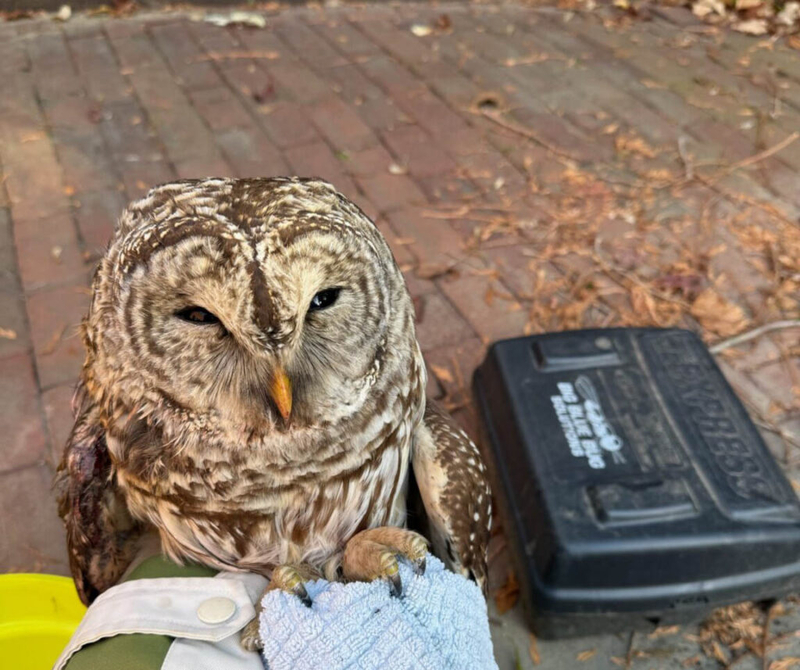
A barred owl Sheida Soleimani rescued by a bait box at Brown University later died at the Congress of the Birds her wild bird rehabilitation clinic. (Photo courtesy of Sheida Soleimani/Congress of the Birds)
There’s more than one way to poison a rat.
But not all poisons are created equal, and some of the most popular rodenticides can wreak havoc higher up the food chain, killing the birds and mammals that feast upon vermin.
A bill by Providence Democratic Rep. Rebecca Kislak would gradually end the sale of these offending agents, known as anticoagulant rodenticides, in Rhode Island, while phasing in alternatives via a municipal pilot program.
“It’s basically Coumadin for rats,” Kislak said in a recent phone interview, comparing commonly used rodenticides to a brand name blood thinner prescribed for humans
Warfarin, Coumadin’s active ingredient, was approved for use as a rodenticide before it entered human medicine as a means of treating conditions like deep vein thrombosis and pulmonary embolism. All anticoagulants stop blood from clotting, but the heavy-duty variants used in pest control achieve their end by ceasing clots to the point of internal bleeding and, eventually, death.
The newer anticoagulants deliver even more poison in a single dose than older drugs, thereby removing the need for multiple feedings. But the poison does not kill instantly, and rodents can live for days after eating their fatal meal, sharing their toxicity with creatures who may eat them. And there are many creatures who feast upon rats and mice, from raccoons to birds of prey to baby bobcats.
These poisons “disproportionately” affect raptors like owls and hawks, which enjoy diets plentiful with rats and mice, Kislak told her colleagues on the House Committee on Municipal Government and Housing during her presentation of the bill on Thursday, Feb. 26.
“It’s not good for our ecosystem,” Kislak said. “It’s not good for eliminating rats.”
Kislak’s bill would ban first-generation anticoagulants warfarin, chlorophacinone and diphacinone, which were developed before 1970 The second-generation agents that would be banned include brodifacoum, bromadiolone, difenacoum and difethialone.
“This has been a vocabulary-building bill for me,” Kislak told the House committee.
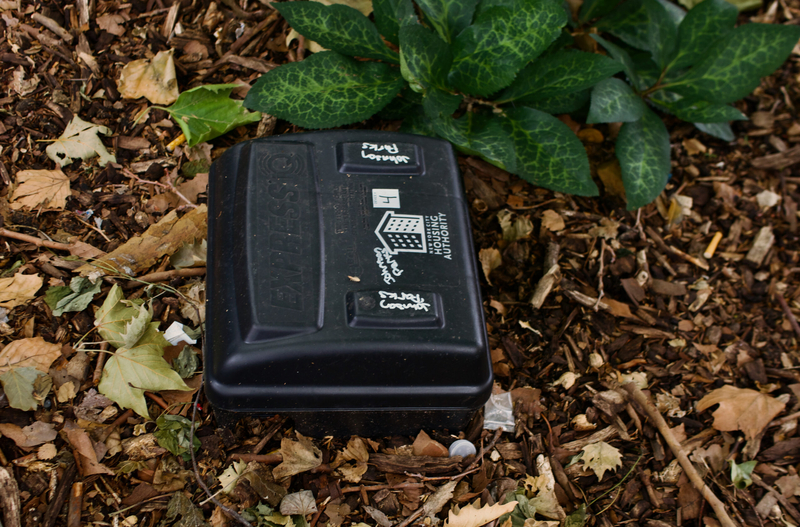
The bans would phase into law over three years:
- March 1, 2027: First-generation anticoagulant rodenticides could no longer be sold to Rhode Island consumers in stores or online. Wholesale-to-business sales could continue if the business employs licensed pest control agents.
- Jan. 1, 2028: Consumers could no longer purchase second-generation anticoagulants in-state or through online retailers.
- Jan. 1, 2029: Use of first- and second-generation anticoagulant rodenticides would be prohibited statewide, with limited exemptions for state or municipal officials should they need to use the rodenticides for public health purposes like protecting a drinking water supply, eradicating an invasive rodent species, or to control an infestation that does not respond to other measures. Certain agricultural and food and beverage production sites could also use the rodenticides in select ways.
The bill would also create a Rodent Integrated Pest Management Pilot Program Act to be overseen by the state Department of Environmental Management (DEM) and intended to help municipalities try out new rat control programs that don’t revolve around anticoagulation. Participation would be entirely voluntary, and the pilot program would sunset in October 2029.
After identifying an area to test new rodent control tactics, some options municipalities could pursue include promoting natural predators or using EPA-approved rodent contraceptives.
The bill would also create an Integrated Pest Management Fund that would allow DEM to seek grants or philanthropic funding to help municipalities pay for extra costs.
At least one municipality submitted testimony in support: Warwick’s Director of Public Works Eric J. Earls wrote in a letter supporting the bill that anticoagulants “often fail to address the root causes of rodent infestations, resulting in a cycle of repeated pesticide application without long-term population control.”
Birds of prey horror stories
Signaling robust public interest in the measure were the 67 pieces of written testimony submitted ahead of Thursday’s hearing, most of them in support. The bill successfully passed the Senate last year, and Kislak also submitted the bill in the House in 2025, although it died in committee.
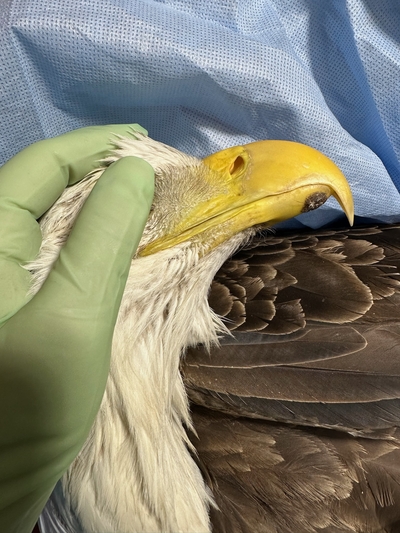
Sheida Soleimani, a federally and state-licensed wildlife rehabilitator who is also founder and executive director of the Congress of the Birds in Providence and Chepachet, told legislators about a bald eagle that died in her arms last year. A postmortem toxicology test revealed copious amounts of anticoagulant in its liver.
Soleimani, who is also an associate professor of fine arts at Brandeis University, told lawmakers her clinic admitted 134 raptor patients last year. She treats each one under the assumption that they have been exposed to second-generation anticoagulant rodenticides. This year so far, the clinic has admitted 27 raptors.
Earlier this year, Soleimani said she was contacted one afternoon by two Brown University students about a barred owl on the campus. The owl — dazed and unreactive, a nocturnal creature in the daylight — was near a rodent bait box loaded with poison. It was the third owl Soleimani said she had found in that location.
“Blood dripped from his mouth onto my exam table and did not stop,” Soleimani said. “Beneath his feathers, his entire body was bruised. He died within hours.”
For baby birds, “It might be the first meal that that baby ever has that’s going to wipe it out,” Soleimani said, while larger birds may be felled by “even something small, a branch, a collision, a hard landing” once internal bleeding starts.
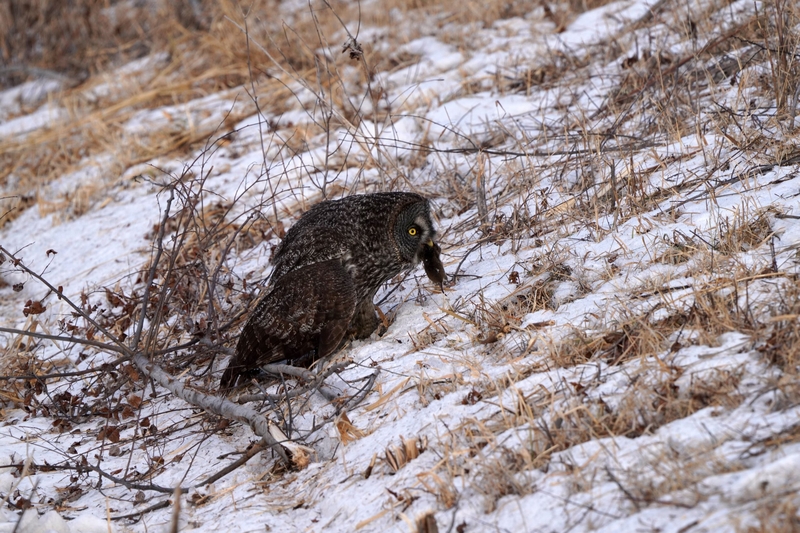
Soleimani narrated a lethal chain of events: “The rat eats the bait. The owl eats the rat. The poison does what it was designed to do — only now it is inside something we never intended to kill. An owl can eat hundreds — sometimes thousands — of rodents in a year. They are not the problem. They are the solution.”
It’s not that birds are getting into the bait boxes, Soleimani clarified for legislators, but that the rats can exit the traps in a stupor.
“They go to the box, they eat the bait. They leave. They then become dizzy. You know, when you’re bleeding out internally, I imagine you’re not too coordinated, they’re stumbling.
Those stumbling rats then appear as fast food to birds like owls, who Soleimani said generally won’t turn down an easy meal.
“They see something stumbling or slow, and they’re like, Okay, cool, easy food. Let’s go. They’ll kill it.
Dave Caldwell, president of the board of the Audubon Society Rhode Island and a former candidate for Providence City Council, described himself as a lover of “owls, hawks and eagles.” He said he has seen some success in his own East Side home with rat sterilization and tighter control of trash.
“I have nothing against rats, per se, but they are causing a bit of a problem here,” Caldwell said.
Caldwell recalled that, when he was young, the Ocean State was not home to many raptors, which he attributed to DDT — a prevalent poison before it was banned in 1972 “that was very effective in what it did, but it was very effective at killing a lot of things too.”
“So the rat poison is very good at what it does, but it’s doing some other things here too that are less desirable,” Caldwell said.
‘Important tools’
Rat populations soared during the pandemic, partly because outdoor dining generated the ideal conditions for eating and breeding in city streets. Things got so bad in New York City that the Big Apple at one point appointed a “rat czar” in 2023 to control the rapidly multiplying pests.
This protracted battle against booming rodent populations continues, entomologist Nathan Jewett warned the committee Thursday — one reason for his testimony on behalf of the New England Pest Management Association.
“We have to be very careful while removing these important tools from our toolbox,” Jewett, who also serves as director of field operations at Big Blue Bug Solutions in Providence, told the committee. “There’s a reason why mice and rats are rated the second and third most successful mammals on Earth, right after humans. They’re very prolific breeders, very adaptable to their environments.”
An owl can eat hundreds — sometimes thousands — of rodents in a year. They are not the problem. They are the solution.
Jewett urged lawmakers to oppose the bill, while adding that he agreed with some of Caldwell’s commentary. Still, the industry association is not keen on such a broadly restrictive bill, according to Jewett. A statewide ban on anticoagulants could perhaps be narrowed to exclude licensed pesticide applicators who follow Integrated Pest Management (IPM) principles, something the bill’s existing carveouts would not satisfy, Jewett suggested.
The bill allows for public employees to continue using the toxic agents for public health purposes, Jewett noted, but added, “I don’t see any verbiage that would require them to be licensed or trained.”
“And in my almost 20 years of being in pest management, some of the most egregious applications I’ve seen have been by unlicensed public officials, sometimes done on the city level,” Jewett said.
More preferable, the entomologist said, is proposed legislation in New Hampshire which would restrict who can buy certain rodenticides. The Granite State bill allows for retailers, including online ones, to verify licensure at the point of sale.
Kislak’s bill was held for further study on Thursday, a standard practice when a bill is first introduced.
Providence, RI