Reynolds signs 5-cent vape tax into law, providing funding for pediatric cancer research
May 26, 2026 | 7:20 pm ET
Description
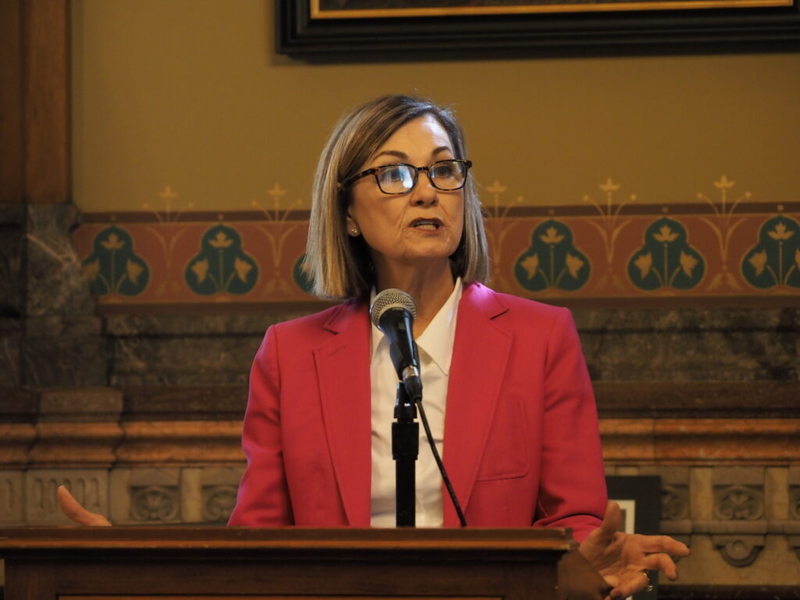
Gov. Kim Reynolds answered questions from reporters at a media availability Feb. 26, 2026. (Photo by Robin Opsahl/Iowa Capital Dispatch)
Joined by pediatric cancer survivors and family members at the Stead Family Children’s Hospital in Iowa City, Gov. Kim Reynolds on Tuesday signed a measure into law imposing a 5-cent tax on vapes and alternative nicotine products that will be used to fund up to $3 million in pediatric cancer research.
Senate File 2480 establishes a tax on products like vapes and nicotine pouches and directs the revenue from that tax to the state’s health care trust fund, a Medicaid appropriation program. From there, up to $3 million in funding generated by the tax will go to the Iowa Board of Regents annually, specifically to conduct pediatric cancer research, clinical therapy trials and provide physician-scientist leadership at the University of Iowa children’s hospital where Reynolds, legislative leaders and families advocating for the funding gathered Tuesday for the bill signing.
Reynolds thanked the parents and families of pediatric cancer patients and survivors who made repeated trips to the Capitol to advocate for the measure.
“By standing up for all the children of our state, you’ve honored your loved ones in the greatest way possible, and your advocacy is turning awareness into action, as Iowa now commits $3 million each year to the cause you’ve so effectively championed,” Reynolds said. “As governor, even more so as the wife of someone living with cancer, I could not be more grateful.”
Providing $3 million in additional funding for pediatric cancer research was a goal shared by these families, advocates, and a majority of lawmakers in both chambers. But the measure Reynolds signed into law drew some pushback as it went through the legislative process in 2026 because it tied the continued funding for the research to the use of nicotine products.
Speakers like Rep. Austin Baeth, D-Des Moines, called during floor debate for lawmakers to instead move forward House File 2758, which would create a standing appropriation of $1 for every Iowan — up to $3 million — for pediatric cancer research in the UIHC system.
During subcommittee meetings on the proposal, anti-tobacco and healthcare advocates said the measure did not propose a high enough tax to effectively deter people from using nicotine products. The measure implements a 5-cent tax on a per-unit basis. Vape products would have a tax of 5 cents per milliliter of nicotine or a nicotine analog in a solution, and containers of nicotine pouches containing up to 20 pouches would be taxed 5 cents, with a proportionate tax for each unit above 20 within a container.
Advocates also disputed whether or not the tax would generate $3 million annually. The Legislative Services Agency note on the bill also stated it would take until 2031 for the tax to generate the $3 million in a year — but Sen. Kara Warme, R-Ames, said industry representatives said the tax is estimated to generate between $15 million to $18 million during the first year of implementation. Funding in excess of $3 million going to the UI system would stay within the health care trust fund and go toward funding Iowa Medicaid.
Phil Jeneary, a lobbyist for Iowans for Alternatives to Smoking and Tobacco, said his organization supports funding for pediatric cancer research, but expressed concerns about the regulation of vape products.
“We were registered neutral on the bill. The issue we have is the overall policy as it comes to the regulation of vape products,” Jeneary said.
Jeneary said that the implementation of House File 2677 in 2024 which limits which vaping products can be sold in Iowa and has been challenged in federal court, has affected businesses because consumers have fewer options. He said he wants a statewide environment that regulates vape products when necessary, but expressed a desire for small shops to stay open.
“We’re trying to get the regulation right, keep the bad stuff out, get rid of the bad actors but also have an environment where the ‘good guys’ can stay open,” Jeneary said.
Rashay Reasoner, the regional manager of ABC Smoke in Ames, expressed frustration with the new law. Reasoner said the implementation of House File 2677 has negatively impacted businesses and the new nicotine tax will only drive regulations further.
“We have to pass the prices onto consumers, and they don’t like it when we have to do that,” Reasoner said. “It seems like the government is trying to shut us down.”
Though there were disputes with the tax portion of the bill, family members and survivors of pediatric cancer spoke at the Tuesday event about the importance of providing funding for research. Scott Kaas, the father of Devyn Kaas, who was diagnosed with cancer at seven months old, held his daughter as he spoke on the importance of the research for families like his.
After his daughter’s cancer went into remission, Kaas said, “we wanted to make a difference for other families that would have to go through this same journey that we went through,” and after speaking with doctors, they told him the best way to support families was to find more funding for pediatric cancer research.
“So we took it on as an opportunity to do something at the state level, where we needed to help get the funding for the kids, for the researchers, and just continue the fight against cancer,” he said. “The governor said (pediatric) cancer is rare — and we’ve argued that many times with doctors, that it’s not, as you can see standing here, there’s quite a few people impacted. But we’re so very thankful for all the legislators, the governor, all the folks that worked with us.”
Des Moines, IA