Reynolds calls ruling ‘short-sighted’ that blocks SNAP restriction on junk food
Jun 23, 2026 | 4:27 pm ET
Description
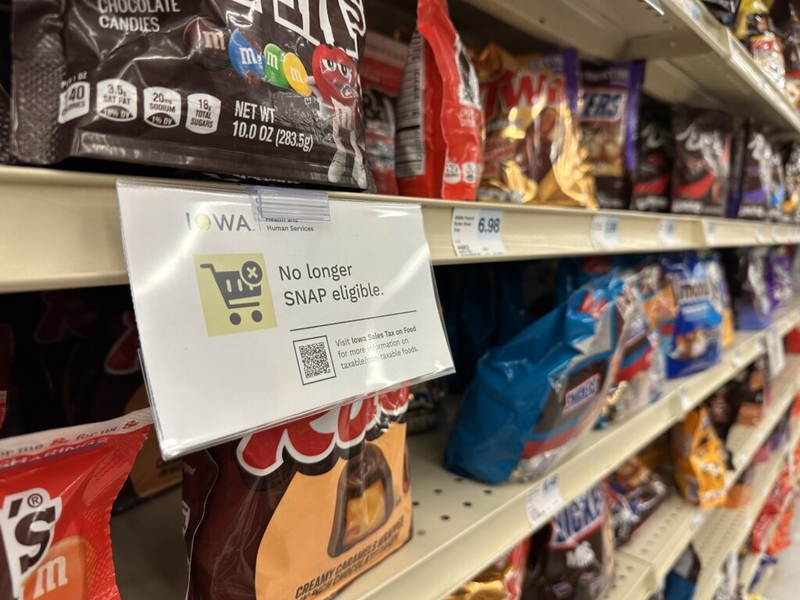
A sign at a grocery store shows certain items cannot be purchased using the federal nutrition assistance program. (Photo by Cami Koons/Iowa Capital Dispatch)
Gov. Kim Reynolds on Tuesday called a federal judge’s decision to stop Iowa from restricting the purchase of soda and candy through the Supplemental Nutrition Assistance Program (SNAP) program “short-sighted” and said it “does nothing to improve the health of our country.”
The decision issued Monday by U.S. District Judge Amy Berman Jackson overturns a federal waiver from the U.S. Department of Agriculture that allowed Iowa to exclude certain food and drinks from being purchased using SNAP. The waiver was granted to the state in May 2025 and took effect at the start of the year, Jan. 1.
Colorado, Nebraska, Tennessee and West Virginia had also been granted waivers by the USDA to implement similar restrictions which were rescinded by the district court decision. The lawsuit, filed by the National Center for Law and Economic Justice on behalf of SNAP recipients in the impacted states, argued the “healthy” food waivers stop individuals from accessing foods that meet their needs for issues like diabetes or allergies — as well as stating these waivers change the legal definition of “food” for the program.
In her decision, Jackson agreed with this argument, saying that when Congress defined “food,” when creating SNAP, it did not “authorize the agency to amend or waive the definition it enacted” or authorize the USDA to “cut types of food out of SNAP entirely.”
Jackson also stated the ruling was not a reflection on whether the waivers to restrict items deemed unhealthy should or should not be pursued. The ruling is based on the fact that U.S. law states SNAP benefits are only restricted for “alcoholic beverages, tobacco, hot foods or hot food products ready for immediate consumption,” she wrote.
“The federal defendants and the states may have a genuine desire to improve the health of SNAP households by encouraging healthy choices at the store, and they can take lawful steps to meet those goals,” the ruling states. “But what they cannot do is violate the law and their own regulations along the way.”
Reynolds defends Iowa’s waiver
Reynolds said in a statement, “for decades, the USDA’s Supplemental Nutrition Assistance Program has fallen short of its original intent to provide low-income families with affordable access to nutritious food.”
“With a broad definition of eligible foods — one that excludes only alcohol, tobacco, and hot foods — taxpayers are subsidizing so-called nutrition benefits that today include soft drinks and candy while 40% of American adults and 20% of children are obese,” Reynolds said in a statement. “I’m proud that Iowa is among the states leading the type of SNAP reforms necessary to promote better nutrition, health, and well-being. The changes proposed aren’t a mandate—SNAP members can choose what they want, but the state won’t pay for unhealthy foods.”
The USDA has approved waivers restricting certain foods from purchase in 23 states overall, Reuters reported, — changes that were supported by U.S. Health and Human Services Secretary Robert F. Kennedy Jr. as part of the “Make America Healthy Again,” or “MAHA” movement. A spokesperson for the USDA said in a statement that the department “will not be backing down from the fight to Make America Healthy Again, including for families and communities reliant on SNAP.”
In Iowa and other states where these restrictions were implemented, some SNAP recipients and anti-hunger advocates have argued they are not necessarily helping people receiving food benefits eat more healthy food, but are making it more difficult for people in need to access assistance while causing confusion for retailers.
In a Tuesday statement, Katharine Deabler-Meadows, a senior attorney at the National Center for Law and Economic Justice called the decision “a major step in restoring essential food assistance to the millions of families that rely on SNAP nationwide.”
“This decision makes clear that the USDA cannot bypass the legal guardrails that establish how SNAP must operate across the country,” Deabler-Meadows said. “It affirms that families deserve a program that works without confusion.”
However, the decision could potentially affect Iowa’s participation in federal food assistance programs in the future. The Iowa “MAHA” law, signed by Reynolds in May, requires the state to “continually request” restrictions on the purchase of unhealthy foods through both SNAP and the federal Summer EBT program. While the law, House File 2676, states SNAP benefits will be available to recipients “uninterrupted” in accordance with federal law, regardless of whether the USDA “approves state participation utilizing only eligible foods,” it does not contain this requirement for the state’s future participation in the Summer EBT program.
In December 2025, Reynolds had announced the state would participate in the USDA SUN Bucks program — known as Summer EBT — in the 2026 summer because the federal department approved a waiver aligning the summer feeding program with the “Healthy SNAP” restrictions.
Des Moines, IA