Republican candidates for Oklahoma governor disagree on OETA extension
May 29, 2026 | 4:24 pm ET
Description
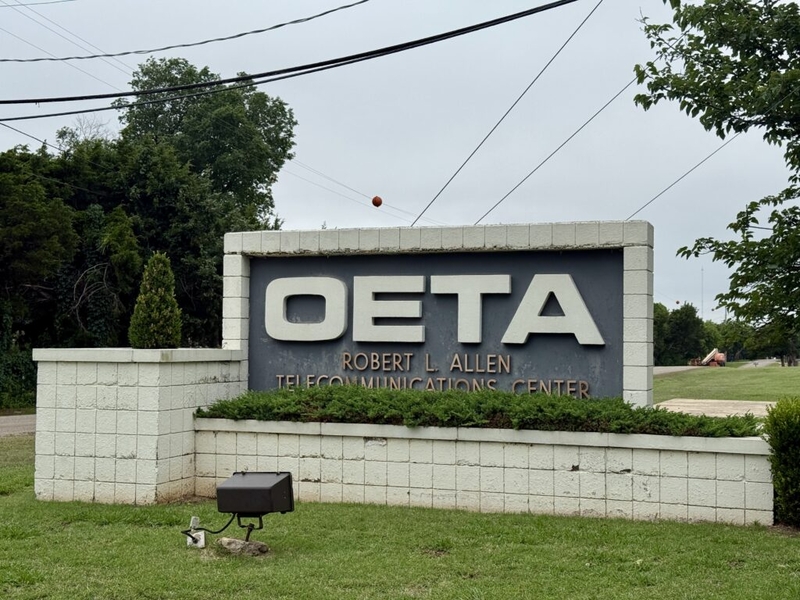
A sign for the Oklahoma Educational Television Authority, or OETA, is pictured in Oklahoma City on May 20. (Photo by Emma Murphy/Oklahoma Voice)
OKLAHOMA CITY — Leading GOP candidates in the Oklahoma governor’s race are divided on whether they would preserve the state’s public TV broadcasting station.
Of the four Republicans who participated in a Thursday evening debate hosted by NonDoc and KWSO 7 News, only one gave unconditional support for preserving the network, which provides Oklahoma-focused educational programming and acts as a local affiliate of the national Public Broadcasting Service.
The fate of the Oklahoma Educational Television Authority is uncertain after Gov. Kevin Stitt, who is term-limited after this year, vetoed a bill that would extend it for another five years. After an attempt to override the veto failed in the state Senate, House Speaker Kyle Hilbert, R-Bristow, said lawmakers will discuss the station’s future with the next governor.
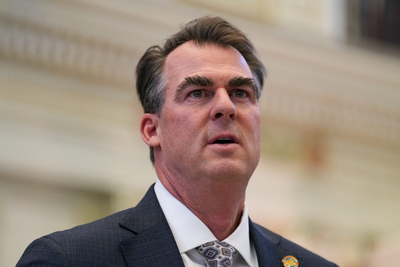
Attorney General Gentner Drummond was the only Republican candidate who pledged unconditionally to protect OETA. He said during the GOP debate that public safety is his top reason to do so.
The network’s broadcast towers reach all 77 counties in the state and are relied upon, especially in rural areas, to issue severe weather warnings and emergency alerts.
Drummond, of Pawhuska, said eliminating state-funded broadcasting would “cut the knees out of public safety in Oklahoma with a short-sighted agenda.”
“OETA is a wholesome, excellent broadcasting network that needs to be sustained,” he said. “I grew up with it. My children grew up with it. My grandchildren watch it, and we’ll restore it next year.”
The station would cease to exist as a state entity on July 1, 2027, unless Oklahoma leaders intervene in the next legislative session.
OETA, which counts 650,000 weekly viewers, will receive $2.84 million in state funds over the next year. Stitt said viewers and advertisers should fund the TV station, not taxpayers.
The network has said it cannot broadcast long term without legislative approval. Its federal broadcasting license is held through the state of Oklahoma, according to a station statement.
Former House Speaker Charles McCall helped override Stitt’s veto of OETA in 2023. McCall, of Atoka, said he warned the station’s leadership at the time about its programming, which Stitt had criticized for having pro-LGBTQ+ content.
OETA could play a role in improving children’s academic outcomes, McCall said on the debate stage, but it “has got to get back to a mission.”
“OETA would have to prove to me that they are a viable resource to the people of the state of Oklahoma,” he said. “These tax dollars are not the state of Oklahoma’s. They are the taxpayers’ money. Everything must be scrutinized.”
Former state Sen. Mike Mazzei, of Tulsa, dodged answering whether he would try to preserve the public broadcast network. Instead, he said he would focus on eliminating the “liberal, left leaning radical socialists” whom he claimed are running Oklahoma’s 541 school districts.
He said OETA is a small state agency and is “really not the big issue when it comes to education in Oklahoma.”
Chip Keating, Stitt’s former public safety secretary, appeared to be the most reluctant to continue funding the TV station.
“OETA, if it does not have a core mission, no,” he said. “I want to give more money back to the citizens of Oklahoma.”
Keating, of Oklahoma City, complained state government has grown too large while Oklahomans struggle with the rising costs of inflation.
Republican candidate Jake Merrick gave a similar answer while standing outside the Cameron University facility in Lawton where the debate took place.
Polling by NonDoc found Merrick, a former state senator, had too low a level of public support to take part in the debate. The event required a threshold of 12% support to participate. Those not invited to the debate stage could submit written answers about their policy priorities.
Merrick, of Tuttle, responded in real time to the live-streamed debate with a live feed on his Facebook page. He said on the stream that he is 100% against state funding of OETA.
Merrick also complained the station “pushes left-wing indoctrination.”
“Honestly, if it was good, conservative programming, I’m not sure we could justify it,” he said. “I don’t know if that is the primary function of government, and if we want to get serious about tax reform we have to stop allowing government to invest in things outside its lane.”
Republican gubernatorial candidates Leisa Mitchell Haynes, Kenneth Sturgell, Jennifer Domenico and Calup Anthony Taylor also fell below the threshold to participate in the GOP debate. None filmed their own response like Merrick nor have issued public statements on OETA.
Oklahoma City, OK