Report: Deaths by suicide increased in Maryland as numbers declined nationally
Jun 06, 2026 | 6:48 am ET

Description
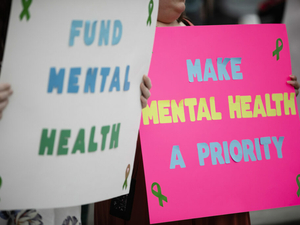
The 988 Suicide and Crisis Lifeline launched nationwide can help people in crisis connect with resources and support. (Photo by Danielle E. Gaines/Maryland Matters)
A new report says states are finally seeing reductions in fatal drug overdoses, alcohol-induced deaths and suicides, after two decades of increases across the nation, leaving some hopeful of a potential “turning point” in those types of deaths.
But while the 2026 edition of “Pain in the Nation: The Epidemics of Alcohol, Drug, and Suicide Deaths” released this week said deaths by suicide fell 3% nationwide from 2023 to 2024, Maryland actually saw a 4% increase, one of more than a dozen states to see a rise that year.
Why Maryland didn’t see the same progress as the nation is unclear, but advocates and public health experts say the report’s findings can be used to further build on suicide prevention efforts in the state and nationwide.
“There’s so many factors and it’s really hard to have a sort of definitive answer,” said Molly Warren, senior health policy researcher and analyst with Trust for America’s Health, which produced the 2026 report.
“All these deaths went up a huge amount during the pandemic … and they weren’t good before,” she said. “So, we have a lot more work to do.
Warren notes Maryland still has a relatively low rate of suicide deaths, even if the percentage grew between two years, with a rate of 9.7 deaths per 100,000, compared to the nation’s 13.7 per 100,000. She even called Maryland “relatively stable,” as previous data shows Maryland’s rate of suicide deaths has fluctuated between around 8 deaths per 100,000 to the pandemic-era peak of 10.3 per 100,000.
Follow the money: New dashboard tracks use of opioid settlement funds
She still urges Maryland to continue supporting and boosting suicide prevention efforts, especially as federal cuts under the Trump administration could disrupt funding for certain behavioral health services and other efforts at the state level.
“National funding is harder to get, and even when you do get it, there’s sometimes disruption and uncertainty that can cause programmatic difficulties,” said Warren. “I think … state officials, should try to continue programs as best you can and find funding to continue this extremely important work.”
Overall, the report says the cited fatalities peaked in the early years of COVID-19, with more than 207,800 people dying in both 2021 and 2022 from all three of those causes. It wasn’t until 2023 that deaths started to drop, and the all three metrics fell nationwide in the 2024 report.
In 2024, alcohol-related deaths fell 4% nationwide along with a 26% drop in drug overdose mortality and a 3% decline in deaths by suicide. They combined for a total of 173,913 deaths in 2024, a 16% decrease from 2023 data.
Maryland largely aligned with those trends. In 2024, about 2,900 Marylanders died from either alcohol, overdose or suicide, a 24% drop from 2023. Alcohol-induced deaths in the state fell 12% and overdose-related deaths dropped 32%, outpacing the national figures.
The report notes that Maryland does not currently have a state official or commission required by law to focus on suicide prevention. That said, Maryland does have a group established by a long-running executive order to do just that.
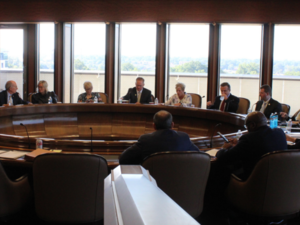
The Governor’s Commission on Suicide Prevention was initially formed in 2009 through an executive order issued by former Gov. Martin O’Malley (D). Former Gov. Larry Hogan (R) issued another executive order in 2018 to modernize the commission by expanding its membership. It still meets in 2026.
Help is at hand
If you are in crisis, you can call the Suicide and Crisis Lifeline at 988, or contact the Crisis Text Line by texting TALK to 741741.”
But Warren said that having the commission codified into Maryland law would be “one way to ensure” that suicide prevention has “long-term” state efforts behind it.
“If governors change, this would be a permanent office that would have funding dedicated to it, personnel that could focus on suicide across governorship,” she said. “None of these are going to fix any of it by itself, it really needs to be a variety of these efforts.”
Holly Wilcox, who chairs the Governor’s Commission on Suicide Prevention, says that there are opportunities and challenges in reducing suicide in Maryland. Accessibility of firearms is one of the current main points of interest.
“One thing that’s been keeping many of us up at night is this issue of, during the pandemic, there were more people at the beginning of the pandemic buying firearms, so there are more firearms out in circulation. For suicide prevention, that is a major challenge,” said Wilcox, who is director of the Johns Hopkins Bloomberg School of Public Health Center for Suicide Prevention.
In a written statement Friday, the Maryland Department of Health reports that since 2022, firearm suicides have increased by 24%, accounting for almost 53% of firearm-related deaths in 2025. From January through April this year, approximately 55% of the 158 reported firearm deaths have been suicides.
A newer point of interest is in workplace suicide-prevention initiatives, which could involve training employees to recognize signs of distress or the use of an anonymous questionnaire that could connect an employee with additional resources if needed.
Wilcox noted there can be overlaps between substance use and suicide, which can complicate reduction efforts.
“Another challenge is that when people die and it’s an overdose, sometimes it’s really hard to understand the intent and to classify it as an accidental death or a suicide,” she said.
Wilcox said that those deaths may be ruled “undetermined,” leading to a lack of data for advocates and state leaders to consider new policies that could have best helped that person and could prevent a similar death in the future.
Medical examiner audit reclassifies dozens of police-restraint deaths as homicides
Wilcox said that state officials are working to reduce the number of “undetermined” deaths, which could be impacting the Maryland’s data in the TFAH report.
According to 2023 data from the Office of the Chief Medical Examiner, so-called “undetermined” deaths made up 19% of autopsies evaluated by the state medical examiner. In 2024, that figure decreased to 14% of fatalities ruled as undetermined. In 2025, a state audit reported that Office of the Chief Medical Examiner had reevaluated and reclassified dozens of previously “undetermined” deaths.
Meanwhile, the reduction in national death by suicide figures coincides with an increased awareness of the national 988 Lifeline, which people in crisis or people who are concerned for another’s wellbeing can call for specialized crisis supports and resources.
Wilcox said it’s too early to determine if the introduction of the 988 Lifeline correlates with the national reduction in suicide deaths, but it’s still helpful to have those resources available.
The Trust for America’s Health is not taking any victory laps on downward trend of nationwide fatal drug overdoses, alcohol-induced deaths or suicides just yet.
It says the progress outlined in the 2026 report is fragile, as funding disruption under the Trump administration threatens to weaken the programs and resources available to keep deaths trending down.
“Over the past year, the federal behavioral health and injury prevention systems that support prevention, surveillance, and crisis response have experienced leadership upheaval, funding disruptions, and workforce reductions,” the report says. “Whether recent gains continue will depend on sustained investment in the public health infrastructure that makes prevention possible.”
Warren urges states like Maryland to bolster state-level efforts to further prevent suicides along with the other trends in reducing overdose and alcohol-induced deaths.
“This is the first year we’ve seen significant declines for each off the three causes nationwide, and that’s really important — it’s also not guaranteed to continue,” Warren said. “This is the best data I’ve seen since working on this and I want to keep going.
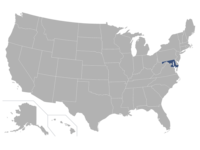
Annapolis, MD