PEEHIP board approves retiree trust withdrawal to close FY27 benefit gap
Jun 05, 2026 | 6:00 am ET
Description
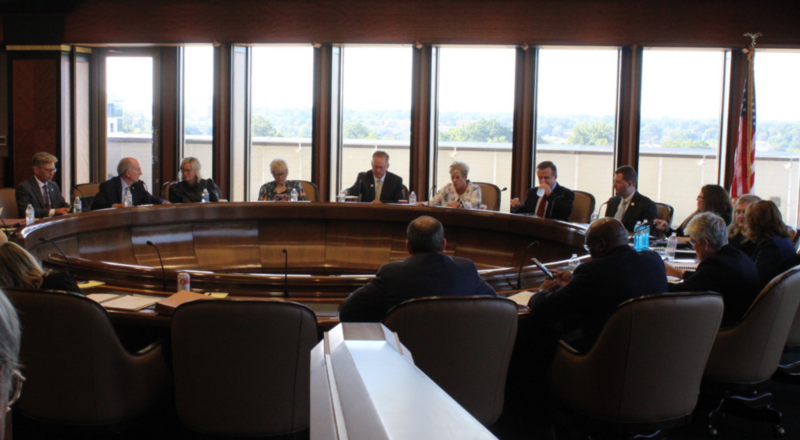
The Public Education Employees Health Insurance Plan board approved a $380 million budget request increase at its quarterly meeting on Sept. 3, 2025, in the RSA building in Montgomery, Alabama. The Legislature this spring appropriated approximately $180 million, so the board on Wednesday approved a $200 million withdrawal from the retiree trust fund to cover the rest of the benefits. (Anna Barrett/Alabama Reflector)
The Public Education Employee Health Insurance Plan (PEEHIP) Board on Wednesday voted to withdraw money from its retiree trust fund after the Legislature approved a benefit funding level less than what the board requested.
PEEHIP currently provides $904 per member per month, an estimated $814.8 million, to the Education Trust Fund (ETF) budget. Amid rising healthcare costs, the PEEHIP board requested $1,209 per member per month, an estimated cost of $1.09 billion to the ETF, for fiscal year 2027. Gov. Kay Ivey asked the Legislature to appropriate $1,073 per member per month, an estimated $966.4 million cost to the ETF.
In the final version of the ETF, lawmakers appropriated $1,048 per member per month, an estimated $180 million cost to the budget, leaving the PEEHIP board to fund the rest.
The board unanimously approved a withdrawal from the trust for up to $200 million to cover the rest of its members’ benefits for fiscal year 2027. Jo Moore, the deputy director of administration for the board, said at a PEEHIP meeting on Wednesday that running a healthcare program is “one of the most difficult plans to administer.”
“We don’t control our members’ health, we don’t control their need for health services, and we don’t control the cost of those health services,” she said. “But nevertheless, we have approximately 360,000 individuals that are depending on us to provide them with quality healthcare. We do the best that we can with what we’ve got, and we will continue to do so.”
Growing economic pressures on the state’s budget have led to conservative budgeting and warnings from the legislative fiscal officers about future budgets. Kirk Fulford, legislative fiscal officer, told legislators in January that fiscal year 2028 would be “a rock fight.” As of Thursday, the ETF’s revenues, most of which comes from the state’s income tax, were up 0.79% from this time last year, according to the Legislative Services Agency.
Neah Scott, PEEHIP’s legislative counsel, said at the meeting that the board “did pretty good” in the current fiscal year and FY 2027, which begins on Oct. 1, but said it would be more difficult as “the growth slows and there’s more pressure and demands.”
Diane Scott, chief financial officer for PEEHIP, said Wednesday that as of Monday there was about $2.9 billion in the retiree trust fund.
“PEEHIP faces funding shortfalls due to the escalating cost of providing healthcare benefits based upon a change in Medicare funding. Even with additional funding from the Alabama legislature, PEEHIP anticipates a shortfall of up to $200 million for fiscal ’27,’” she said, reading a motion presented to the board.
The CFO said that if the Legislature’s rate stays the same for fiscal year 2028, the board will have to withdraw up to $293 million from the retiree trust, and up to $468 million for fiscal year 2029 if costs continue to increase and membership is stagnant at about 104,000 people.
“We’re not going to deal with those today. We need to deal with what we’re going to do the rest of this year and what we’re going to do with ’27,” she said. “Get that anchor down and let the process naturally occur. But again, that’s consistent with those increases in costs that we’re seeing.”
David Bronner, CEO of the Retirement System of Alabama, said those in attendance should ask political candidates “are you going to support us or not?
“Then we know where we stand at least,” he said. “Are you going to support us for our pensions? But we also need to know, are you going to support healthcare for teachers? Or are you going to ask teachers without any meaningful raises, are you going to ask them to pay more for their healthcare?”
Montgomery