Report: Erin Stewart received more than $120,000 in severance
Jun 04, 2026 | 4:00 pm ET

Description
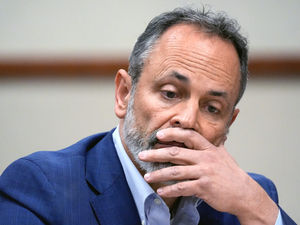
Photo courtesy of CT Mirror
Last July, as Mayor Erin Stewart of New Britain looked ahead to leaving office and beginning a gubernatorial campaign in November, she sent a stunning email to four officials — a demand for more than $205,000 she calculated the city owed her for unused vacation, holiday, sick and personal days as its elected mayor.
On a spreadsheet, Stewart essentially submitted a bill to the city she had led for 12 years: $92,135 for 240 unused vacation days; $37,739 for 78 unused personal days; $54,502 for working on 126 holidays; $24,201 for 192 unused sick days. She also claimed $900 in “longevity pay.”
Almost none of it was allowed under city payout policies for departing employees, much less a mayor who did not seek reelection.
When the human resources director, Linda Guard, replied that Stewart had misread city policies and undoubtedly exaggerated her tale of unending labor — a claim she worked every holiday and never took a single vacation or sick day — the mayor responded angrily.
“Don’t you think I’m due this?” she asked.
In the end, Stewart received $121,978 in separation payments before they were cut off in February. The appropriate amount, the city calculated, would have been $14,275.
The episode was recounted in an investigative report submitted Wednesday to the city’s corporation counsel by the Crumbie Law Group and released Thursday by Stewart’s successor, Mayor Bobby Sanchez. It describes a mayor who demanded and frequently got benefits unauthorized by the city charter or ordinances.
“Today’s report is deeply disturbing,” Sanchez said in a statement. “What began as a routine review of City operations has uncovered yet another pattern of conduct that represents a serious abuse of public trust and a disregard for the rules that exist to protect taxpayers.”
The cost of a master’s degree in public administration, a course of study that included best practices in budgeting and human resources? The city paid her $31,561 in tuition reimbursements, and Stewart used her city credit card to buy the required text books.
Guard, the human resources director who told investigators that Stewart coerced her into signing off on separation benefits, might have found irony in one of the books Crumbie listed in a footnote. It was titled, “Human Resource Management in Public Services: Paradoxes, Processes, and Problems.”
Told that the city’s “use or lose” policies did not allow anyone to cash out unused vacation accrued over little more than a year? Stewart reduced her demand to a little more than $150,000 — a major portion of which was paid immediately, the rest to be provided in 20 payments giving the former mayor a city income while campaigning for governor.
Stewart also obtained what Crumbie called excessive payouts for unused vacation time ranging $4,119 to $34,758 for four top aides, three of whom left office with the mayor and joined her gubernatorial campaign: Brock Weber, her deputy chief of staff; Rachel Zaniewski, her communications director; and Desiree Rivera, her assistant. The fourth, Justin Dorsey, remains a city employee.
The report offered a telling new detail about a nonexistent “deferred partial retirement pension” benefit Stewart sought shortly before leaving office. In a Connecticut Mirror story published on April 30, Stewart said, “Why wouldn’t I make the ask?”
An answer was provided by Crumbie.
Stewart had first inquired about a pension in a Dec. 3, 2020 email to a city attorney, Mary Pokorski, asking if she was vested after 10 years. Pokorski immediately replied in writing, informing Stewart the city charter required 20 years of service for an elected official to collect a pension.
Approximately 30 minutes later, Crumbie reported, Stewart replied, “Ughhhhhhh thankslol.”
In Crumbie’s view, the exchange casts the paperwork Stewart filed on Oct. 31, 2025 asserting a right to partial pension in a new light: “the evidence supports the inference that Ms. Stewart’s intent was not a good-faith mistake but rather an effort to defraud the city and obtain pension benefits.”
It is the third report produced by Crumbie, the firm Sanchez initially hired to investigate the irregularities in tax collector’s office. The first led to the tax collector’s dismissal in April — and a claim by Stewart, a Republican, that her Democratic successor was engaging in a “witch hunt” to undermine her gubernatorial campaign.
“As Mayor, I am frustrated, bewildered, and saddened by what continues to be uncovered,” Sanchez said in his statement. “The people of New Britain deserve a government that operates with integrity, transparency, and respect for taxpayer dollars. Instead, each new report reveals conduct that appears increasingly inconsistent with those basic principles.”
The inquiry shifted to Stewart last month with a second report released on May 14 detailing what Crumbie called a systematic misuse by the mayor of her city credit card. The firm concluded the “great majority” of $207,076 in purchases Stewart charged over nearly a decade were personal and unrelated to city business.
Crumbie, whose earlier report was forwarded to state and federal criminal investigators, alleged the purchases were a breach of public trust and “may also implicate statutes governing Fraud, Larceny, Embezzlement, False Statements, Wire Fraud, and Misuse of Government Property.”
The same day, Stewart ended her campaign for the Republican nomination for governor and promised to make restitution for personal purchases made on the city card. Since then, Stewart’s troubles have only mounted — as have the city’s potential financial claims against its former mayor.
They now appear to exceed $300,000, though a final accounting is yet to come.
“While these findings are disappointing, they also reinforce why this administration launched these independent reviews on day one,” Sanchez said. “We made a promise to the public that we would follow the facts, ensure transparency, and restore trust in City Hall. That work will continue until every question is answered.”
The release of the new report comes a day after the attorney general and commissioner of consumer protection opened an investigation into Stewart’s handling of assets for the Mayor’s Trophy Charitable Fund, a charity founded by her father, former Mayor Tim Stewart.
Neither Stewart nor her lawyer have commented on the investigations since she ended her campaign. Stewart did not respond to a request for comment Thursday.
Crumbie said the new report also should be reviewed by criminal investigators.
“The frequent and repetitive nature of the misconduct exhibited by Ms. Stewart is inexplicable for a public official and should be referred to the proper state and federal law enforcement authorities for further review as her actions may constitute fraud, larceny, embezzlement, false statements, and official misconduct,” Crumbie wrote.
The report has an inconsistency, saying Stewart sought a payout of $205,000. The claims she listed for unused holidays, vacation, sick, and personal days add to more than $208,000.
Crumbie said Stewart’s approach to seeking the separation payout was intended to minimize a paper trail. In her email claiming she was owed more than $200,000, Stewart suggested further discussion be done via phone: “I welcome discussion, please call my cell.”
An exhibit in the Crumbie report showed Stewart sent the email on July 3 to four officials: Guard; Pokorski; the corporation counsel, Gennaro Bizzarro; and the finance director, Jonathan Perugini. Attached was the spreadsheet offering her calculations for what she was owed.
“The request to discuss the matter by phone is an obvious attempt to eliminate any discussion of the issue in writing, which would leave a document trail,” Crumbie wrote.
“There is no specific provision in the city Charter or its policies relating to entitlement to benefits for elected officials. This is largely because, unlike full-time employees, elected city officials are not required to keep track of their time and do not have a set work schedule,” Crumbie wrote.
But the city’s long practice was that elected officials were entitled to the same limited benefits accorded city employees regarding unused vacation time. The city’s “use or lose” vacation policy limits how many vacation days can accrue: Generally, the limit is one year, though the H.R. director may authorize the carryover of another 15 days.
Neither of the two collective bargaining deals in effect for city employees allow them to cash out unused sick days or personal days, nor is there a provision for the longevity pay claimed by Stewart.
Based on records reviewed by Crumbie, no previous mayor had sought payments on a scale sought by Stewart.
Her four immediate predecessors limited themselves to payments for unused vacation days: Her father had received $13,482 for 40 unused vacation days when he left office; Lucian Pawlak, $8,025 for 25 days; and Donald DeFronzo, $5,7611 for 27 days. Tim O’Brien, who served a single two-year term between the tenures of the two Stewarts, sought nothing.
On July 10, Erin Stewart notified Guard by text she had spoken with Bizzarro and Perugini and revised her demand, reducing her claim for payment for 240 unused vacation days to 89. Her other demands remained. A letter to Guard made clear there would be no further changes.
“Thank you both for your time in reviewing my accrued leave balances and for confirming the applicable contract language governing each category,” Stewart wrote.
Crumbie reported that Guard viewed Stewart’s letter as an ultimatum.
“Not only was Ms. Guard surprised at being instructed to execute a letter she knew to be factually inaccurate, but she was also stunned at being pressured to sign it under circumstances she experienced as coercive,” Crumbie said.
Guard approved Stewart’s revised demand.
On July 16, Stewart was paid $93,008 for 89 unused vacation days and 126 holidays. On Nov. 12, the day after she left office, the city began making the first of 20 payments for accrued personal and sick days that were to total $57,941. On Feb. 4, Sanchez notified Stewart he was suspending them.
Stewart already had received 10 payments totaling $28,970. Added to the $93,008 paid her in July, her separation payments came to $121,978 — nearly $108,000 more than the city calculated she should have received for unused vacation days.
Even if city policy permitted employees to claim unused sick and personal time, as well as a claim she had worked on every holiday, her assessment was implausible, given her two maternity leaves and time off for surgery, Crumbie noted.
“In effect,” Crumbie wrote, “Ms. Stewart sought a separation payout for every vacation, sick, holiday and personal day she could conceivably be entitled to over her entire twelve years in office, whether she took the time off or not.”

Hartford, CT