Reasons for JBS strike were clear, but political reform is needed for real change
Apr 07, 2026 | 5:30 am ET
Description
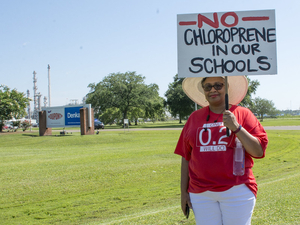
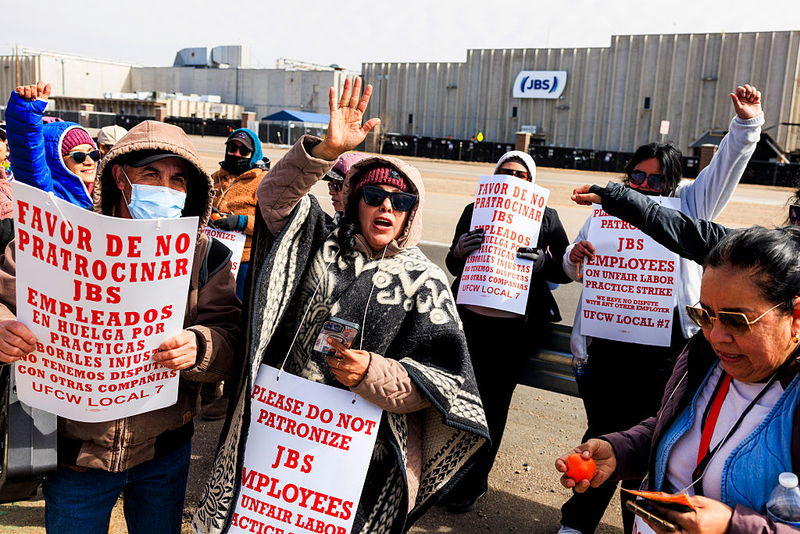
People picket outside of the JBS meatpacking plant on March 16, 2026, in Greeley. (Photo by Michael Ciaglo/Getty Images)
This week workers at the JBS beef processing plant in Greeley discontinued their strike — the first at a meatpacking plant in more than 40 years. But considering the consolidated state of the U.S. meat industry, another meatpacking strike seems inevitable, whether in Greeley, or elsewhere in the U.S.
The JBS plant is one of the largest in the nation, employing 3,800 people to slaughter, process and package an estimated 6%-7% of the beef in the United States. The strike represents a modern day David and Goliath story — employees, many of which are immigrants with temporary protected status, taking on the largest meat company in the world. The conditions that led to the strike are clear: Since the 1980s, meatpackers have been operating in a landscape barren of meaningful regulatory oversight, leading to consolidation, poor working conditions and egregious pollution.
Americans are living through an era of unprecedented corporate consolidation in the meat industry. Just four companies — the “Big Four” (JBS, Tyson, Cargill, National Beef) — control 85% of all beef sold in the U.S., selling to grocery stores, restaurants and dining halls. JBS and Tyson also dominate the chicken and pork industries, along with a handful of other companies.
The union representing the employees at the Greeley plant stated that JBS refused to negotiate in good faith. The union wants wages that keep up with inflation, safe working conditions, and guaranteed personal protective equipment for workers. According to JBS, via a webpage titled “Myths vs Facts,” the company is “providing our team members the best offer possible, while also ensuring the plant stays open and operational” even “amid external pressures,” such as the record low number of cattle in the U.S. (due in part to climate change-induced drought).
Despite the tough circumstances cited by JBS, the company earned a net revenue of $86 billion for 2025, sharing with investors that “JBS Beef North America reported record sales both in the quarter and in 2025.” It takes some gall to report record high revenue while simultaneously telling workers that higher wages are impossible.
Striking is risky for JBS workers. Not only must they sacrifice full wages for several weeks, but their job security is threatened, and for employees without full citizenship, they may become targets for the Trump administration’s aggressive anti-immigration agenda. That said, there are very few legitimate ways to gain leverage over JBS, a company whose labor-friendly assertions are belied by its laundry list of labor and environmental violations.
Since 2020, JBS has been fined for 184 health and safety related offenses, 40 employment-related offenses, and 85 environmental regulation violations under federal or state law. This includes employment discrimination, wage and hour violations, and child labor. In countries with weaker labor protections, there have been credible allegations of business connections to slavery. Recently, JBS paid $1.1 million in a settlement to the state of New York for greenwashing, and a similar suit has been filed in D.C. JBS has been linked to severe and widespread deforestation of the Amazon rainforest. And JBS’s climate impact rivals that of fossil fuel companies because of the methane in its supply chain. JBS is the largest meat company in the world, wielding enormous power, irresponsibly.
JBS and its few competitors in the U.S. (with similar rap sheets) clearly demonstrate the need for greater regulatory oversight of the meat industry. For decades, meat industry lobbying eroded states’ ability to meaningfully regulate consolidation in the industry. But there is already a law on the books enabling the federal government to take action: the Packers & Stockyards Act of 1921.
This law was passed in the early 20th century when a few powerful meatpackers took advantage of an un-competitive market to pay farmers less for animals and increase consumer prices for meat. History is repeating. The meatpacking industry is even more concentrated than it was in 1921. Consumers are struggling to afford the increasing cost of beef (up 51% between 2020 and 2025), and cattle and calf farmers can’t negotiate with companies like JBS for fair prices for beef. This leads to bankruptcies and indebted farmers selling their operations; between 2019 and 2024, more than 20,000 cattle farms shut down each year. It’s past time for regulators to act.
Corporate control of the meat industry is receiving some attention from Washington. In November 2025, President Donald Trump directed the Department of Justice to investigate the Big Four meatpackers for collusion and price-fixing. That said, since taking office, the administration has deregulated the meatpacking industry, to the benefit of JBS and other meatpackers. For example, the Trump administration greenlit increasing line speeds for animal processing in processing plants — a salient issue for the workers in Greeley who have been forced to work faster (which is more dangerous) without more pay. JBS was the largest donor to Trump’s inauguration, spent more than $500,000 lobbying the administration in the first few months of 2025, and its Brazilian billionaire owners have been seen coming in and out of meetings with Trump, evidently assisting with foreign affairs diplomacy.
A more promising avenue for regulation is congressional action. In March 2026, Senate Democrats introduced legislation to break up the largest meatpackers in the country, including JBS. That said, Republicans and Democrats alike have neglected the increasing corporate consolidation of the meat industry for decades, to the detriment of workers, farmers, consumers, animals and the environment.
For real change to take place, a wave of progressive candidates (who refuse to accept corporate donations) is the nation’s best bet. Until then, workers at the Greeley plant and elsewhere must shoulder the burden of standing up to Goliath JBS and the concentrated meat industry.
Denver, CO