Proposed Alaska gas pipeline has a narrow window of viability, estimates suggest
May 27, 2026 | 2:00 pm ET
Description
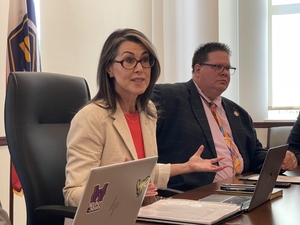
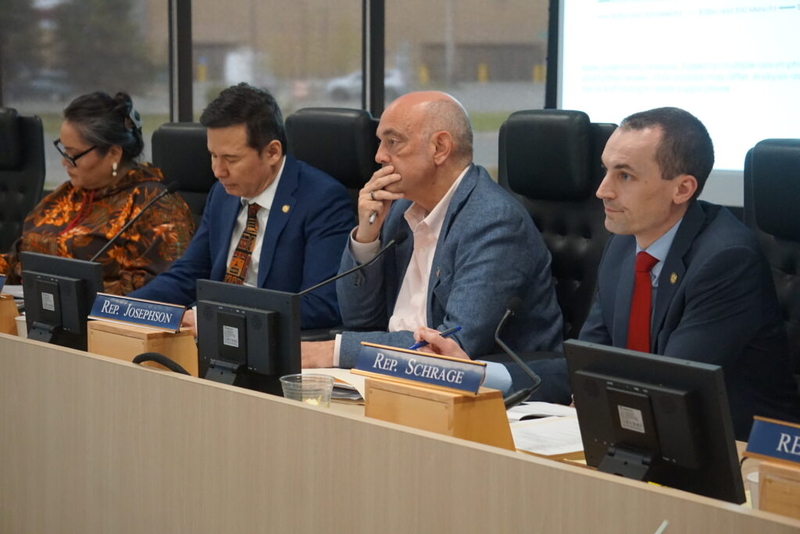
Rep. Nellie Unangiq Jimmie, D-Toksook Bay, Rep. Neal Foster, D-Nome, Rep. Andy Josephson, D-Anchorage, and Rep. Calvin Schrage, I-Anchorage, listen to Nick Fulford, senior director for gas, LNG and energy transition at GaffneyCline Energy Advisory, at a May 26, 2026, House Finanance Committee hearing in Anchorage. (Photo by Yereth Rosen/Alaska Beacon)
The proposed trans-Alaska natural gas line faces a narrow road to profitability, even with Gov. Mike Dunleavy’s proposed multibillion-dollar tax break, according to estimates presented to state legislators.
The more the pipeline costs, the more its builders will need to charge for gas shipped through it in order to make money. But if the cost of Alaska gas is too high, it isn’t competitive with gas from other sources around the world.
On Tuesday, members of the House Finance Committee met for the second time in a 30-day special session devoted to discussing the tax break.
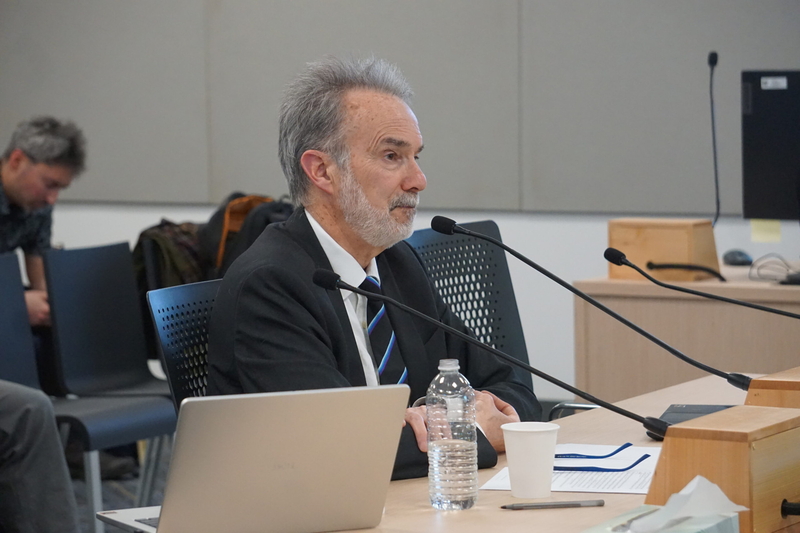
Nick Fulford of GaffneyCline, the Legislature’s hired analyst for the pipeline project, said previously published financial modeling by the Alaska Department of Revenue remains the best public look at whether the project pencils out financially.
“The main question really is: How much bigger and how much more capital cost can the project support before it becomes uneconomic,” he said.
In 2018, officials with the Alaska Gasline Development Corp. suggested that building a pipeline from the North Slope to Cook Inlet — plus large industrial processing plants on either end — would cost roughly $43.4 billion, including money earmarked for possible cost overruns.
Since then, the official cost has risen only slightly, to $46.2 billion, but many state lawmakers have said they are skeptical of that figure, because it does not seem to account for inflation.
Glenfarne, a multinational corporation that now owns 75% of the pipeline project, has not disclosed an updated figure.
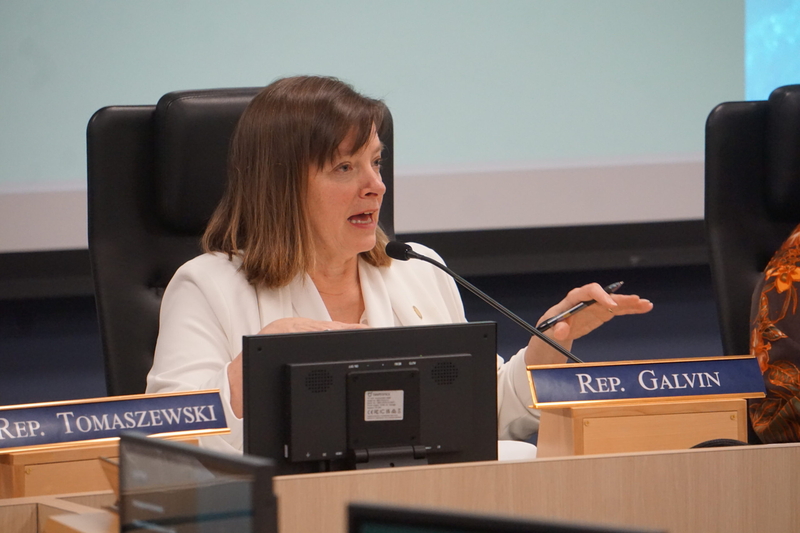
Rep. Alyse Galvin, I-Anchorage, said that when she uses the Consumer Price Index to judge how much the cost has grown, it’s significant.
“When I look at cost adjustment, just using CPI, just a straight cut through, that brings us to $57 (billion) to $60 billion,” she said during Tuesday’s hearing.
“I would say it seems highly likely that it would be more than $46 billion given the general inflation that we’ve seen,” Fulford said.
Publicly available estimates suggest gas could be bought from North Slope producers between $1 and $2 per thousand cubic feet. That’s what’s technically known as the “upstream price.”
In a scenario where the pipeline costs Galvin’s suggested figure, the state’s tax laws don’t change to help the project and the upstream price is $1.50 per thousand cubic feet of gas, the Department of Revenue estimates that an end buyer in Japan could expect to pay more than $11 per thousand cubic feet.
That’s likely a problem for the pipeline project, because according to GaffneyCline’s estimates, the average contract price in Japan over the past 10 years has been $10.41 per thousand cubic feet — less than what the Alaska project would have to charge to earn its expected profit target.
Under a tax change proposed by the governor, the end buyer’s price would drop to about $10.40, using Galvin’s cost estimate and the $1.50 upstream price.
But if the cost of upstream gas rises, or if the cost of the pipeline rises, even the governor’s proposed tax break isn’t enough to keep the project economically competitive.
Fulford, speaking to the House Finance Committee, said he thinks Asian LNG prices will rise in the coming years, possibly offsetting any rising costs and keeping the project viable.
But he also acknowledged that with so many unknowns, it’s not clear where the project becomes uneconomic.
“The question is … if the price of LNG goes up and if the capital cost goes up, then where’s that sort of tipping point where the project can still go ahead, even if it’s a much higher capital cost?” he said.
Under Dunleavy’s proposal, the state’s existing petroleum property tax would be largely replaced by a tax on gas that moves through the pipeline.
Speaking last week in Anchorage, Glenfarne CEO Brendan Duval said the governor’s proposed change is necessary for Glenfarne to get financing for the project.
“It won’t be financeable in the form that we’re trying to do it without the tax stabilization law,” he told the Anchorage Daily News.
Legislators appear favorable to the general idea, but they don’t know what tax rate to use for the “alternative volumetric tax,” as it is formally known.
Dunleavy has proposed 6 cents per thousand cubic feet of gas. House and Senate lawmakers are each considering different, higher rates.
They’re also considering mandatory impact payments to compensate cities and boroughs that collectively would lose out on $14 billion in property taxes through 2063 if the governor’s plan is adopted. A mandatory natural gas spur line to Fairbanks is also being discussed. As currently planned, the pipeline runs to the west of Fairbanks.
Rep. Calvin Schrage, speaking Tuesday, said legislators are working with a large amount of uncertainty, and that is slowing their work.
“If we could eliminate some of these variables and have it known, it would really help us in figuring out where this might be going, but we don’t have that right now,” he said. “What this is ultimately showing is that under our current tax structure, there’s a very small window of break-even profitability for a developer.”

Juneau