U.S. Sen. Deb Fischer seeks more fiber in Nebraska’s broadband expansion diet
May 27, 2026 | 2:03 pm ET
Description
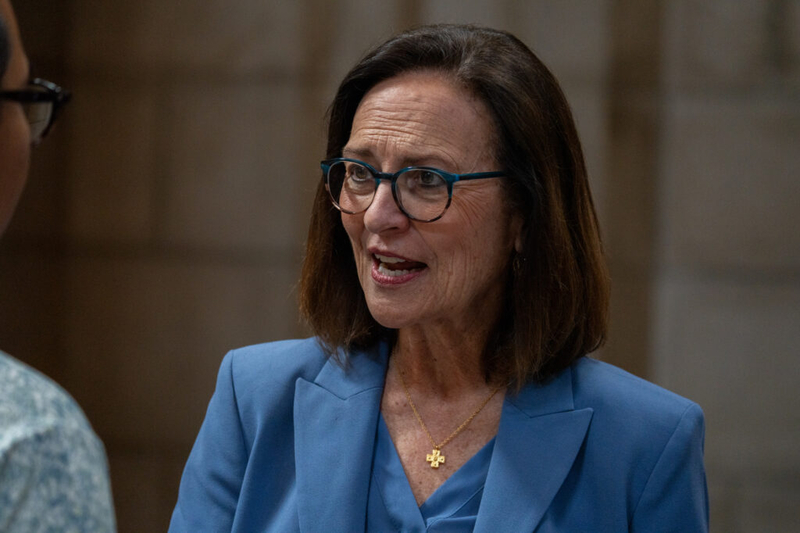
U.S. Sen. Deb Fischer, R-Neb. June 6, 2025. (Zach Wendling/Nebraska Examiner)
LINCOLN — U.S. Sen. Deb Fischer, R-Neb., wants Nebraska to use more fiber in its broadband expansion plans, contradicting Gov. Jim Pillen’s claims that other internet technologies are sufficient.
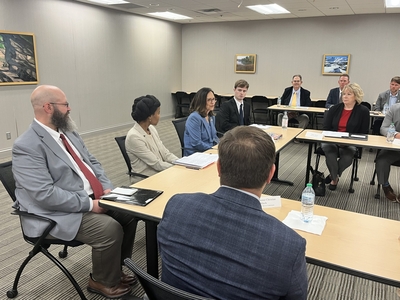
Fischer hosted a roundtable discussion this week alongside Olivia Trusty, a member of the Federal Communications Commission, and several local stakeholders, including four members of Nebraska’s Public Service Commission, the state’s elected, catch-all regulator. Several participants were telecommunications officials based in rural areas like Stanton, Hamilton County and the Panhandle.
The roundtable discussed the state of rural broadband across Nebraska and what can be done to improve it. Nebraska has had multiple groups working on broadband expansion in recent years.
Public Service Commissioner Tim Schram said the PSC has connected roughly 46,000 locations to the internet via fiber. Separate from the PSC, Pillen created the Nebraska Broadband Office in 2023 to oversee the state’s implementation of the new federal Broadband Equity, Access and Deployment (BEAD) Program.
Pillen said he created the office via an executive order as one of his first acts as governor, hoping to ease the workload of the PSC. Earlier this month, state officials celebrated Nebraska’s first internet connection fostered through BEAD in Ogallala, using fixed wireless.
Since 2023, BEAD has undergone a massive restructuring following the change in presidential administrations, which led to a nearly 90% reduction in the funds Congress allocated for Nebraska to use for broadband expansion.
While the state was initially awarded $405 million under BEAD, Pillen later announced that Nebraska only applied for about $44 million for broadband expansion efforts.
Several roundtable participants Tuesday expressed concerns about the BEAD program. Public Service Commissioner Kevin Stocker said the state’s celebration of its first BEAD connection in Ogallala left him perplexed, because locations in that area already had internet access through cellular technology.
“I’m scratching my head, because there were other ways,” Stocker said. “I’m really concerned that we’re investing money into areas through the BEAD program that had other means already.”
John Barrett, vice president of government affairs for Great Plains Communications, said he believes there is a misconception among BEAD proponents that most of the necessary infrastructure to enact broadband connections have already been built, when he argued more needs to be done.
“The job is not done,” Barrett said, clarifying later. “BEAD may help get service to every American at some level, but rural providers are still going to need ongoing support. In the areas we serve, there simply is not enough population density or customer revenue to make those investments economically sustainable without continued federal and state support.”
Barrett also worried aloud about the de-emphasis on fiber in Nebraska’s BEAD plan, which was once a priority under the Biden administration’s version of the program.
Multiple participants highlighted their preference for fiber internet over other technologies. Schram said in the PSC’s view, “there is no substitute.”
According to the National Telecommunications and Information Administration, Nebraska ranks dead last in granting BEAD funds for fiber internet, at about 9%. The national average is about 62%.
Pillen called the perception that fiber internet is the gold standard of internet connections outdated. He said it ignores rapid advancements in other technologies, including satellite and cable. He said the internet speeds established in Nebraska’s first connection were “off the charts.”
The roundtable told a different story, with several participants noting the benefits of fiber, particularly for Nebraska. One key benefit is that fiber optic cables are buried underground, which keeps it safe during Nebraska’s frequent severe weather events.
John Nelson, CEO of Hamilton Telecommunications, and Nick Paden, vice president of Stanton Telecom, said during Nebraska’s wildfires and tornadoes, the only reason their areas maintained internet service was because fiber connections had already been established.
A BEAD on Nebraska broadband: State reopens provider applications with over $300M still in limbo
“Knowing what’s best for the future utility of the people we represent — it’s buried infrastructure,” Schram said.
Schram noted that maintaining broadband connections across Nebraska comes with additional costs, which the roundtable highlighted as another benefit of fiber. Nelson said the state has been burying fiber cables since 1984, and in that time only a handful of locations have required replacements.
Tonya Mayer, CEO of Mobius Communications, estimated that the average fiber cable has a lifespan of 30-40 years.
Fischer said she believes there is a place for internet technologies other than fiber, like satellite, but she’s not convinced those methods will work for all of Nebraska. She equated investing in fiber to investments in other vital infrastructure, like roads and waterways.
“Those are costly, big, and lasting investments, and fiber is proven to be able to last,” Fischer said.
Fischer said she is still pushing federal officials to secure the more than $300 million in leftover BEAD funds for Nebraska. The NTIA is currently evaluating uses of these dollars, labeled as “non-deployment funds,” and Fischer said she is uncertain when the allocations will be announced.
Fischer said she has had multiple conversations with U.S. Assistant Secretary of Commerce and Communications and Information Arielle Roth about the leftover funds. She said she would like to see some of the funds used to advance technological support for precision agriculture, but noted she would prefer to use part of the funds to build more fiber connections as well.
It is unclear whether non-deployment funds can be used to foster broadband connections, as the NTIA has yet to issue guidance on acceptable uses of the remaining funds. According to a written statement from the Nebraska Broadband Office, the funds could be used for “any use determined necessary by the assistant secretary to facilitate the goals of (BEAD).”
- 2:18 pmEditor's Note: This story has been revised to correct which Public Service commissioner commented on the first BEAD connection.
Lincoln, NE