Prop. 316 would cap Arizona grocery taxes. Rural cities say it will cost them, and their residents.
Sep 21, 2026 | 11:52 am ET
Description
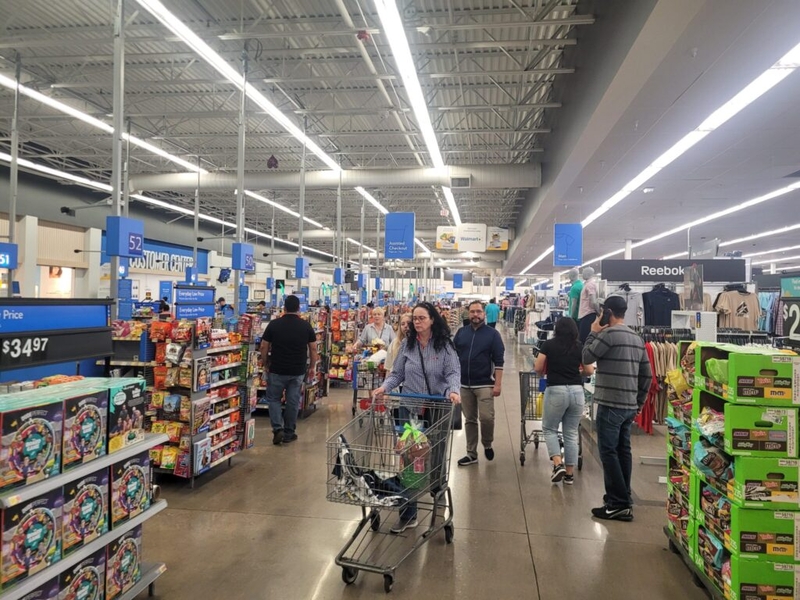
(Photo by Marty Schladen/Ohio Capital Journal)
Voters will decide in November whether city governments must earn their approval before raising grocery taxes. And while Republicans say doing so will help ease the financial burden on everyday Arizonans, some city officials warn that it will make it harder to provide public services.
Proposition 316 would cap grocery tax rates at 2% and require cities seeking to implement new taxes or increase existing tax rates to get permission from voters.
Some cities, especially those in rural areas, currently have higher rates than that. Taylor, a town of just over 4,000 people in Navajo County, has a 3% grocery tax rate. Prop. 316 would let Taylor keep its rate as is, with the caveat that it can never be raised again. Going to the voters isn’t an option for cities and towns like Taylor that exceed the 2% mark.
Republican lawmakers have tried to prevent cities from charging their residents for groceries since 2023, in a bid to present themselves as the party that is responding to the rising cost of living. But an early attempt would have banned the taxes altogether, drawing fierce opposition from cities across the state and a veto from Gov. Katie Hobbs.
City officials argued that the impact of food taxes on consumers are negligible, but the revenue generated by them makes up a significant part of the budgets of many cities. Seventy of Arizona’s cities and towns levy taxes on groceries and an analysis from the Joint Legislative Budget Committee estimated that banning them entirely would mean forfeiting $227 million in revenue in 2028 alone.
Prop. 316 started out as a total prohibition on grocery taxes, but pushback from city officials and others led to the 2% cap as a compromise.
Chandler Mayor Kevin Hartke, who is also the president of the League of Arizona Cities and Towns and helped negotiate Prop. 316 down from a complete ban, said the ballot measure was a middle-ground approach.
“The original conversation for years has been to entirely remove this,” he said. “Lobbying multiple times with other mayors, this seemed (like) something that can accomplish the state’s goals concerning food taxes as well as the cities goals’ concerning protecting a revenue source. It was kind of an uneasy win-win.”
Chandler taxes groceries at 1.5%, which, under the provisions of Prop. 316, means it would still have the freedom to raise taxes in the future, as long as voters agreed with doing so. Other cities in Maricopa County wouldn’t fare as well if Prop. 316 is successful in the fall. Paradise Valley has a 2.5% grocery tax rate and Litchfield Park has its set at 2.8%.
Outside of the metro Phoenix area, the reliance on grocery taxes is greater.
Bisbee Mayor Ken Budge criticized the ballot measure for enshrining governmental overreach into state law.
“Why should the state be able to tell local governments and their residents how much and how they are willing to be taxed to support their town?” he said in an emailed statement. “Let these decisions be made by the people that are affected, not by state representatives trying to make one size fit all municipalities.”
Bisbee, a city with about 5,000 residents located minutes from the Arizona-Mexico border, is a tourist hotspot. The city’s grocery tax rate is set at 3.5%, which Budge said brings in about $700,000 a year in annual revenue. That makes up a sizable part of the city’s $9 million budget.
Budge said the city’s grocery tax is high in part to take advantage of Bisbee’s tourist traffic.
“Having taxes that are paid by people that are outside of our area helps us out a lot,” he said. “That’s one reason we use that, versus putting everything on the local individual.”
For some cities, local tax rates are reliable ways to raise money. Page, in northern Arizona, has a 3% grocery tax rate. In an emailed statement, spokesman Adam Geller said that the city already lost $228,000 in annual revenue because lawmakers eliminated rental taxes last year.
While Page’s grocery tax rate would be preserved if Prop. 316 passes, the city would be barred from using grocery taxes to respond to any future budgeting needs. And he said shifting the burden to tourists isn’t a great alternative, because tourism rates aren’t always steady. Limiting a city’s ability to exercise its own tax rates leaves city officials with fewer options to deal with financial issues, Geller said.
“Both rental and grocery taxes are stable, resident-generated revenue,” he said. “As those options narrow, the city relies more on tourism-driven collections, which declined in FY26: hotel and lodging tax fell 7.4% and amusement tax fell 15.4%.”
Budge said that the money raised from Bisbee’s food tax pays for things like infrastructure improvements and the city’s wastewater treatment system. He acknowledged that affordability is a concern for many, but pointed out that banning the city from increasing tax rates means that services will be cut instead, including public safety or those popular with the public.
“Do we not buy a new firetruck? Do we go out and cut our personnel?” he said. “We don’t fill as many potholes, we don’t keep the swimming pool open as long, we don’t buy new books in the library.”
Phoenix, AZ