Kansas GOP’s Marshall and Moran, Democrat Hamilton embrace agriculture legislation
Sep 21, 2026 | 10:13 am ET
Description
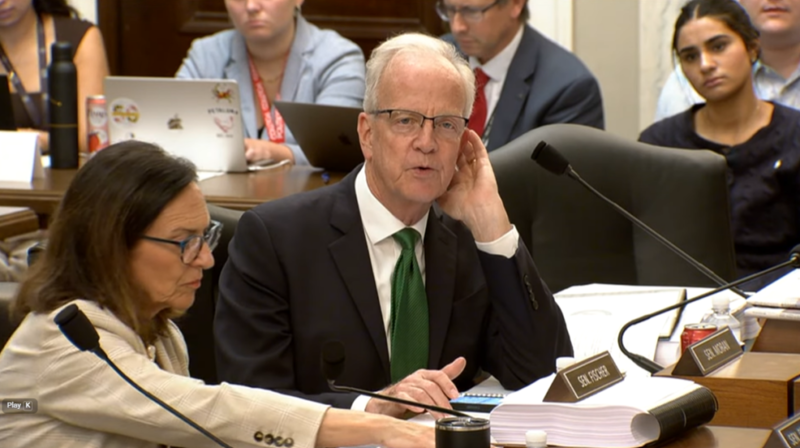
U.S. Sen. Jerry Moran, R-Kansas, pleads for Congress to recommit to bipartisanship when debating legislation relative to U.S. farming and ranching. He recently cast a vote for the Senate Agriculture Committee's farm bill, which also received endorsements from Kansas GOP U.S. Sen. Roger Marshall and his November election challenger Democrat Adam Hamilton. (Kansas Reflector screen capture from U.S. Senate video)
TOPEKA — U.S. Senate candidates Adam Hamilton and Roger Marshall found consensus amid their combative Kansas campaign by endorsing farm legislation passed by a Senate committee without votes from Democrats.
The respective Democratic and Republican nominees for U.S. Senate criticized Democrats on the Senate Agriculture Committee for opposing the bill outlining revisions to federal law benefitting farmers or ranchers and delivering food aid to low-income Americans. The bill moved to the full Senate. The U.S. House passed its own version in April. The rival pieces of legislation were crafted to supplement a 2025 mega-bill that included agriculture and food policy.
Republican U.S. Sen. Jerry Moran of Kansas also urged lawmakers to find the courage to set party labels aside when considering bills pivotal to people tied to agriculture.
Federal farm bills historically have been revised every five years with bipartisan support, but political disputes inhibited passage of a new comprehensive five-year law since 2023.
“Fighting for people is more important than party,” Hamilton said. “I’m disappointed that committee Democrats voted against this critical bill to help our farmers and ranchers. I would have voted to advance it. When diesel prices are skyrocketing to record levels because of an unnecessary war, our producers need all the support they can get. Democrats must support this bill. Republicans must vote to end this war. And both need to come together to fix the cuts to SNAP, which has already led to food being taken away from 18,000 hungry Kansas children and would create additional costs to our state.”
Marshall, a member of the Senate Agriculture Committee, said Senate Democrats were responsible for delaying action on the bill. The Senate waited for return of U.S. Sen. Mitch McConnell, the Kentucky Republican who suffered a serious fall in June, to secure a 12-11 margin necessary to get it out of committee.
“For over a month, Senate Democrats blocked this bill, and then every single one of them voted against it — turning their backs on farmers, ranchers and rural families to score political points,” Marshall said. “Kansans don’t have the luxury of playing politics with their livelihoods, and neither should Washington.”
Moran, who also voted for the Senate Agriculture Committee’s bill, said it was important members stayed focused on the farm economy instead of future elections.
He said lawmakers should turn away from “broader political implications that occur in all of our lives about who gets the majority next year after the election” in November.
Moran said the Senate bill would permit year-round sale of E15 gasoline, which is produced with corn. It would adjust the conservation reserve program for benefit of livestock grazing, increase Farm Service Agency loan limits and double U.S. Department of Agriculture trade promotion programs.
It would permanently transfer the Food for Peace program to USDA. The program had been targeted for elimination in 2025 by President Donald Trump.
Meanwhile, Marshall said the legislation would defend in international trade negotiations the opportunity of U.S. producers to use generic terms such as “parmesan” and “black forest ham” in marketing. The Senate bill could boost local meat processing capacity by shrinking regulations. It would broaden USDA requirements to deter importation of diseased dogs and promote dairy purchases by people receiving SNAP, or food stamp, benefits.
Marshall said during a news conference that some people didn’t understand why the five-year federal farm bill was important to the nation.
“That five years of certainty is going to allow that Kansas farmer to plant a wheat crop this fall, despite maybe having had bad drought and lost their corn crop for the most part,” Marshall said. “When we have a constant supply of agriculture products, this lowers the cost of groceries for Americans. Americans pay one-third to one-half of what other developed nations pay when it comes to groceries.”
He said the lingering question was whether Democrats would fall in line with Republicans in the Senate to pass the bill.
“Will we get the Democrats to vote for this before we leave here in a couple weeks? Or, are they going to play politics and continue to make sure that Republicans don’t get any type of a win?” he said.

Topeka, KS