The problem with prescribed burns
Nov 12, 2025 | 6:53 am ET
Description
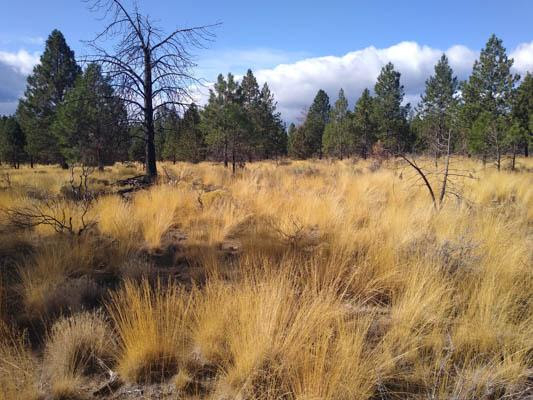
This area was treated by prescribed burning just two years prior to this photo--note the abundant growth of flammable grasses that has resulted. (Photo by George Wuerthner).
Prescribed burning is often promoted as a magic bullet that can prevent large wildfires, but it has several disadvantages that are seldom discussed.
The presumed purpose of the National Prescribed Fire Act 2025 is to reduce the risk of catastrophic wildfires by investing in managing hazardous fuels. The legislation would accelerate and expand the use of prescribed burns during cooler, wetter months.
The legislation also includes a clause increasing the percentage of federal land on which prescribed burns occur each year. The legislation requires that the acreage burned be increased by 10% more than the amount burned in previous years.
While the goal is admirable—to reduce wildfire threats to communities—the assertion that such prescribed burns can reduce “catastrophic” fires is delusional. It displays the faulty expectations inherent in the legislation.
Large, so-called “catastrophic” blazes occur only when the right combination of climate and weather conditions exists. Extreme fire weather requires severe drought, low humidity, high temperatures, and, most importantly, high winds.
Fires that ignite under less-than-extreme fire weather conditions usually burn a small acreage and often self-extinguish, with or without fire suppression. In the United States, 98% of the fires never burn more than 300 acres.
On the other hand, if you have high winds—the conditions that lead to “catastrophic” blazes, prescribed burns don’t stop fire spread. Wind will blow embers over or around any area of a prescribed burn.
High winds regularly blow embers over lands without fuel, such as 16-lane freeways or across mile-wide rivers, as the 2017 Eagle Creek Fire did in the Columbia Gorge.
The second problem with the proposal is that you can’t predict where a fire will occur. On all U.S. Forest Service lands across the conterminous U.S., 6.2% of prescribed fire-treated areas from 2003–2022 encountered a subsequent wildfire in 2004–2023.
However, this statistic is deceptive. Just because a fire encountered a treated area does not mean the treatment had any effect on fire spread.
Beware of the time factor. For example, a study of smoke emissions in treated areas compared to untreated areas, showed a 14% reduction in particulate matter. However, the study focused on prescribed burns two years old or less. No one doubts that if a fire encounters a prescribed burn shortly after treatment, it can sometimes have an influence.
The effectiveness of fuel reductions declines over time. In many instances, burning or thinning promotes new plant growth. Often, within a few years, you may have more fuel than before treatment.
What grows back is dominated by “fine fuels” like grasses and shrubs. These fuels are more “flammable” than trees, large branches, logs, and other debris that may have existed prior to prescribed fire. So, prescribed burns can alter the fuel composition, increasing the likelihood of burning.
The only solution to this problem of plant regrowth is frequent burning. Depending on the plant community, one may need to reburn it every few years to preclude the creation of higher fuel loads. To be effective, you must continue the prescribed burning forever.
This means citizens must be ready to accept smoke as a nearly year-round inconvenience and health hazard.
I cannot delve into the entire flawed argument that “a hundred years of fire suppression” has led to fuel buildups or that Indian burning precluded large wildfires that proponents use to justify burns, but I encourage readers to consult my commentary on this issue.
The strategic use of prescribed burns near homes and communities may have some utility, but the advantages are grossly exaggerated. Given the many disadvantages, whether this is worth the costs is rarely discussed. Ultimately, we must address climate change, which is the underlying cause of large wildfires and hardened homes, so they are less vulnerable to any wildfire ignitions.
George Wuerthner has studied wildfire ecology for decades and written numerous articles and books on the topic.
Helena, MT