McKee extends pause deadline on Flock cameras indefinitely
Oct 19, 2026 | 6:33 pm ET
Description
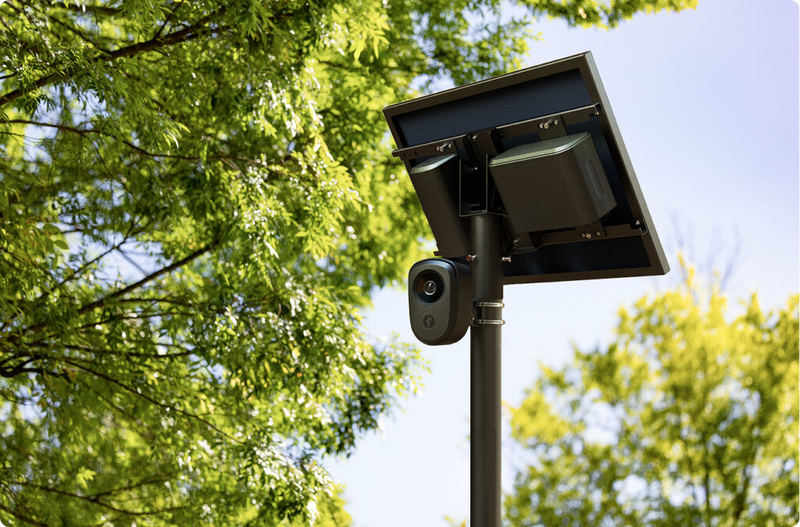
Rhode Island Gov Dan McKee has decided to keep a pause on the installation of new Flock Safety license plate readers in place. Questions surrounding oversight of the technology have led to backlash in communities across 49 states. (Photo courtesy of Flock Safety)
Rhode Island’s pause on new automated license plate reader installations, originally set to end Monday, has been extended indefinitely after Gov. Dan McKee announced he would leave it to the General Assembly to establish binding statewide safeguards for the surveillance technology.
But the governor’s announcement Monday afternoon came with a framework crafted by the Rhode Island State Police to guide local departments’ use of the technology during the interim.
“Automated license plate readers can be a valuable tool for law enforcement, but we need to make sure they’re being used responsibly and that people’s privacy is protected,” McKee said in a statement.
McKee on Aug. 18 directed Rhode Island’s Department of Public Safety to conduct a 60-day “comprehensive review” of automated license plate reader systems amid growing resistance to Flock Safety cameras over concerns about privacy and how police are using the surveillance technology.
Rhode Island State Police Superintendent Col. Darnell Weaver completed the review and presented his recommendations to McKee’s office at 10 a.m. The governor’s office made the announcement at 4:08 p.m.
McKee’s August order tasked Weaver with consulting the Rhode Island Police Chiefs Association, the League of Cities and Towns and other stakeholders. But privacy advocates criticized the review for shutting them out of the process.
Flock camera opponents say they were left out of state-led policy review
The American Civil Liberties Union (ACLU) of Rhode Island said in a statement that an initial review of the guidance raised “fundamental concerns,” though officials in the organization said they had not yet had time to thoroughly analyze the policy.
Under the proposed guidelines, police departments would need to delete license plate data within 30 days unless the information is being preserved for an investigation. Privacy advocates had called for state law to limit data retention to seven days in a letter sent to Weaver on Oct. 9, noting that Flock Safety, the company behind the network, had reduced the limit from 30 days to seven in August.
The policy Weaver recommended disallows cameras from being used for federal immigration enforcement, traffic violations, outstanding fines, civil infractions or investigations involving conduct not criminalized under Rhode Island law. Additionally, the camera technology could not be used to infringe on First Amendment rights or to discriminate against protected groups or interfere with reproductive rights.
Police could still access the camera data when a criminal investigation warrants reasonable suspicion of a state or federal crime. Advocacy groups had called for restricting camera use to specific serious offenses, including stolen vehicles, missing persons and violent crimes.
“This model policy establishes clear, consistent standards for how this technology should be used, how information is accessed and shared, and how agencies are held accountable,” Weaver said in a statement. “Our goal is to ensure that law enforcement can use this technology effectively and responsibly.”
Rhode Island municipalities and state police have contracted independently with Flock since 2021, creating a patchwork network of at least 280 cameras statewide, according to an ACLU estimate. Some communities have since moved to cancel their contracts over concerns about data access and use — including Providence, where city councilors recently proposed ending the city’s relationship with Flock.
“Not every community will choose to use automated license plate readers, but it is important that all municipalities have access to a consistent set of standards if they decide to adopt this technology,” Michael Correia, chief of the Barrington Police Department and president of the Rhode Island Police Chiefs Association, said in a statement.
Spokespeople for House Speaker Christopher Blazejewski and Senate President Valarie Lawson did not immediately respond to request for comment.
Providence, RI