At least some new NC voting rules may be delayed until after the midterms
Aug 27, 2026 | 4:13 pm ET
Description
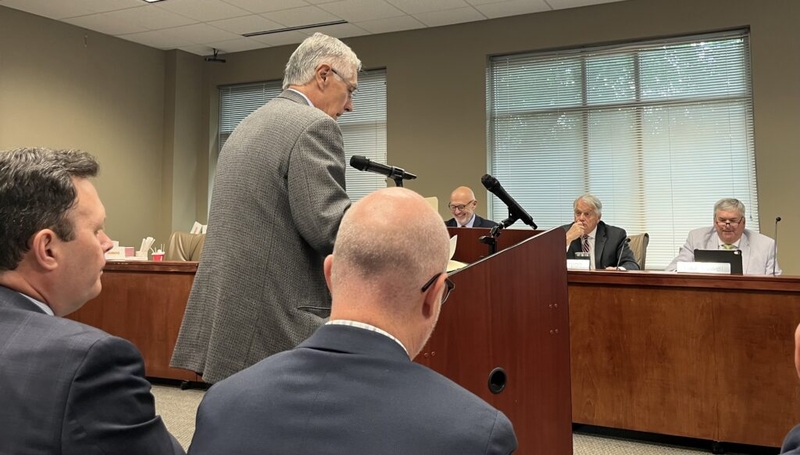
Robert Rodriguez of Democracy Out Loud objects to proposed voting rules at the NC Rules Review Commission on Aug. 27, 2026 (Photo: Lynn Bonner/NC Newsline)
A state commission that okays administrative rules unanimously approved changes for elections and voting on Thursday, though at least some of those rules may not be ready in time for the midterm elections.
The Rules Review Commission is usually a final stop for administrative rules changes before they’re activated. That’s unless at least 10 people object to a rule. When 10 or more people write acceptable letters of objection, rules effective dates are delayed for legislative review in the General Assembly’s next regular session. The legislature is on a break but is still in session. The next regular session won’t start until next year.
As of Wednesday, the proposed rules for photo ID and for voting site conduct received more than 10 objection letters, as did one section of a proposed rule on recounts. The deadline for objection letters is 5 p.m. on Friday, so it’s possible more rules will be delayed.
Brian LiVecchi, state Board of Elections chief of staff, said the board would consider issuing the rules as “numbered memos,” instructions to county elections boards that are less formal than rules.
“We probably will discuss that if anything is deemed critical,” he said.
Members of Democracy Out Loud – a group that says it wants a “fair and inclusive democracy” – spoke against the rules Thursday, saying they were not clear or that the board went beyond its legal authority to make the changes. Jim Womack, president of the conservative North Carolina Election Integrity Team, objected to a rule on buffers around voting sites.
Gov. Josh Stein sent the commission a letter Wednesday asking it to delay one of the rules for absentee ballots and the rules for throwing out ballots when members of local boards believe that voters are lying about why they don’t have photo ID.
After Thursday’s hearing, Stein criticized “partisan actors” in Washington and Raleigh for moving to change election ruled just days before North Carolina mails absentee ballots.
“The harmful and unnecessary changes proposed by Auditor Boliek’s State Board of Elections risk creating confusion for voters, chaos for election officials, and unnecessary barriers to the ballot box,” said Stein. “I urge all North Carolinians to call on their elected officials and the State Board of Elections to stop undermining our democracy.”
As it stands now, a county board of elections must vote unanimously to discard the ballots of people who members think lied about the reasons they didn’t present an ID. The proposed rule would allow a simple majority to make that decision, meaning Republican majorities on boards could vote to toss ballots.
NC elections board moves to make it easier to toss voters’ ballots
The rule on absentee ballots makes it hard to vote by mail, Stein wrote, and “increases the likelihood that more voters casting absentee ballots will see their votes thrown out. Many North Carolinians, including people who are elderly, disabled, or ill, choose to vote absentee by mail, and there is no evidence that the additional proposed requirements for these votes to be counted are necessary.”
Stein also objected to the rule making it easier for local boards to toss ballots if members decide a voter lied about photo ID.
“Making the rejection of voters’ ballots a partisan decision will undermine voters’ trust that their ballots will be counted,” Stein wrote.
The photo ID rule drew vigorous public objection when it went before the Board of Elections earlier this year. The board received 161 pages of emailed comments about the rule, and 1,506 comments through an online portal. Most were opposed to dropping the need for unanimous votes to toss ballots.
Raleigh, NC