In packed GOP field, gubernatorial candidates aim to distinguish themselves in first TV debate
May 05, 2026 | 9:57 pm ET

Description
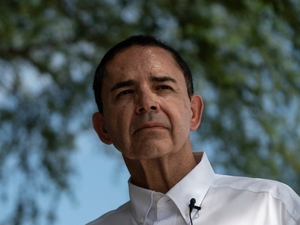
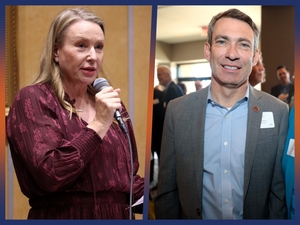
Most of the Republican gubernatorial candidates participated in the May 5 WMTW debate. From top left, Jonathan Bush, Ben Midgley, Garrett Mason, Owen McCarthy, David Jones and Robert Wessels. (Official campaign photos)
The Republican gubernatorial candidates all agreed that, if elected, they’d cut taxes, regulations on businesses and, overall, the state budget during the first statewide televised debate Tuesday night.
But, they differed on how they’d achieve those shared goals and how they believe their backgrounds would help them in doing so.
WMTW invited all candidates to participate, however Bobby Charles, an attorney from Leeds and former federal government official, declined.
Charles also won’t partake in another upcoming debate Thursday, which he said is because Robert Wessels, a small business owner from Paris, isn’t allowed to participate. Wessels didn’t meet the criteria of the networks sponsoring Thursday’s debate, CBS News 13 and the Bangor Daily News, including getting 5% support in an independent poll.
The six candidates who did participate Tuesday spent a lot of time critiquing Charles, both for his decision not to attend and for his campaign promises.
“I’m disappointed that Bobby Charles isn’t here again,” said David Jones, who owns F.O. Bailey Real Estate in Falmouth. “His absence is a pattern that we all see. Maine deserves a candidate who knows how to answer tough questions. Nothing should stop me from being here, and he definitely should be here as well.”
The likely Democratic nominee for U.S. Senate in Maine was also not spared from critique.
“As I look out to the working people of this state — the people I grew up with, they are Republicans, independents and Democrats — we know they want change and we know this because Janet Mills just lost to an outsider with a working class message,” said Owen McCarthy, a health industry entrepreneur and University of Maine trustee from Gorham.
Gov. Janet Mills dropped out of the race last week, essentially handing it to frontrunner Graham Platner, a political newcomer.
Five of the six Republicans in attendance self-identified as CEOs, with Wessels as the exception. Wessels also said he’s the only candidate who homeschools his children and that he’d push to expand school choice.
Of the majority CEO bunch, Ben Midgley, the former president of Planet Fitness, said his work creating thousands of jobs and building a company sets him apart.
Jonathan Bush, a health technology entrepreneur who is the nephew of the late President George H.W. Bush, mentioned being a former platoon leader with experience “getting rid of the weak links and relentlessly motivating the team.”
Along with Charles, Garrett Mason is the only other candidate to have worked in government. Mason served as Maine Senate majority leader during Gov. Paul LePage’s administration.
“I’m not a newly converted conservative,” Mason added, “and I’m not one who just learned to talk like one on social media.”
That distinction came up later, when the candidates were asked if they’ve ever voted for a candidate of the other major political party. Midgley has. He was previously a Democrat. Bush also said he has, though not recently. All others said no.
Here’s how else the candidates distinguished themselves:
What is a tax subsidy, mandate or state program that you’d cut in your first budget?
Wessels said he would cut $2 billion from the budget during year one, including by eliminating unfilled state positions, downsizing the Department of Education and addressing fraud. Additionally, he’d expand the homestead exemption and have the state adopt the federal provisions of no taxes on tips and overtime for certain workers. Long-term, he wants to eliminate property taxes for primary residences, like Florida.
Bush pushed back on Wessels’ plan, calling a $2 billion cut unrealistic in year one. “But, it’s certainly plausible as we grow,” Bush said.
But Bush did not point to a specific policy he’d cut. “I hate them all equally and they all need to go in equal measure,” he said. “I don’t think there’s a specific one that’s more egregious than the other. It is the fact of an overwhelmingly high tax load and an overwhelmingly suffocating regulatory load, making it impossible for regular Mainers to grow their business.”
Jones also disagreed on the exact number that could be cut in the first year of an administration, with his estimate being $1.5 billion.
“But the bottom line is, if we don’t have the House and we don’t have the Senate, we can all sit here and make all the promises in the world to everybody out there and we can’t do anything unless we have their help,” Jones said.
A Republican governor would likely face a divided Augusta, given that the wider Democratic majority in the Senate is unlikely to flip, though the Maine House of Representatives could.
Mason offered a litany of taxes he’d eliminate — the tax on streaming services Mills recently added, the tobacco tax she recently raised, the franchise tax, paint tax, mattress tax. But, most importantly, he pointed to the income tax.
McCarthy said he would cut income taxes for people making under $200,000 by 10%, as well as make it so veterans with permanent and total disability pay no property taxes.
On the other hand, Midgley sees the largest state expense that can be cut down as welfare. “You can cut taxes across the board and still not be in the ball game in terms of where you should be,” he said.
How would you keep people from moving out of Maine’s rural communities?
Midgely said he’d do so by creating more opportunity, specifically by decreasing reliance on welfare.
“I’ve been on the system, so I understand this,” he said. “We need to create a bridge for folks so they can go after opportunities, make more money, do better for themselves and their families and then get back in the workforce.”
Wessels said he’d create more business-friendly policies. “Right now one of our biggest exports is our kids,” Wessels said.
Bush would cut taxes, specifically $1 billion from the state’s income tax. “We got to get rid of these little grant games and grow our economy,” Bush said.
Jones would eliminate property taxes on primary residences, as well as raise the homestead property tax exemption.
Mason spoke about what he wouldn’t do, including incentivizing people to put solar panels on their farmland instead of growing food or allowing seed potatoes carrying pathogens that threaten Maine’s potato industry. “They’re agrarian in nature,” Mason said of counties in the north. “Their economies are very fragile.”
McCarthy, the only candidate with roots north of Augusta, said he’d propose what he called mill rebirth zones, “where we rise up like the Phoenix,” joining what he sees as the reindustrialization of America. He’d also focus on rebuilding hospitals and birthing centers.
Should the state be doing more to reduce the cost of childcare or to expand access?
The candidates agreed on not wanting the state to foot the bill for childcare. They instead spoke about building a stronger, more competitive economy to bring costs down. Many said they believe the current rules and regulations for childcare providers are too stringent. Mason and Jones specifically brought up vaccine mandates.
“Bottom line,” Jones said, “parent’s choice.”
McCarthy offered a distinct take of focusing on the private market as a solution, where local businesses can step in to provide care. “They’re motivated to do it because they’ve trained these people,” McCarthy said. “They don’t want to lose them in the workforce. We need to be a convener on that.”
Midgley also outlined specific steps he’d take, including expanding use of section 125, which allows businesses to offer employees pre-tax salary deductions for qualified expenses, and incentivizing employers to provide childcare by giving them tax write offs.
Wessels mentioned energy prices as a cost driver, as well.
While advocating for decreasing regulations on childcare providers, several candidates simultaneously brought up the issue of child welfare, which several had also focused on during a debate back in September.
“We have all this focus on people who are caring for kids, and absolutely none on people who are not taking care of kids that are wards of the state,” Mason said.
Maine’s public-facing persona
Maine’s last Republican governor, LePage, installed a sign at the border that read, “Open for business,” which Mills replaced to read, “Welcome Home.” The candidates were asked, if elected governor, what is the message you’d put on the sign at the border?
McCarthy: “Innovationland.”
Midgely: “A state that you can make home.”
Wessels:: “A state for the people.”
Bush: “Open for business,” returning to LePage’s sign choice.
Jones: “Welcome to opportunity.”
Mason: “Call me romantic, but if it’s just a street sign it’s ‘The Way Life Should Be.’” Though, he said he wouldn’t mind having “Open for business.”
Augusta, ME