Pa. Supreme Court rules in case centered on controversial gunshot surveillance system
May 26, 2026 | 3:54 am ET
Description
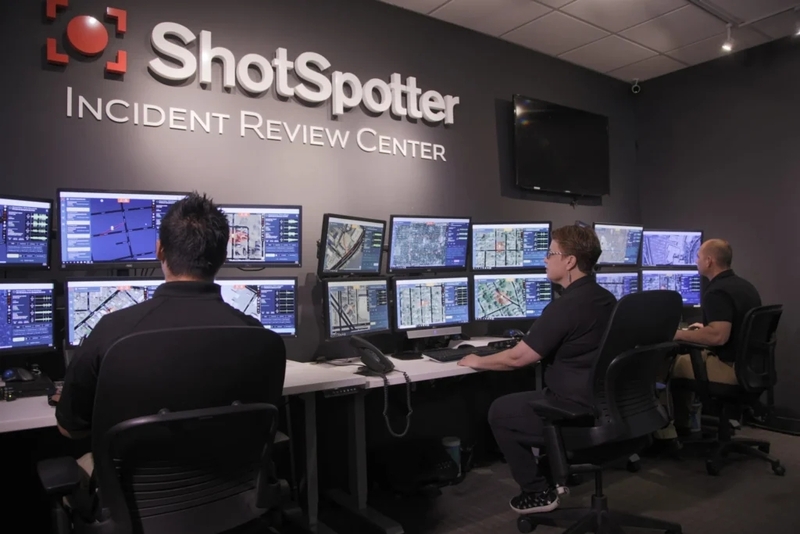
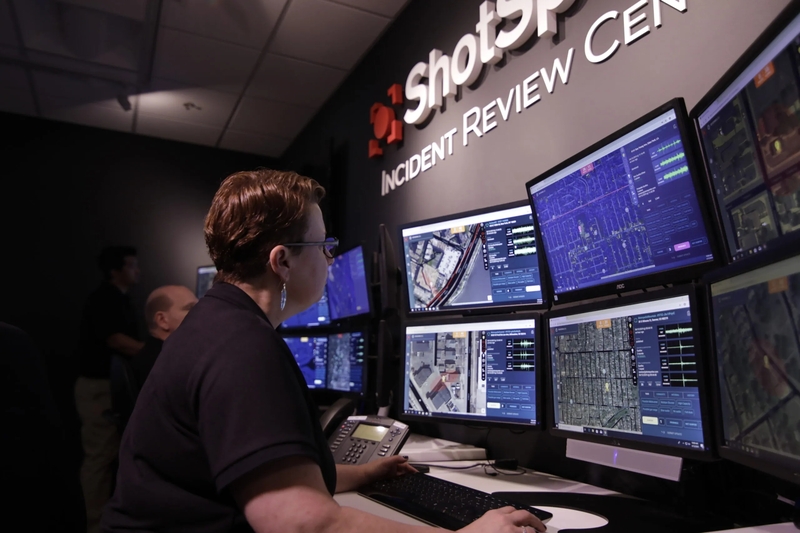
ShotSpotter is a system marketed to law enforcement and used in dozens of cities around the nation that purports to identify the sound and location of gunfire to dispatch police. (Photo courtesy of SoundThinking)
Pennsylvania’s highest court upheld a Pittsburgh man’s arrest when police were summoned by the city’s ShotSpotter system despite civil rights advocates arguing the technology has been proven unreliable.
ShotSpotter is a system marketed to law enforcement and used in dozens of cities around the nation that purports to identify the sound and location of gunfire to dispatch police.
In a sharply divided decision, the state Supreme Court found neither the system’s alerts nor the observations of police who arrested Jamar Foster were, by themselves, sufficient to justify his detention. But under the “totality of the circumstances,” the majority said officer Nathan Powers had reasonable suspicion to make an investigative detention and arrest.
“The late-night ShotSpotter alerts indicating gunfire in a residential neighborhood, the rapid police response, the sole presence of appellant and [a friend] at the scene, and the pair’s furtive and evasive behaviors upon the arrival of the police — amounted to reasonable suspicion,” Justice Kevin Dougherty wrote for the 5-2 majority, affirming the lower Superior Court’s decision.
Two justices issued separate opinions critical of the majority’s reasoning.
The court, Justice Christine Donohue noted, avoided the central question of how much weight it should give to the fact that Foster was merely close to the location where ShotSpotter told police that five gunshots were detected.
As a result, the decision “does little if anything to aid the bench and bar in resolving future cases involving ShotSpotter,” Donohue wrote.
Justice David Wecht said in a brief dissent that he disagreed with the “legal fiction” that a person’s presence in a “high crime area” is a relevant factor in determining whether police have reasonable suspicion to stop them.
California-based SoundThinking is a publicly traded security company that markets and sells ShotSpotter as a service to police. It’s a package of internet-connected microphones, software and a call center where employees listen to and assess recorded audio of suspected gunfire.
The microphones, deployed throughout a city or neighborhood, are designed to detect and record percussive sounds.The software uses an algorithm to distinguish gunfire from other sounds such as fireworks or construction noises. Call center workers then make the final decision to notify police.
The company did not respond to a request for comment by the Capital-Star. The Allegheny County District Attorney’s Office also did not respond to a call Friday.
The American Civil Liberties Union of Pennsylvania, the national ACLU and the Pennsylvania Innocence Project filed a “friend of the court brief” in Foster’s case. They argued his arrest should have been thrown out because ShotSpotter is flawed.
“The biggest problem with the technology is that it sends law enforcement into communities, often disproportionately communities of color, where people are often already susceptible to bad policing based on bad science,” Jay Stanley, a senior policy analyst with the ACLU in Washington, said.
The organizations say in their brief that investigations by the Chicago Inspector General and New York City Comptroller show a vast majority of ShotSpotter alerts are false.
In Chicago, the inspector general’s report found 91% of alerts did not result in officers finding any evidence of gun crime. New York’s audit revealed ShotSpotter alerts resulted in confirmed shootings only 8% to 20% of the time. Chicago decommissioned its system in 2024.
The ACLU of Massachusetts also studied Boston police records and found officers found no evidence of gunfire in nearly 70% of alerts. Fireworks accounted for 10% of alerts while 16% were due to other urban noises such as vehicles backfiring, balloons and garbage trucks, the organizations’ brief said.
In Massachusetts, Cambridge City Council voted last Monday to end its contracts with the company and remove its devices around the city after years of public debate over its benefits and risk, The Boston Globe reported.
The ACLU and Innocence Project argue the Superior Court relied almost entirely on the ShotSpotter reports in its determination that Powers had reasonable suspicion.
Foster’s arrest in September 2019 happened after Pittsburgh police responded to a pair of early morning alerts of gunshots. Multiple officers responded to the location given in the alert.
As he approached the address in his patrol car, Powers saw a car parked in the street with its headlights on. Foster was in the driver’s seat and a woman was in the front passenger seat, according to the Supreme Court opinion.
Powers turned on his emergency lights and dash camera and parked near the car. He saw Foster exit the vehicle and walk toward a house. At the same time, the woman in the passenger seat appeared to be moving around the car trying to grab things, “like her purse,” Powers testified during a hearing in which Foster sought to suppress evidence from the encounter.
The officer testified that as he got out of his patrol car, he ordered Foster to return to the street. When Foster did not comply, he and other officers, fearing that he was armed, drew their guns and forcibly handcuffed him.
Police charged Foster with driving under the influence of alcohol and driving with a suspended license. He unsuccessfully moved to have the evidence against him thrown out and then opted for a bench trial where he was convicted and sentenced to 60 days in jail and six months of probation. Foster’s lawyer, Domenic Pietropaolo, did not return a call for comment.
At the trial, Foster testified in his defense that he had been inside his mother’s house when he heard the gunshots and ran outside to the car where his girlfriend was waiting, at which point police arrived. Powers testified that he investigated the vehicle and found the hood hot to the touch and condensation on the inside of the windows. Combined with Foster’s position in the driver’s seat, he concluded Foster had been driving.
On appeal, Foster argued that the court gave too much weight to the ShotSpotter alerts in determining that Powers had reasonable suspicion to detain him. In addition to the likelihood that the system detected an innocuous noise similar to gunshots, he argued the system can relay inaccurate addresses. And, he noted, Powers acknowledged that someone else could have fired the shots.
Without the alerts, there would have been no police response and ShotSpotter is limited by its audio-only nature in that it provides no information about potential suspects, Foster said.
Prosecutors argued Foster wrongly claimed his arrest was based solely on his proximity to the alerts. They noted he was in a “high-crime area” at night, decided to walk away from police and his girlfriend’s “furtive” movements as she grabbed items in the car all contributed to Powers’ reasonable suspicion to arrest him.
Under the Pennsylvania Constitution and the Fourth Amendment of the U.S. Constitution, courts have held that to justify an investigative detention, police must have “specific and articulable facts … that criminality is afoot,” Dougherty wrote, quoting an earlier state Supreme Court case.
Dougherty found that Powers’ testimony about the North Side neighborhood where Foster was arrested being a high crime area was too vague to support a finding of reasonable suspicion. The opinion also notes a gun that had been fired multiple times was found at the scene, but was not connected with Foster.
“Nonetheless, the articulable facts supported by the record are sufficient to sustain a finding of reasonable suspicion at the time Officer Powers ordered [Foster] to return to the street,” Dougherty wrote.

Harrisburg, PA