‘Out Of Options’: Siting Oʻahu’s New Landfill Is A Political Nightmare
Aug 05, 2026 | 6:01 am ET
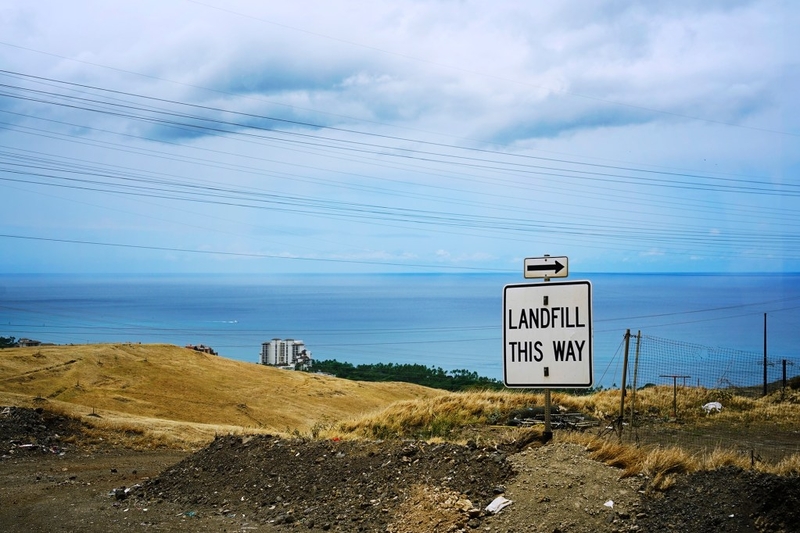
Description
Photo courtesy of Honolulu Civil Beat
Mayor Rick Blangiardi is in an impossible position.
With the island’s only municipal landfill ordered to close by 2031, he needs to find a new place to put the island’s trash. But his first three suggestions have been shouted down by communities who refuse to play host to a dump.
His latest choice — at Kapaʻa Quarry in Kailua — is getting a similar reception.
Windward residents are not keen to host a landfill, and state law prohibits him from placing a landfill there because it’s too close to the surrounding community. Blangiardi is now asking state lawmakers to help him out and repeal the law they passed in 2020 because nowhere else on the island will work.
“We need the Legislature to realize we are out of options,” he said.
Blangiardi is the latest mayor attempting to tackle what has proven to be an intractable political issue. Westside residents have hosted Oʻahu’s only municipal landfill since 1989, to their chagrin, and alternative locations have been pitched and killed for decades.

Now, some officials say it’s more realistic – or at least more politically wise – to imagine a future with no landfill at all. A fledging group established by the City Council, the End Landfills Task Force, met for the first time on Tuesday.
Exactly how it will accomplish its lofty goal has not been determined, and council member Andria Tupola, whose district includes the current landfill at Waimānalo Gulch, even suggested finding a way to expand capacity there despite previously criticizing the administration for not finding somewhere else for Oʻahu's trash.
“We have been relying on landfills as our long-term solution,” Tupola said at a City Council meeting earlier this year, “which is really a policy failure.”
A Political Pickle
Repealing the law the way Blangiardi hopes is a tall order.
The current landfill, which overlooks Nānākuli and Ko Olina, operates with a permit that has been extended several times as mayors time and again have struggled to find a new spot for the island’s trash. No community wants a landfill, and political backlash is to be expected from wherever the mayor makes his decision.
But the task has only become more daunting. In 2020, state lawmakers enacted a buffer zone prohibiting landfills from operating within half a mile of schools, hospitals and residences. They doubled down in 2025, barring landfills inland of a boundary — called the underground injection control line — intended to protect drinking water in the island’s underground aquifers.
Put simply: The first prohibition blocked Oʻahu's coast and the second blocked its interior, leaving few options.

Blangiardi said during his announcement that he realized there would be blowback to his proposal to repeal the law so he can put the landfill at Kapaʻa Quarry.
No matter where the landfill is proposed, University of Hawaiʻi Mānoa political scientist Colin Moore told Civil Beat, elected representatives of the area will push hard to block it.
“Certainly any member of the House or council that didn’t fight against it – that would be politically dangerous for them,” he said.
And no legislator outside the Leeward Side has an incentive to loosen the law, since that could make their own community a viable option for future landfills. In addition, the Leeward Side is mostly represented by Republicans, which in a Democratic supermajority state like Hawaiʻi means they lack political power to force the law’s repeal.
Instead of announcing a new landfill site at the end of 2022 as he had planned to, Blangiardi held a press conference to announce he was requesting a permit extension from the state.
“Considering what is at stake,” Blangiardi said at the time, “we believe it’s clear that asking for more time to find an equitable and practical solution is the way forward.”
By spring 2024, the frontrunner location was military land on Waipiʻo Peninsula, putting it in conflict with a popular soccer complex until the U.S. Navy scuttled that option. Blangiardi held another press conference at the end of that year, this time announcing his planned site was on pineapple land outside Wahiawā roughly 800 feet above an aquifer that supplies drinking water for part of the island.
But community members scarred by the 2021 Red Hill water crisis, when Navy jet fuel contaminated Pearl Harbor’s drinking water supply and sickened residents, loudly opposed the location. State lawmakers quickly coalesced to block it.
Blangiardi then moved to purchase land in Makaīwa Hills adjacent to the current landfill with the idea of expanding existing operations. But council member Tupola successfully removed funding for that from the budget this year, and the administration confirmed it would stop pursuing that plan.
Kapaʻa Quarry is now Blangiardi’s fourth choice location in the span of just over two years. Rather than orchestrate a press conference to formally announce the location, he surprised many people by dropping the news during a live interview on Hawaiʻi News Now’s Spotlight program.
“It’s been a landfill twice before,” he said on the program. “But on this island – not over an aquifer – that is the best place to put it.”
Kapaʻa Considered Before
It’s not the first time Kapaʻa Quarry has come up as a potential landfill location. A city landfill operated nearby between 1969 and 1997.
In a presentation to the City Council in October 2024, Department of Environmental Services Director Roger Babcock listed it as one of a handful of options, along with a piece of state-controlled land near Waimānalo Country Farms and land owned by the University of Hawaiʻi near UH West Oʻahu, among others.
Using the North Quarry and its adjacent area would require repealing the entire buffer zone from state law, while using the South Quarry and its adjacent area would require shortening it from a half-mile to a quarter-mile. Each option would also involve repealing the law’s ban on putting a landfill in conservation zones.
Kapaʻa Quarry’s history as a landfill option goes back even further than that. In 2003, when Jeremy Harris was mayor, a city committee listed it as a top four option along with three Leeward Oʻahu sites.
Nearby residents and the area’s elected officials, including then-state Rep. Cynthia Thielen and Rep. Tommy Waters – who at the time represented the Windward Side – opposed it. They worried it would contaminate adjacent Kawainui Marsh, as well as threaten the quarry’s jobs and concrete supply.
Wade Wakayama, the quarry company’s longtime president until he retired this past March, argued against the landfill’s siting by showing photos of the quarry pit flooded after heavy rain.
“Use your imagination what this would look like if this were a landfill,” he told the Honolulu Star-Bulletin in 2004.

Blangiardi addressed the quarry business, run by Honolulu Construction and Draying, or HC&D, but downplayed the impact it would have on the company’s operations during his interview on Spotlight.
“It’s not going to be cheap to build a landfill,” he said on Spotlight, “especially in Kapaʻa, in the quarry. But I think we’d actually keep HC&D’s ongoing gravel business alive too while we’re doing it.”
HC&D Senior Vice President of Operations Rick Volner Jr. said his team is still digesting the latest proposal to put a landfill in the area, which he said the mayor told them about soon before going on Spotlight. Volner said his company is a lessee on the land so does not have direct say in whether to sell it to the city.
But he said it’s hard to imagine the landfill coexisting with the quarry business in its current form.
“To be honest, we use every square inch,” he said.
He said part of the operation would be displaced, affecting their ability to produce concrete and small rocks used for construction known as aggregate, which he said would have a ripple effect on the larger industry.
Windward legislators today echo the same concerns about the Kapaʻa option voiced over 20 years ago. In interviews, they also say Kailua has done its fair share of hosting.
“If the only reason for moving it from the Westside is because they’ve already paid their dues and had their turn,” Rep. Lisa Marten said, “we have too. We had the landfill in Kailua.”
No More Landfills?
Tupola, the council member who represents the Waiʻanae Coast, has long expressed frustration with the mayor’s team for failing to live up to his promise of finding a spot outside her community for a future landfill.
In an interview on Tuesday, she said she doesn’t expect the mayor’s attempt to repeal state law and site a landfill elsewhere – including at Kapaʻa Quarry – to be realistic.
“The only reason I'm saying that is because we will continuously get put up against the wall with another community not wanting the landfill,” she said. “And I don't blame them.”
By now, she’s focusing on moving toward a future in which the island doesn’t have to host another landfill at all. At the council, Tupola introduced a resolution to start the End Landfills Task Force, and the group had its inaugural meeting on Tuesday. It plans to submit a final report of recommendations in November 2027.
Tuesday’s meeting was mostly introductory, and Tupola brought energy to an otherwise sleepy convening where most participants showed up virtually aside from her, council member Esther Kiaʻāina, and Kirk Tengan, West Oʻahu Aggregate's vice president of administration. Kiaʻāina, whose Windward district includes Kapaʻa Quarry, left after half an hour to tune in remotely and work on other projects.

Tupola said she sees the group as promoting a long term solution that doesn't rely on burying trash in the ground. Despite her previous opposition to the idea, she said in an interview after the meeting that a shorter term solution is to potentially find more capacity at the current site at Waimānalo Gulch.
She said also said it could take another couple of decades to figure out how to better divert waste streams so landfills aren’t necessary, but that the time to start seriously thinking about it is now.
“I personally feel like this is the only path forward,” she said.
Officials from the administration have said landfills will continue to be necessary for the foreseeable future, even if just to collect debris after disasters as happened following the March Kona low storms.
The city is gradually trying to reduce waste sent to the landfill. Most of its intake these days is ash from H-Power, the city’s waste-to-energy facility where trash is burned and converted to electricity. In a handful of neighborhoods, the county is piloting a new program to divert food waste from the landfill to the Hawaiian Earth Recycling composting facility in Wahiawā.
The city also is starting to again explore the idea of shipping trash off island, according to mayor’s spokesperson Scott Humber, after canceling an attempt to do that two years ago when the mayor said it would raise costs too much for residents.
Moore, the UH political scientist, said in an interview that while the political will for legislators to help find a permanent solution for the island’s rubbish might not be there yet, Oʻahu is inching towards a crisis.
“I think it's going to take a broad understanding from the community that you're about to have nowhere to put the trash,” he said. “And I think that people don't really see that yet.”
Honolulu, HI