‘It’s like the Hunger Games’: Quabbin Reservoir towns take funding fight to Beacon Hill amid extended drought
Aug 06, 2026 | 9:07 am ET
Description
Photo courtesy of CommonWealth Beacon
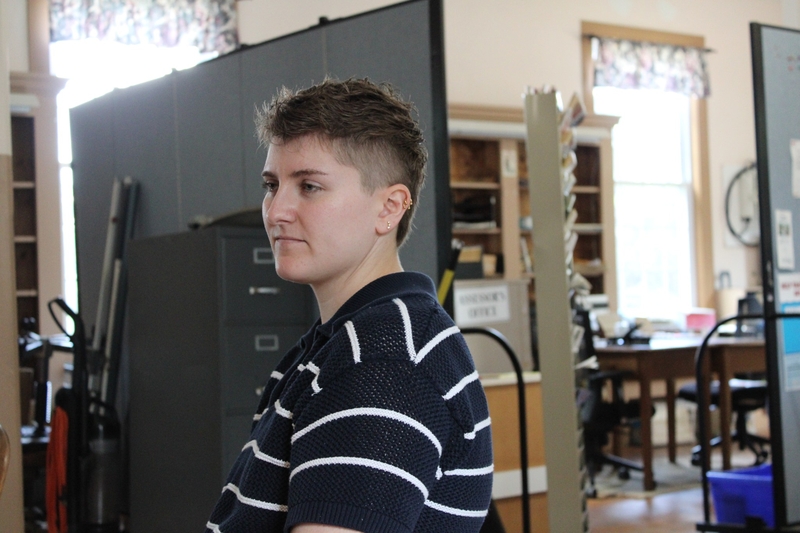
EMILY HILL works not from one town hall, but from what has become a collection of them.
Along with the rest of the small municipal staff, Hill, the town coordinator of New Salem, a 1,000-person rural town in central Massachusetts, is operating out of multiple offices. Some of them are rented from a local church.
The reason? The old well serving the original town hall building ran dry, rendering the building without water and workable restrooms.
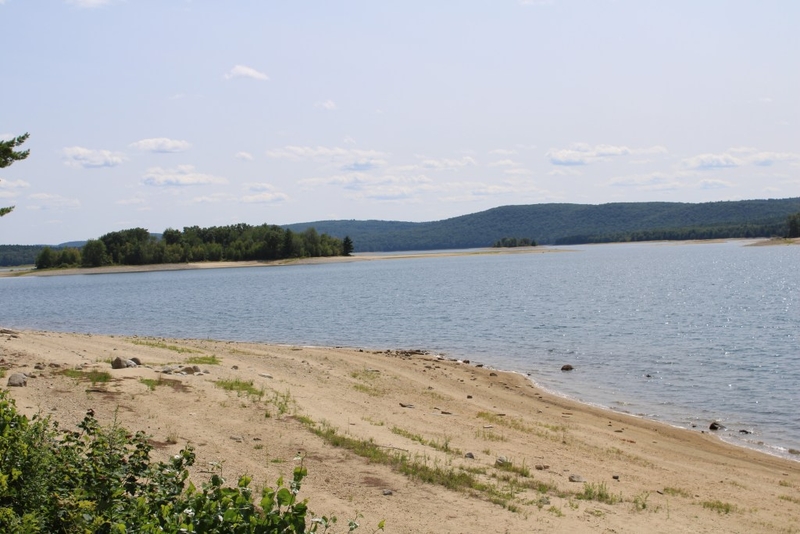
It’s all the more dissonant because a body of water spanning 39 square miles and holding 412 billion gallons of water laps against the town’s shores.
The impossible decisions that Hill is faced with follow her whichever building she happens to call her workspace that day. The town tries to stretch its meager $3.7 million annual budget as far as it’ll go, but officials recently had to let go three elementary school classroom aides in just the latest instance of penny-pinching by necessity.
New Salem is one of a handful of small towns that surround a giant reservoir of clean fresh water dug out a century ago in the middle of the nation’s worst-ever economic collapse in order to hydrate Greater Boston.
The creation of the Quabbin Reservoir, as it’s called, is nothing short of an engineering marvel. Because of it, Boston has not, and likely will not, ever go thirsty.
But, in the communities that are home to the Quabbin, there’s an undercurrent of anxiety and frustration.
“There’s so much rage,” Hill said. “We sacrifice so much. And we are not getting compensated for it.”
A perfect storm of long-held resentments, the well-known story of the financial crunch squeezing small towns across the state, and an act of blameless chance — weather — is raising the stakes and stoking new tensions between these sparse towns and the powers that be in state government.
The Quabbin communities, despite protecting the water source, don’t drink from it themselves.
That means that when water levels drop in their private wells or municipal sources due to drought, as much of the state has dealt with drier-than-normal conditions over the past two years, Quabbin-area residents can feel the impact of drought more than the 2.7 million residents to the east that drink water from the reservoir and are served by the Massachusetts Water Resources Authority.
One glaring example: Recent rainfall notwithstanding, the first half of 2026 has been so dry that it won’t be safe for youth athletes in the Quabbin town of Belchertown to play soccer and football on their home fields this fall.
At the same time, aid that the 29 towns across the watershed system receive as a form of compensation for state-owned land around the reservoir and the streams that feed it and the mandatory development bans that come with it has, for some, barely budged over the years — especially for the Quabbin’s seven “host communities.”
With older dwindling populations and stagnant growth, some of the towns have had to consolidate resources, lay off municipal staff and teachers, and resort to asking their own residents to raise their property taxes, even though they are the guardians of Boston’s water and practically hold the keys to any housing or economic growth that’s to take place in the state’s eastern half.
“It’s like the Hunger Games,” said Sen. Jo Comerford, a Democrat who represents towns around the Quabbin. “We’re starting to lose the ability to govern ourselves in this region. It’s as simple as that.”
Exacerbating the tension is the ongoing drought, which has been afflicting most of the state with below-normal precipitation levels since 2024.
Local officials around the Quabbin said they see it in reduced stream flows, drier soils, and more exposed chunks of shore at the reservoir itself.
Because these residents drink from more fragile municipal sources and private wells, many of the towns have responded with bans on outdoor water use and other nonessential purposes — another layer of tightening the belt to keep life livable in these rural enclaves.
In some Quabbin communities, in addition to others around the state, that means no watering the lawn, filling the swimming pool, or washing the car.
That’s on top of perennial issues around contamination of “forever chemicals,” which have tainted some of the region’s wells and forced these towns to spend hundreds of thousands of dollars in remediation, along with regular enhanced testing of local streams that flow into the Quabbin.
For communities so close to so much water, it’s a cruel irony.
Yet MWRA customers aren’t generally under these same restrictions.
Though customers living in a state-designed “critical” drought, like the state’s northeast region, are also supposed to stop nonessential outdoor water use, residents who are served by the MWRA and drink Quabbin water that is in some cases nearly 100 miles away aren’t at particular risk.
The reason, said Stephen Estes-Smargiassi, MWRA’s interim executive director, is simple.
The Quabbin, because of its sheer size, is hard to chip away at: It takes a lot longer for the water source to deplete in times of drought, insulating these consumers from more severe restrictions. It also, though, takes longer for the Quabbin to recover from drought, meaning the opposite could happen in the future, where communities in other parts of the state lift their drought restrictions sooner than the MWRA can based on conditions at the Quabbin.
Right now, the Quabbin is about 82 percent full, said Estes-Smargiassi. The agency is asking customers to conserve water where possible on its website.
The Quabbin is “able to capture water not over a period of a few months, but over multiple years,” he said. “So it takes a big, long drought to make the Quabbin go down. Whereas if you’ve got a small reservoir or a groundwater source, you’re likely to be affected if you’ve got three or four months of dry weather.”
That doesn’t change the optics, though, for Quabbin communities, who live near water they can’t consume and watch Greater Boston seemingly drink freely despite the drought conditions on the ground.
Now, in response to a range of apparent disparities, these communities have formed a loose coalition known as the Quabbin Stewards to coordinate in what they say is an unprecedented way to take their fight to the State House.
Their legislative demands include a permanent seat on the MWRA board and a new trust fund to pay for municipal services like infrastructure and sewer improvements and public safety needs. They are also seeking increased payments in lieu of taxes from the state, or PILOTs, that they receive as compensation for playing home to state-owned land that can’t be developed. Lawmakers are considering these reforms in the environmental bond bill currently under negotiation.
Those demands carry tradeoffs, argues the MWRA, a quasi-public state agency that provides water and sewer services for 61 municipalities, most of which are in the Boston area.
“There’s no free money,” Estes-Smargiassi said in an interview. “That would mean a pretty substantial rate increase. It’s tough all around. It’s going to come from folks in Chelsea and Everett and folks here in the East, and many of them are having a hard time paying their bills.”
The agency’s advisory board, in a 2025 letter, opposed the legislative reforms proposed by the Quabbin communities, though Estes-Smargiassi said the agency isn’t actively working against the measures in the Legislature and is merely “watching it play out.”
Local officials, though, point to deep financial inequities in the PILOT payments they receive, which are calculated by a formula set by the state Department of Revenue and paid by the MWRA.
Five of the seven Quabbin “host communities” have received the same amount in PILOT payments in each of the past five fiscal years – essentially a decrease when adjusted for inflation – laying bare a sizable difference between what these towns earn per acre through state aid and what they generate per acre through property taxes on developed non-Quabbin land.
Last fiscal year, the Quabbin town of Hardwick received about $156,000 in PILOT payments, or $32 per acre, according to state records.
That’s a slight increase to the $121,000, or $25 per acre, that Hardwick received five years ago in PILOT payments.
On the other side of the reservoir, New Salem received around $722,000 in PILOT payments — 20 percent of its budget — to compensate for roughly 90 percent of its land falling within the watershed and owned by the state.
That comes out to just $21 per acre, the exact same amount the town was receiving five years ago.
The median PILOT payment for state-owned land across Massachusetts is $127 per acre, according to a 2025 report from Auditor Diana DiZoglio.
PILOT payments alone aren’t necessarily intended to return all of the land’s value to the municipality. But Hill said that raising these payments closer to that statewide median would send a real signal about the land’s worth, doubling her town’s budget in what would amount to a “game changer.”
Already, the town hires out emergency services from nearby Orange, shares a fire department with Wendell, and many municipal employees like the treasurer, library director, and police officers are only working 19 hours per week because New Salem can’t afford to pay their health insurance, she added.
Given that her town is the one deploying scarce first responder resources to defend the water and sacrificing economic development and additional housing so that Greater Boston can grow, she wants to see the value of that land reflected in fairer state aid.
“We choose protection over profit every single day, but locking away this land means we are left with a crippled local tax base and no way to grow,” reads a joint letter sent last month to the MWRA from Hill and the New Salem select board members.
If the state doesn’t act, Hill said, expect more fights over raising property taxes on residents who already skew older and earn below the state median income.
Nearby Belchertown, another Quabbin community, approved a $2.9 million Proposition 2 ½ override last fiscal year to fund municipal and school budgets. It passed by 21 votes. An override vote in New Salem earlier this year, meanwhile, failed by 19 votes, forcing the layoffs of classroom aides in its elementary school.
Still, there are both macroeconomic issues and technicalities associated with the program at play.
The Department of Revenue sets the value of the land, which guides the PILOT payment rate and can greatly vary between communities based on real estate prices and local tax rates. And, Estes-Smargiassi of the MWRA noted, property values in rural central Massachusetts aren’t as high as other communities near Boston or along the coast.
If anything, he said, the MWRA is issuing PILOT payments at higher rates the agency otherwise might if not for a “hold harmless” clause that prohibits these payments from declining from year to year. Even if local land prices or tax rates decrease, these PILOT payments never will, though the average single-family tax bill in the Quabbin communities has generally gone up over the past decade, Department of Revenue data show.
And other PILOT programs that rely on appropriations from the Legislature are underfunded compared to the payments issued by the MWRA, which fulfill 100 percent of the value as determined by the Department of Revenue, according to a 2020 report from then-Auditor Suzanne Bump.
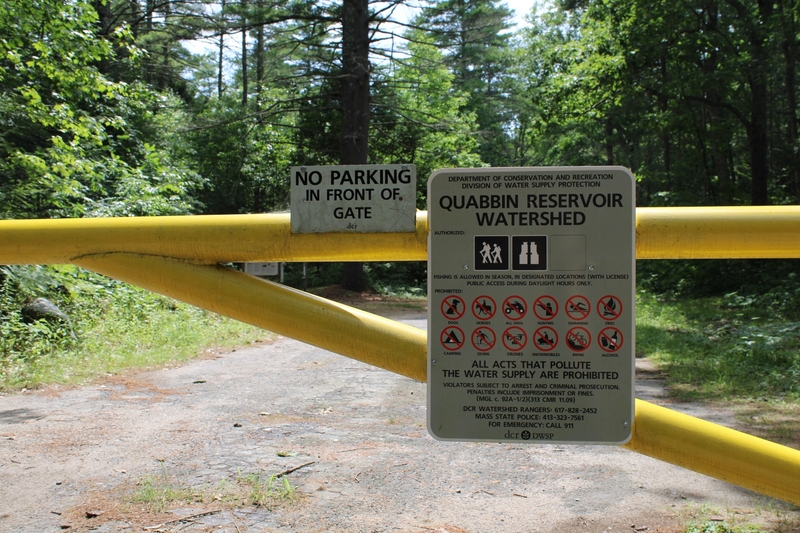
The MWRA has paid about $200 million in PILOT payments since 1985 to 29 watershed communities, which stretch across the system from the Quabbin to the Sudbury Reservoir in and around Framingham.
Those payments, though, have only increased by about $500,000 total between 2015 and 2025 and are shared across those 29 municipalities, according to state data.
“We are not asking for charity,” said Matteo Pangallo, land use clerk in Shutesbury, a Quabbin town of 1,800. “We are asking for equity.”
All of this collided at a rare MWRA board meeting at the Quabbin Visitor Center in Belchertown last month, where local officials and residents took Gov. Maura Healey’s top environmental official and the agency to task for the perceived disparities.
William Tinker, vice chair of the Hardwick select board, said at the meeting that there are real economic choices facing Quabbin towns like his. With Hardwick’s hospital and ambulance now gone and its police station in another town, the municipality was recently offered $2 million annually for a regional landfill.
Hardwick said no.
It threatened the watershed, Tinker said.
“What happens when the next offer is $5 million? Or $10 million?” Tinker told the MWRA board. “What happens when the weight of generations of neglect outweighs principle?”
Some of the frustration reaches back nearly a century to the creation of the Quabbin in the 1930s as a water source for Boston, which literally flooded the region and forced four towns off the map.
That’s not something easily forgotten here: The menu at the deli at the New Salem General Store, for instance, names different sandwiches after each of those four towns of Enfield, Prescott, Greenwich, and Dana.
Farms, businesses, schools, homes, and properties were lost in the flood and taken through eminent domain; a crucial rail link connecting the Quabbin region was destroyed. Family cemeteries and burial points were moved, too.
The history, like everything, is complicated. The project provided decent work during the Great Depression, when the towns were already declining, falling behind the nearby Connecticut River Valley. And there became some acceptance as the Quabbin inched closer to reality that this was a necessary sacrifice for the greater good.
Still, “these were ordinary people living ordinary lives, whose familial and historical connections were all severed,” Elisabeth Rosenberg, author of “Before the Flood: Destruction, Community, and Survival in the Drowned Towns of the Quabbin,” said in an interview. “A lot of them did not have a lot of material things. What they had was land and community, and those were the two things that were taken away from them.”
It’s against that backdrop that a new cry for help and a battle in the Legislature for money and relevance is being waged.
And similar power imbalances persist in the current legislative fight, said Lexi Dewey, former head of the Water Supply Citizens Advisory Committee. The legislators representing the Quabbin towns are outnumbered by those representing the more populous Eastern Massachusetts. Much of that region is served water by the MWRA.
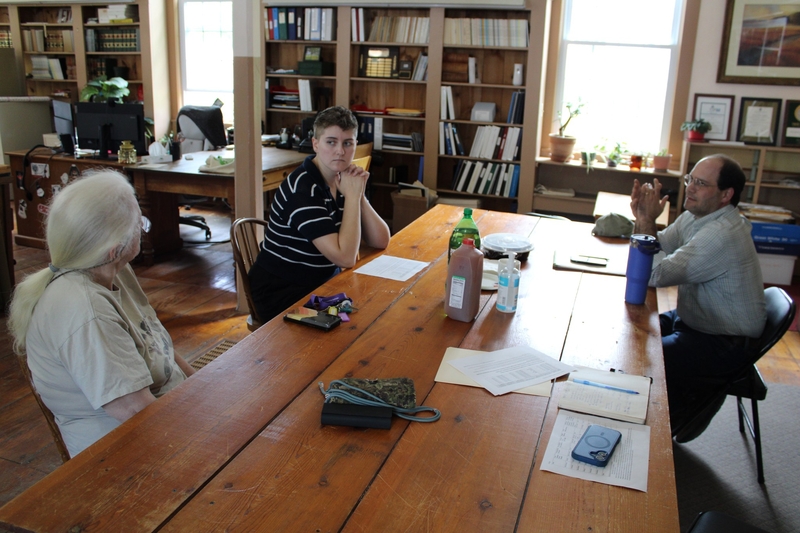
Healey, meanwhile, is looking for a wider fix to the PILOT system, launching a special commission last year to probe “whether the allocation of PILOT funding is fair.” The commission has been meeting since May under the leadership of Healey’s budget chief Matthew Gorzkowicz and held four public listening sessions in July.
It’s not clear when final recommendations will be issued, and any substantive changes would likely require legislation. But there seems to be some recognition that adjustments are in order.
The current system, said Doug Howgate, president of the Massachusetts Taxpayer Foundation and a member of Healey’s special commission, is overdue for a review to ensure it “passes the commonsense test.”
“Especially in the case of the Quabbin, this is land that we don’t want to be developed,” he said. “It leads to a different set of policy choices for how you want it to work.”
For the Quabbin communities making an aggressive push on Beacon Hill, it comes down to what is land worth — and how much of that should fall on water customers in and around Boston.
“The long story short of it is that we are running out of money,” said Hill, the New Salem town coordinator. “We have nowhere else to turn.”
Boston