North Carolina challenges public school students to read 10 million books in 2027
Nov 10, 2026 | 4:07 pm ET
Description
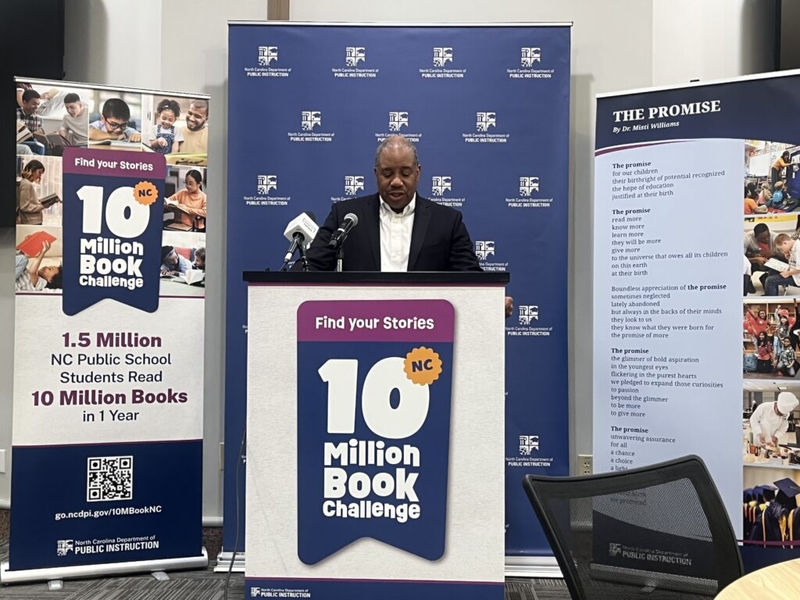
State Superintendent Mo Green speaks to the media about the 10 Million Book Challenge initiative, Nov. 10, 2026. ( Photo: Ahmed Jallow/NC Newsline)
Can North Carolina public school students read 10 million books in one year? State Superintendent Maurice “Mo” Green thinks they can.
Green announced the 10 Million Book Challenge on Tuesday, asking the state’s 1.5 million public school students to collectively read 10 million books in 2027. The campaign is intended to encourage children to read for fun, at a time when fewer are choosing to pick up a book outside school.
“Learning to read and loving to read are not the same thing,” Green said. “We are teaching more children how to read. Now we want to be sure that they learn to love to read.”
The challenge begins Jan. 1. Students can log the books they read through an online platform, with each book counting toward the statewide goal. Picture books, graphic novels, audiobooks and books read aloud by parents or teachers will all count.
Participation is voluntary and students will not be tested on what they read.
Green said the challenge is meant to complement the state’s efforts to improve reading instruction.
Reading proficiency among students in grades three through eight rose to 55.7% in 2025-26, up from 50.1% two years earlier, Green noted.
Third-grade reading proficiency also increased, from 48.6% in 2023-24 to 55.3% last school year. Still, about 45% of third graders were not yet reading on grade, he said.
“We’re not declaring victory,” Green said. “We know that there is more work to be done, and we will do it.”
The book challenge is focused on getting children to read outside the classroom. Green cited national figures showing that the share of 9-year-olds who read for fun almost every day fell from 53% in 2012 to 37% in 2025. Among 13-year-olds, the share dropped from 27% to 14% over the same period.
The idea comes from a similar reading challenge Green led when he was superintendent of Guilford County Schools. The district initially set a goal of having students read 1 million books in a year. They read 1.1 million, Green said. The following year, the district raised the goal to 2 million. Students read 2.6 million.
Green said he believes students statewide can meet the 10 million target.
“I have amazing confidence in our students,” he said.
More than 170 public school units, including traditional school districts and charter schools, have signed on to help coordinate the challenge, according to Green. Businesses, nonprofits and community organizations are also supporting the effort.
The State Employees Credit Union and the Bojangles Foundation are serving as the campaign’s main sponsors. Other sponsors include First Citizens Bank, Book Harvest, Healthy Blue and Benchmark Education.
Green said sponsors have provided six-figure financial contributions, along with other support. The money will help pay for promotional materials and advertising, including billboards and social media campaigns.
The Department of Public Instruction has also built an online platform where students, families and educators can log books. The system will use automated checks to flag unusually high submissions, followed by reviews from school-level coordinators.
Molly McGowan Gorsuch, DPI’s strategic partnerships manager and a project lead for the challenge, said schools will have a month to review and verify their numbers before they are publicly released.
NC students show gains in testing, graduation rate reaches record high
DPI also plans to hold celebrations as students reach reading milestones, including 1 million, 2 million, 5 million and 10 million books.
School and public libraries will play a role in the effort, too. North Carolina has 90 public library systems and more than 400 library locations where students can find print books, e-books and audiobooks.
Ginger Young, founder and CEO of Durham-based Book Harvest, said giving children the freedom to choose what they read can help them develop an interest in books.
Book Harvest has distributed 3.4 million books to North Carolina children and families since 2011, she said.
“When kids get to choose what they read, and when they have someone cheering them on, they keep going,” Young said.
The statewide launch celebration is scheduled for Jan. 7.
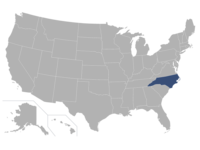
Raleigh, NC