Official: Moving Arkansas Medicaid expansion enrollees to new program would take more than 6 months
Nov 10, 2026 | 6:28 pm ET
Description
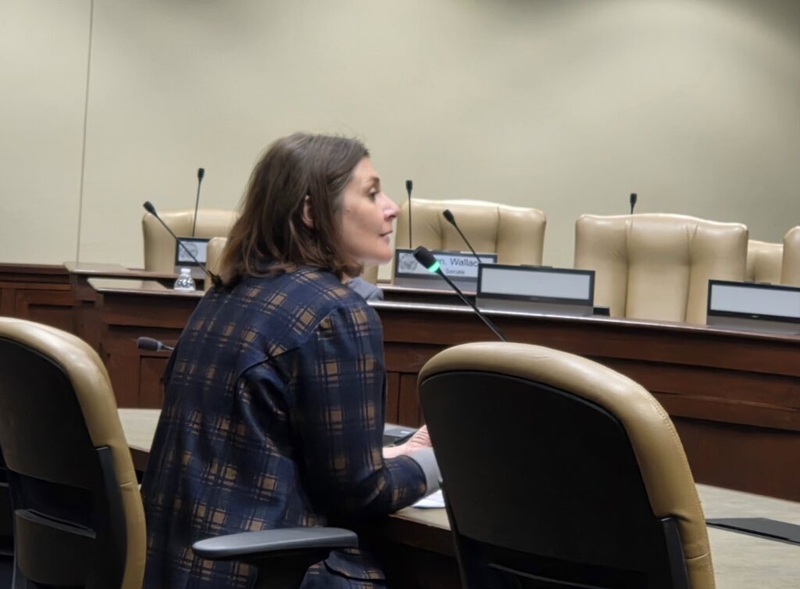
Elizabeth Pitman, Director of the Division of Medical Services for Arkansas Medicaid, addresses the Human Services subcommittee of the House and Senate Public Health committees on Tuesday, Nov. 10, 2026. (Photo by Tess Vrbin/Arkansas Advocate)
Transferring the nearly 209,000 low-income Arkansans on expanded Medicaid to a new health insurance program would take longer than the six months allowed under a temporary extension granted by the Trump administration, the state official overseeing the programs told lawmakers Tuesday.
The state asked the U.S. Centers for Medicare and Medicaid Services for a two-year reprieve in August after the agency verbally denied a five-year extension of the expansion program known as Arkansas Health and Opportunity for Me, or ARHOME.
The Trump administration notified Human Services Secretary Janet Mann last week that the program will remain in effect until June 30, 2027.
The Department of Human Services wanted a two-year grace period because it would take that long to move the entire Medicaid expansion population to a managed-care program if need be, state Division of Medical Services Director Elizabeth Pitman told the Human Services subcommittee of the House and Senate Public Health committees.
Instituting fee-for-service Medicaid instead would take 12 to 18 months, Pitman said. She reiterated Mann’s past statement that nixing Medicaid expansion completely is not an option.
Arkansas officials confident people on Medicaid expansion will retain health coverage
Republican Rep. Aaron Pilkington, the subcommittee’s House chair, said formulating a new expansion model will be a high priority in the legislative session that begins in January.
Pilkington asked Pitman how many more staff the Department of Human Services would need to hire to conduct fee-for-service Medicaid. Pitman said she was unsure of the need for additional staff but knew the agency would have a higher volume of paperwork to process, such as prior authorizations.
“It’s not necessarily adding new processes,” Pitman said. “It’s just a matter of scaling those up.”
Last year’s federal tax and spending cut legislation known as the One Big Beautiful Bill Act requires special Medicaid programs, such as Arkansas’ hybrid expansion, not to cost the federal government more than would be projected without them.
Arkansas’ program uses Medicaid money to purchase private insurance for low-income residents. The first-in-the-nation model was approved in 2013 as an alternative to expanding Medicaid under the Affordable Care Act.
The One Big Beautiful Bill Act allows the state to increase its Medicaid reimbursement to the same rate as Medicare. Doing this for a fee-for-service model that covers all 208,837 Arkansans in the current expansion program would save the state between $22 million and $35 million, Pitman said. The same for a managed care model would save the state between $61 and $70 million. Pitman did not give an expected time frame for the projected savings.
Private insurer Centene announced its upcoming withdrawal from the program in July. The company’s three Medicaid expansion plans cover about 70,000 Arkansans, Pitman said, and open enrollment began last week for enrollees to get new coverage starting Jan. 1.
If Centene enrollees do not choose their own Blue Cross Blue Shield insurance plans by Sunday, the Department of Human Services will choose for them, Pitman said.
The One Big Beautiful Bill Act put in place work requirements for Medicaid expansion recipients that Arkansas will start enforcing Jan. 1. Negotiations over the future of Medicaid expansion will not impact the work requirements, which apply to able-bodied Arkansans between the ages of 19 and 64, the agency said last week.
The Department of Human Services has been preemptively working to determine Medicaid enrollees’ continued eligibility before the work requirements go into effect. If the agency does not have enough information to make a determination, Pitman said, it will enlist the help of a customer service center that’s in the process of launching after lawmakers approved a three-year, $48 million contract last month.
Starting Jan. 1, the customer service center will reach out to Medicaid enrollees via phone, email or any other means of communication to get any outstanding eligibility information, Pitman said.
Little Rock