Nonprofits Face New Political Realities, Threats To Homeless Housing Programs
Jul 27, 2026 | 6:01 am ET
Description
Photo courtesy of Honolulu Civil Beat
Hawaiʻi Health & Harm Reduction Center, which runs public health and homeless housing programs on Oʻahu, was in a tough spot.
As part of an annual competition for federal funds to combat homelessness, the nonprofit was applying to renew its grant for its Guide on the Side outreach program, which focuses on at-risk and homeless LGBTQ youth.
But the new funding guidelines from the Department Housing and Urban Development, or HUD, which awards the grants, now specifically reference a January 2025 executive order issued by President Donald Trump that targeted diversity, equity and inclusion programs for elimination.
So Hawaiʻi Health & Harm Reduction Center made adjustments, defining Guide on the Side more broadly for the application’s sake.
“Definitely we've had to change language and the ways we answer the questions,” said Heather Lusk, the nonprofit’s executive director.
“We were funded for LGBTQ homeless youth outreach,” Lusk said. “Now we're applying for general youth outreach, but knowing that in practice, any young person could access our services, always could and always will.”
Hawaiʻi’s homeless services nonprofits are pivoting and pivoting again in the search for funding as the federal government turns away from long-favored approaches to reduce homelessness, and changes the guidelines for what programs will win grants in the annual HUD competition.
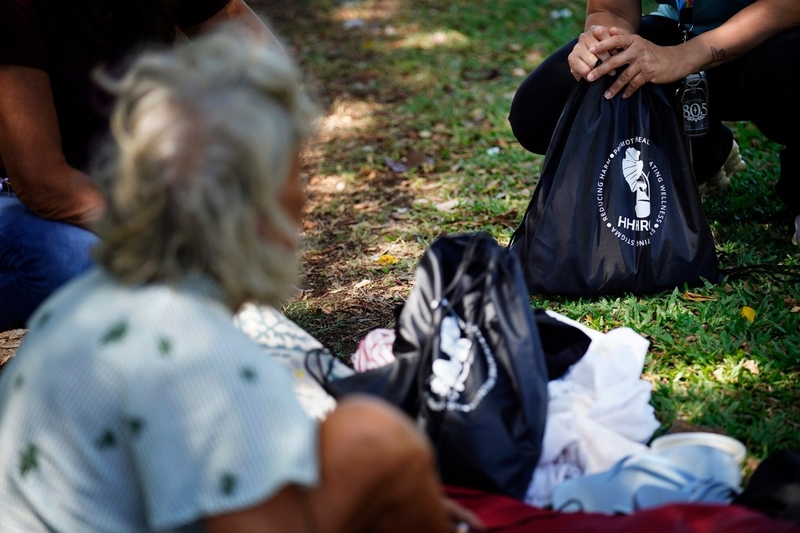
Some, like Hawaiʻi Health & Harm Reduction, tweaked the language in their applications. Others fashioned new proposals. All are bracing for the unknown, fearing that many hundreds of Hawaiʻi residents could be thrown back into homelessness.
“It's truly demoralizing and exhausting,” said Laura Thielen, executive director of the Oʻahu nonprofit Partners in Care, a coalition of social service providers, government officials and community members. Her group coordinates data collection and analysis among different homeless service providers and helps manage the HUD grant application process.
Every year, HUD makes available just over $4 billion nationwide for programs to address homelessness. About $18 million came into Oʻahu through the competition last year, Thielen said.
The programs that win grants are identified through regional organizations called Continuums of Care, which are mandated in jurisdictions that get HUD funds related to homelessness.
On Oʻahu, that organization is Partners in Care, which evaluates and ranks the applications then submits them to HUD, which makes the final decisions, by Dec. 1.
The Hawaiʻi Health & Harm Reduction Center’s application is one of about 40 Thielen said the organization is now reviewing.
Housing First Uncertainty
The grant competition process has been tumultuous this year for a variety of reasons.
The Trump administration is pulling back from funding permanent housing programs HUD has supported for more than 15 years. And faced with repeated court challenges to its new policies, HUD has issued three different sets of funding guidelines since November.
“We feel like we're just being jerked back and forth,” said Connie Mitchell, executive director of the Institute for Human Services, Hawaiʻi’s largest homelessness services provider.
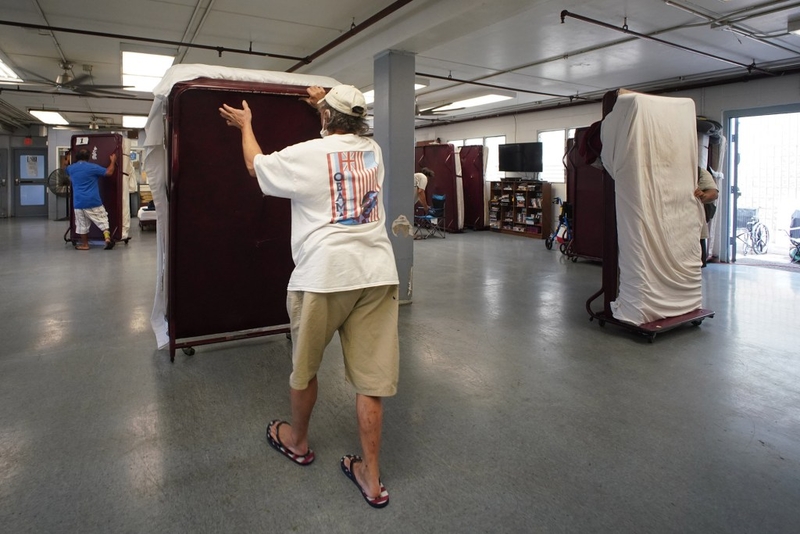
For nonprofits such as the Institute for Human Services that offer permanent supportive housing through the Housing First model, the prospects are mired in uncertainty.
The Housing First approach is to place people in what’s known as permanent supportive housing without requiring they be drug free or in treatment for addiction or behavioral health issues, then offer them those and other support services once they are there. Once housed, advocates say, people can better tackle their challenges.
But after prioritizing that model for more than 15 years, HUD, under the Trump administration, has declared it a failure, saying it fosters dependence over self sufficiency. It has redirected $1.3 billion away from Housing First projects toward transitional housing and programs that provide supportive services to treat addiction and mental illness.
Mitchell said she fears the Institute for Human Services — with about 130 people in permanent supportive housing programs — will lose more than a third of its $1.8 million housing grant due to the new rules.
“It'll be very, very damaging to our homeless service system, I think,” she said.
Her grant writing team tried to tailor their applications toward HUD’s new guidelines, but it was no easy task, she said.
“We highlight the aspects of what we're doing that meet those particular priorities of theirs,” Mitchell said, “but if it's already a permanent housing program, it's kind of hard to say that this is transitional housing.”
No Going Backward
Also under threat is a $6.3 million continuum of care grant that Aloha United Way has used to support permanent supportive housing programs run by Institute for Human Services and four other Oʻahu nonprofits.
“We've seen a lot of great success,” Michelle Bartell, CEO of Aloha United Way, said of the Housing First approach. “It is much easier to help them address some of their other needs when they are in stable housing.”
About 470 people are housed through programs funded by the grant.
Not knowing their future “introduces an awful lot of uncertainty, which is incredibly difficult,” Bartell said. “And you can imagine it's incredibly difficult for the (program) participants themselves.”
One key concern is that under its rules, HUD historically has not paid for people to go “backward” in services, she said. So if permanent supportive housing programs lose funding, displacing tenants that programs can no longer support with rent subsidies and services, HUD wouldn’t pay for them to go back to transitional housing.
“The fear is those folks are going to lose their ability to be supported, period,” Bartell said.
The latest guidelines do offer a glimmer of hope, saying people in permanent housing may be eligible for transitional programs, but how that will work in practice is unknown.
Depending on how much less funding local programs get under the new rules, as many as 733 people could lose their spots in permanent supportive housing programs, according to a Partners In Care estimate.
Mitchell said she has been speaking with Honolulu officials about forming a task force “to think about how we could mitigate the impact of the loss of so much housing.”
Honolulu “is closely monitoring” the funding process, Aedward Los Banos, deputy director for the city’s Department of Community Services, said in a statement, and “remains in communication with community partners that may be affected by shifts in program priorities at the federal level that could impact existing programs.”
Amid The Chaos, New Opportunities
The new guidelines may also lead to new possibilities, some nonprofit leaders say.
For example, in outlining new rules for supportive services programs, the HUD guidelines define childcare as a barrier to exiting homelessness because without it, it is harder to achieve economic self-sufficiency.
So Family Promise of Hawaiʻi, which provides emergency shelter, housing and services to homeless families, applied for a grant to start a childcare center.
The nonprofit is also proposing a new housing navigators team to work with school complexes to identify families struggling with homelessness and provide them with housing referrals and other resources.
Both ideas had been percolating for some time, said Family Promise executive director Ryan Catalani, and the new HUD rules made it more likely the idea would be fundable.
“We thought that because there was this opportunity and we've been thinking about these ideas for a while,” he said, “we might as well put pen to paper.”
Honolulu, HI