NJ judge who threatened to deport truant students should be removed, panel says
Jun 15, 2026 | 6:07 pm ET
Description
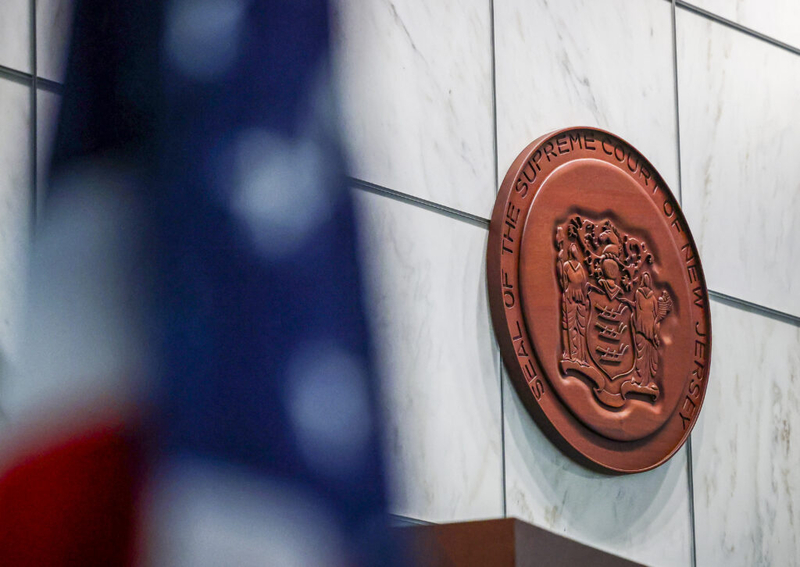
The New Jersey Supreme Court will review a judicial ethics panel’s recommendation that a judge be removed from the bench for his threats to deport truant children. (Photo by Dana DiFilippo/New Jersey Monitor)
A judicial ethics panel has recommended the removal of a New Jersey municipal court judge who threatened truant students with deportation.
In a split opinion, a majority of the state Advisory Committee on Judicial Conduct agreed that Britt J. Simon should be booted from the bench for bullying three students from Bound Brook and their parents “to harass and intimidate them into compliance.”
The panel also objected to Simon blaming a lack of training for his outbursts at the teens and their parents in separate hearings in August 2024 and January 2025, according to a presentment penned by the committee’s chair, Carmen Messano.
“Respondent’s misconduct, in the aggregate, betrays not only a lack of sound judgment and self-control, but the appearance of an ethnic and socioeconomic bias against individuals routinely served by the municipal courts in which he sits,” Messano wrote. “Respondent’s repeated refusal to accept responsibility for this conduct when appearing before the Committee and attempts to deflect responsibility for his actions onto others, compounds the harm.”
NJ judge blames frustration for threats to deport truant teens
Seven members of the panel joined Messano’s recommendation. Three others agreed Simon’s conduct was intolerable but disagreed on discipline, noting his short tenure as a judge and previously clean judicial record. (Britt started as a municipal judge in Bridgewater, Somerville, and Raritan in January 2023 and added Bound Brook in January 2024.)
Members Hector R. Velazquez and Ricardo Solano Jr. wrote that Britt, who was suspended without pay from the bench in February 2025, already had been punished enough. They recommended he be required to attend training on implicit bias, prejudice, and harassment, at his own expense, before returning to court. Another panel member, Robert T. Zane, agreed Simon’s suspension was appropriate and suggested a statement of public censure too.
Thomas Scrivo, Simon’s attorney, declined to comment, directing the New Jersey Monitor to a post-hearing brief he filed in April asking for Simon to remain on the bench with additional training or supervision.
The panel took testimony over two days in January and March before issuing its recommendations last week. Court officials released them Monday.
At those hearings, the panel’s members heard recordings of Simon berating a boy from El Salvador as “a beggar, piece of garbage” and telling him he would report him to state child protective workers, who he said would alert ICE agents to take his mother.
“Your mother’s going to get deported. You are going to end your mother’s life,” he told the boy. “You’re spitting in the face of this country. Would you like me to spit in your face? Somebody’s giving you something and you’re spitting on it. You are disgusting.”
A week after President Donald Trump’s inauguration, he warned a 14-year-old boy from El Salvador: “Hey, there’s a new sheriff in town.”
“You’re illegal, you’re getting deported. You know a great place to find people to deport is? The courts. You’re bringing your mother in here because of your bad behavior. You’re not a U.S. citizen, either. You think I’m kidding? The ICE officials wait outside the door for people like you,” Simon said.
He told a girl he’d have her placed in a group home and ICE agents would come for her mother.
“You better not sleep. Don’t close your eyes. I’m not kidding you. You’ll have everything you own stolen. You will be beaten. Is that the kind of life you want? You want to go to a Newark group home? Why are you not going to school? Answer me. Answer,” he demanded.
Such “unconscionable” tirades sully the court’s dignity and harm its integrity, suggest bias and a lack of impartiality, and represent an abuse of authority, Messano wrote.
They also flout both the judicial code of ethics and Supreme Court directives, he added.
The state’s top court allows judges to collect immigration-related data only if it’s “needed to fulfill a legitimate court purpose.” They can inform defendants of possible immigration consequences only during three stages of the court process: during the judge’s opening statement for each court session, at a defendant’s first appearance, and as part of a guilty plea colloquy.
Simon’s immigration-related inquiries served no legitimate purpose, Messano wrote. And truant students are not defendants, he added. Truancy is a civil disorderly persons offense in New Jersey that’s charged to the parent or guardian.
“Respondent inquired of the defendants’ immigration status, not for altruistic purposes, but to wield their vulnerability as undocumented immigrants as a bludgeon against their students,” Messano wrote. “In so doing, Respondent misused the weight of his office, issued false threats, misstated the law, and invoked executive branch powers unavailable to those within the judicial branch.”
The state Supreme Court will review the committee’s recommendations and decide discipline.

Trenton, NJ