New UI clinic pilots exercise treatments to improve health of cancer patients, survivors
Oct 16, 2026 | 5:30 pm ET

Description
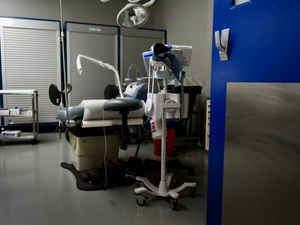
A new University of Iowa exercise oncology clinic is working with cancer patients and survivors to help with their symptoms and health. (Stock photo via Getty Images)
When Casey Westlake had her first mammogram around a year ago, she was told everyone gets called back in. So when she was asked to stop by for another round of imaging, she knew not to panic. After that, however, Westlake got called in for a biopsy.
“I opened the biopsy results Sunday night, I think it was the Sunday before Thanksgiving, and I really thought there’s no way this is cancer, it’s not happening, and it was cancer,” Westlake said.
Westlake was diagnosed with stage 1B breast cancer, which she said was an early stage of the cancer. What followed was a winter with two surgeries, a spring filled with four rounds of chemotherapy and four weeks of radiation in the summer. She rang the bell to signal the end of her active cancer treatment on July 7 — just one day before her 41st birthday.
A new exercise oncology research clinic at the UI is helping Westlake and others dealing with cancer and its aftermath build back strength and trust in their bodies through exercise training.
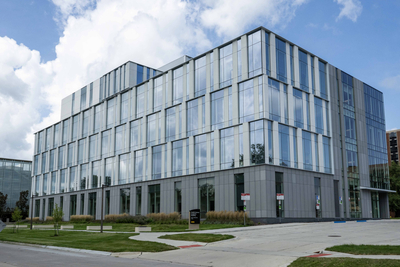
The new clinic, housed in the UI’s new Health Sciences Academic Building near the Holden Comprehensive Cancer Center, is funded with $642,896 over three years through the university’s public-private partnership initiative. Jessica Gorzelitz, director and founder of the exercise oncology clinic, said she hopes the exercise treatment she’s researched and implemented here will eventually become part of cancer patients’ standard care.
Gorzelitz has been exploring the relationship between exercise and cancer since her own days as a college student, she said, and her lab and work at the UI focuses on how exercise can help improve cancer patient and survivor health and wellness.
“Across the United States, there are over 60 NCI-designated comprehensive cancer centers,” Gorzelitz said. “I can count on one hand the number of those cancer centers that even address physical activity, much less exercise oncology, so I think one component would be considering how we can set ourselves up as leading the field as a comprehensive cancer center.”
Iowa has become “infamous” for its number-two ranking in increasing cancer incidence rates, Gorzelitz said, but more and more people are also surviving cancer due to better treatments. It’s important to address the health outcomes of cancer survivors as well as those still going through treatments, she said.
Evidence from behavioral clinical trials she’s conducted shows that patients who exercise see differences in their symptoms, treatment outcomes and mortality risk, but Gorzelitz said the frustrating part is the difficulty in changing people’s behavior.
“There shouldn’t be this finger wagging of what people should be doing,” Gorzelitz said. “The question I have is how do we hit the easy button and build this into the clinical pathway so it’s part of cancer treatment, so that patients are seeing their oncologist, their radiologist, and then they have exercise oncology to support them on their journey as well.”
The clinic operates as a research trial, Gorzelitz said, with its main questions focusing on implementation — and measuring success — of exercise oncology treatments with cancer patients and survivors. The 30 women involved in the first pilot trial, including Westlake, had diagnoses of breast or gynecological cancers.
With the first pilot over the halfway mark and already seeing successes with participants, Gorzelitz said she and clinic staff are getting ready to open the doors to patients across Iowa with different types of cancer through remote consultations and training.
“Through this pilot, we’ve been able to identify inefficiencies and ways that we can do things better or clearer,” Gorzelitz said. “We’re also finding the importance of raising awareness both within our cancer center and educating the providers about this free, evidence-based service, then also thinking about strategies for outreach to rural areas and getting patients who might not live in Iowa City aware that this is available to them.”
As exercise is “inherently dangerous,” Gorzelitz said the clinic must go beyond the general aerobic and resistance exercise guidelines for exercise among cancer patients and figure out what would be safest for each patient in terms of exercise frequency, timing, progression and other areas.
What treatments patients are going through also must be considered, as they can cause fatigue or tingling in the hands and feet, and patients’ physicians sometimes need to be consulted for medical clearance and guidance.
Westlake said the different cancer treatments she went through left her feeling weak and fatigued, with medications she’ll need to be on for the foreseeable future also causing lower back and joint pain. Now, halfway through the exercise oncology pilot, she’s completing leg presses with the equivalent of her own body weight and can pick up her 7-year-old daughter, acts that she calls “empowering.”
“It’s been really amazing to do this because I know it’s a proactive way for me to prevent my cancer from recurring,” Westlake said. “It’s also been a really powerful experience in learning to trust my body again and rebuilding my strength after going through all this treatment.”
As the pilot reaches the latter half of its programming, Gorzelitz said participants have worried about what happens when the trial ends, and she has a goal of giving patients post-program resources or training that they can use in their own gym or home.
Both Westlake and Gorzelitz shared their dreams for where the clinic could lead, with the director wanting to find a way to keep the clinic sustainable and cost-free for its patients. She said she hopes Medicare, Medicaid and maybe even private insurers “see the value of these services” and cover them, and that the clinic is “institutionalized” to continue to receive UI support.
“In my dream world, every Iowan with cancer would eventually have access to this kind of care,” Westlake said.

Des Moines, IA