New SNAP work requirements start March 1, thousands of Nevadans to lose benefits
Feb 19, 2026 | 7:40 am ET
Description
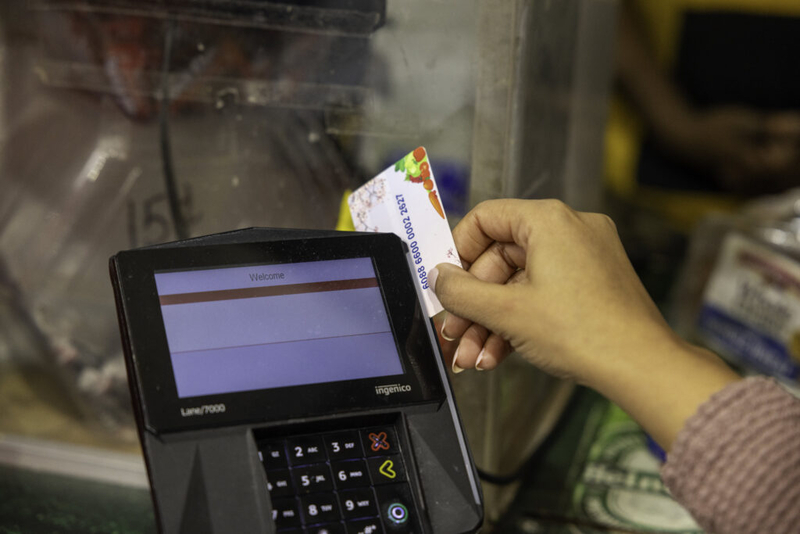
The new work requirements will likely fundamentally alter the landscape of food assistance in Nevada, which has been exempt from SNAP work requirements since 2008 due to the state’s higher-than-average unemployment rate. (Photo by U.S. Department of Agriculture)
Thousands of Nevadans who cannot prove they are working at least 20 hours a week could lose their monthly food assistance by the end of the month under new federal rules.
In Nevada, about 44,700 residents who get help buying food through the Supplemental Nutrition Assistance Program (SNAP) will be at risk of losing their benefits once measures in the One Big Beautiful Bill Act go into effect March 1.
Under the bill’s new work requirements, SNAP recipients must prove they work at least 20 hours per week or are participating in approved education, job training, or community volunteer programs. That includes the SNAP Employment and Training or workfare program.
Veterans, homeless Nevadans, adults aged 55 to 64, and former foster kids who were previously exempt from work requirements will no longer qualify for SNAP assistance without meeting minimum work requirements.
Most people deemed “able-bodied adults” will also no longer qualify for work exemptions, including those heading households with children aged 14 and older.
A spokesperson with the Nevada Division of Social Services, which administers the SNAP program, said they are “coordinating with community partners to help impacted individuals identify volunteer opportunities and access benefits.”
Adults in Nevada who don’t meet the work requirements by the start of next month will only be eligible for three months of SNAP benefits within a three-year period.
Under the One Big Beautiful Bill Act, noncitizens who are lawfully present in the U.S. will also be barred from receiving SNAP benefits. In Nevada, about 2,500 lawfully present immigrants are expected to be affected by the eligibility changes, according to the Nevada Division of Social Services.
Some work exceptions did survive the One Big Beautiful Bill Act. Native Americans are exempt from SNAP time limits if they meet the definition of an “Indian,” “Urban Indian,” or “California Indian” as outlined in the Indian Health Care Improvement Act (IHCIA).
The new work requirements will likely fundamentally alter the landscape of food assistance in Nevada. Nevada has been exempt from SNAP work requirements since 2008, due to the state’s higher-than-average unemployment rate.
Before the One Big Beautiful Bill Act was signed into law, state and county governments could request to waive work requirements if they had persistently high unemployment rates.
However, under the new rules waivers will only be granted to jurisdictions with annual unemployment rates above 10%.
High unemployment remains an issue in Nevada, although not as high as during the pandemic when unemployment rates reached 30%. Nevada currently has the third highest unemployment rate in the U.S., tied with Oregon and New Jersey at 5.2%.
“Nevada consistently having one of the highest unemployment rates in the country necessitated the need for the work requirement waiver. So this is a big change for working families that have real struggles,” said Shane Piccinini, the government relations director for the Food Bank of Northern Nevada.
Advocates say most people who use SNAP already work, though they can struggle to maintain the minimum work requirements, keep up with the paperwork to prove they have a job, or are exempt from work requirements through disability or other medical needs.
From October to December last year, about 450,000 Nevada residents were enrolled in SNAP — about 14% of the state’s population.
Food banks across Nevada are anticipating a new surge in demand once thousands are removed from SNAP starting next month, said Piccinini.
An analysis by the Food Bank of Northern Nevada found that every county in Nevada will see significant changes in people’s ability to maintain benefits under new work requirements.
In Reno, roughly 2,200 SNAP recipients would be impacted by the new work requirements, according to the Food Bank of Northern Nevada.
Smaller communities will also likely feel the brunt of lost dollars, said Piccinini. In Elko, as many as 168 Nevadans could be at risk of losing benefits under new work requirements. In Fallon, roughly 167 Nevadans could lose benefits if they can’t maintain work requirements.
“It’s a significant impact on the economic viability of those communities. For every $1 that’s spent on SNAP benefits there’s roughly $1.80 in economic activity returned back to the community,” Piccinini said. “The SNAP program is every bit as much of an economic development program as it is a safety net program. The entire community is going to feel the loss of these benefits.”
According to the Center on Budget and Policy Priorities, the average SNAP benefit in Nevada during federal fiscal year 2024 was $166 for each household member per month.
Work requirements could be especially difficult on individuals aged 55 to 64 who were previously exempt, said Piccinini.
“The retirement age for Social Security is 62 and the work requirements for SNAP are 64, that’s a gap that needs to be covered now,” Piccinini said.
According to the Nevada Division of Social Services, about 29% of SNAP households include individuals age 60 or older, while Social Security benefits are one of the most common non-wage sources of income.
Nevada state government will also need to bear hefty costs under the One Big Beautiful Bill Act.
In Nevada, administrative costs associated with implementing the new federal requirements are estimated at $19 million for the 2025–26 biennium and approximately $50 million for each future biennium, according to the Nevada Division of Social Services.
New work requirements could also potentially increase error rates due to the complexity of new SNAP requirements, said Piccinini, which could increase the cost of administering the program in Nevada.
SNAP benefits are funded by the federal government, with states responsible for the cost of administering the program and overseeing the distribution of benefits. Changes under the One Big Beautiful Bill Act would transfer between 5% and 15% of program costs to states, depending on each state’s payment error rate, starting in 2028.
States with an error rate of at least 6% would be responsible for paying 5% of benefits, and those with an error rate higher than 10% would shoulder 15% of the cost of benefits.
Nevada’s current SNAP error rate is 6.5%, according to the Nevada Division of Social Services.
“The work requirements are, for sure, going to be where the states across the country see their error rates go up,” Piccinini said. “We see work requirements as the biggest threat to keeping error rates low.”
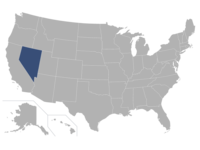
Las Vegas, NV