New Mexico state veterinarian says more screwworm cases ‘headed this way’
Aug 04, 2026 | 5:00 pm ET
Description
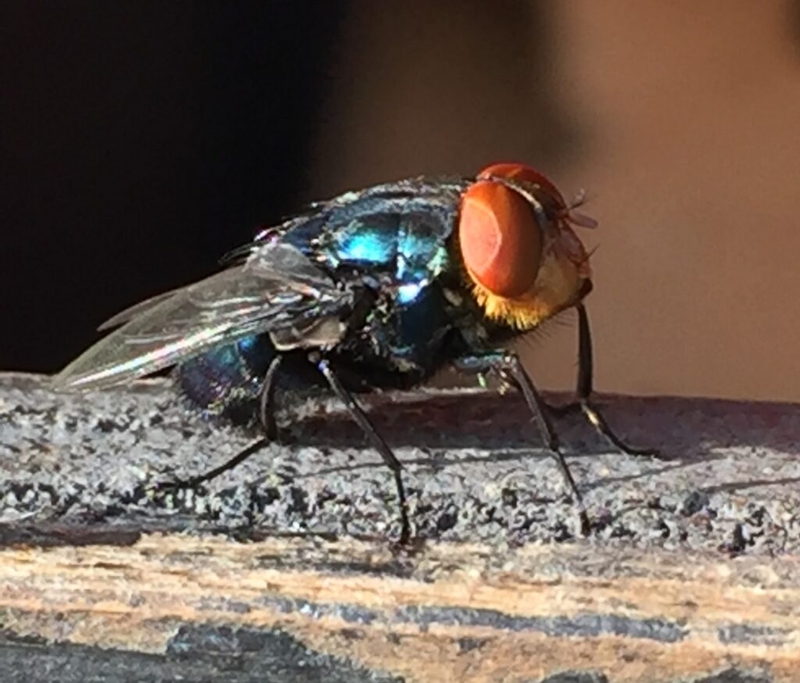
New Mexico’s state veterinarian outlined her office’s plans to address a potential outbreak of New World screwworm, pictured above, in a presentation to state legislators on Aug. 4, 2026. (Courtesy USDA)
While no new cases of New World screwworm have been detected in New Mexico for more than a month, the parasitic fly “definitely is headed this way,” and a widespread infection would quickly exhaust the state’s resources, the state’s top veterinarian told state lawmakers Tuesday.
Samantha Holeck, state veterinarian with the New Mexico Livestock Board, told legislators that the state is urgently finalizing a program that would increase the number of certified livestock inspectors to help private veterinarians, along with state and federal officials, contain a screwworm outbreak.
The pest, which has advanced rapidly through Mexico after being mainly contained in Central America for several decades, is named for the maggot’s behavior of feeding on live tissue. The fly made its first new incursion to the United States in early June, when it was detected in a south Texas calf, and then officials identified a separate infection in a Lea County dog in New Mexico a few days later.
Since then, the number of cases has increased in Texas and in Mexican states along the U.S.-Mexico border. As of Monday, Texas tallied 43 total infections, including eight new cases. Chihuahua, which borders New Mexico, has 57 cases, a case count Holeck said has “risen rather quickly.”
As a result of those spikes in cases, Hoseck said more infections in New Mexico are inevitable.
“We’ll have much more than just a single isolated case,” she said.
The infestation of maggots causes severe wounds that can result in injury and deaths of pets, wildlife, livestock and — in rare cases — people. The risks to livestock, especially in the eastern part of the state where cattle operations are most concentrated, have state officials most worried, Holeck told lawmakers on the interim Federal Funding Stabilization and Affordability Subcommittee.
The lack of federal support adds to her concern, she said. The United States Agriculture Department currently employs three federal field veterinarians for the whole state, she said, following widespread cuts to the department last year.
While the USDA is rapidly trying to hire new staff in New Mexico and along the U.S.-Mexico border, Hoseck said that process could take up to four more months. The state, which also has only three field veterinarians, will likely have to recruit private veterinarians if the screwworm outbreak worsens.
New Mexico reports first New World screwworm case in Lea County dog
“If it becomes much more prevalent here, similar to what’s going on in Texas, even our accredited veterinarians will be tapped out fairly quickly,” she said. “Imagine if this gets into the east side of the state, into our very concentrated dairy population. It’s going to be a challenge, significantly.”
The state is finalizing curriculum to certify additional inspectors, she said, through a one-day course in which students will conduct “nose-to-tail” inspections of cattle and also learn about the biology of the fly. Texas launched a similar program in early June. The free, online course grants recipients the authority to certify that animals are safe to be transported, among other duties.
Hesock said launching a similar program in New Mexico is “critical.”
“If the outbreak expands here, then we can activate additional individuals to help maintain the continuity of business for the livestock industry in New Mexico,” she said.
Santa Fe, NM