New Mexico behavioral health committee signs off on $8M plan for northern region
Jul 10, 2026 | 11:32 am ET
Description
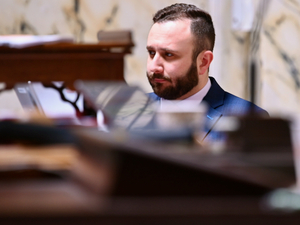
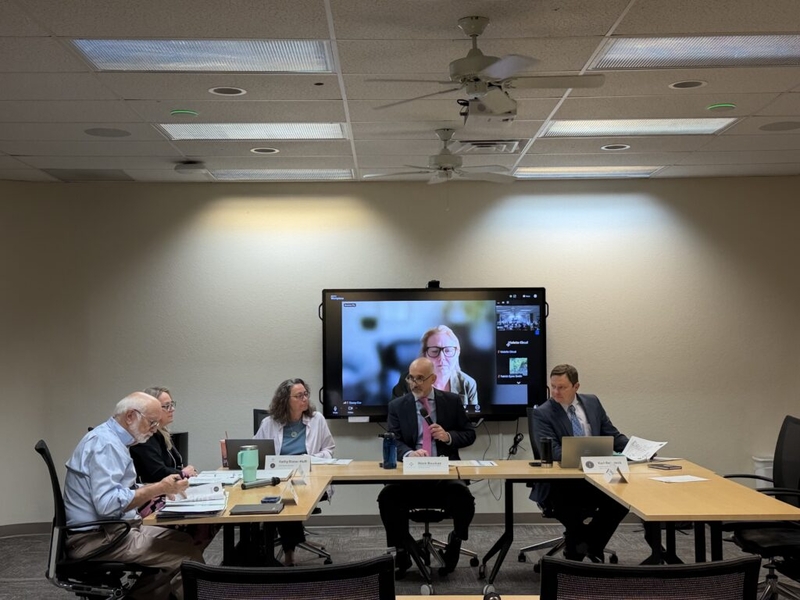
The Behavioral Health Reform and Investment Act Executive Committee met in Santa Fe on July 9, 2026, to approve the second of 13 regional plans to rebuild New Mexico's behavioral healthcare infrastructure. (Joshua Bowling/Source NM)
The committee tasked with overseeing the reconstruction of New Mexico’s behavioral health care infrastructure on Thursday unanimously approved an $8 million plan for the second of 13 regional proposals aimed at doing so.
The Behavioral Health Reform and Investment Act Executive Committee met in Santa Fe to vote on the plan for Region 1, which includes Santa Fe, Rio Arriba and Los Alamos counties, the Jicarilla Apache Nation and a half-dozen pueblos.
Region 1’s plan has five priorities: regional medical detox, recovery and crisis stabilization expansion; medication-assisted treatment expansion; workforce development; regional navigation and on-demand transportation services; and prevention efforts across the age spectrum.
Detox efforts, in particular, have been a priority for local leaders in recent years. Nearly a year ago, Gov. Michelle Lujan Grisham declared an emergency in Española, which is included in Region 1, and mobilized the National Guard to the area due to its outsized rate of fentanyl deaths.
Overall, the plan comes with a funding request of more than $8 million, Nick Boukas, the executive committee chair and director of the state Health Care Authority’s Behavioral Health Services Division, said during Thursday’s meeting.
Boukas praised local leaders for compiling a “very comprehensive plan” and, in particular, said he believes its age-based prevention efforts will prove fruitful by intervening in New Mexicans’ lives early.
The executive committee had previously approved the regional plan for Region 2, which includes Bernalillo County and Albuquerque.
Lujan Grisham signed the guiding legislation for this effort, which carved the state into 13 behavioral health regions mirroring the state’s 13 judicial districts, in 2025. The law was aimed at repairing the state’s behavioral health system after former Republican Gov. Susana Martinez accused several providers of fraud and froze their Medicaid payments, which led to an exodus of providers.
In the nearly 18 months since Lujan Grisham signed the legislation, the process of implementing it has not always been smooth.
At a recent interim legislative committee hearing, an Otero County official working to finalize one of the regional plans told lawmakers that he had often received “nebulous” goals from the many stakeholders in his community.
And at a recent interim Legislative Finance Committee hearing, Administrative Office of the Courts Deputy Director Sarah Jacobs told lawmakers that the lack of a uniform governance structure across the 13 regions was leading to some friction and “varying politics at the local level.” A report presented at that hearing found that some residents still struggle to schedule behavioral health appointments despite the state investing nearly $844 million on the effort in recent years.
Thursday’s meeting, however, gave officials overseeing the effort cause to be optimistic.
Boukas told Source NM that, in addition to approving two regional plans this year, his committee is scheduled to review another nine at its August meeting, although the agenda has not yet been finalized. That would leave just two of the 13 outstanding.
“I think it’s meaningful progress,” he said, adding that he hopes to have all 13 plans approved by the end of the year. “When you have new legislation, you want to move as quickly as possible, but you also want to be very mindful of how you’re doing it.”
The process has felt long at times, in large part because each of the 13 plans will have significantly different details tailored to the areas’ respective needs, Boukas said.
“They’re not just saying, ‘Give us money and we’ll figure it out later.’ They’re saying, ‘Here’s what we’re doing to do with this money,’” he said. “It might just take a little bit of time.”
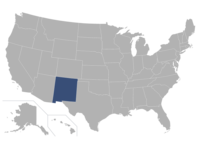
Santa Fe, NM