New Jersey Senate panel approves state voting rights bill
May 21, 2026 | 5:36 pm ET
Description
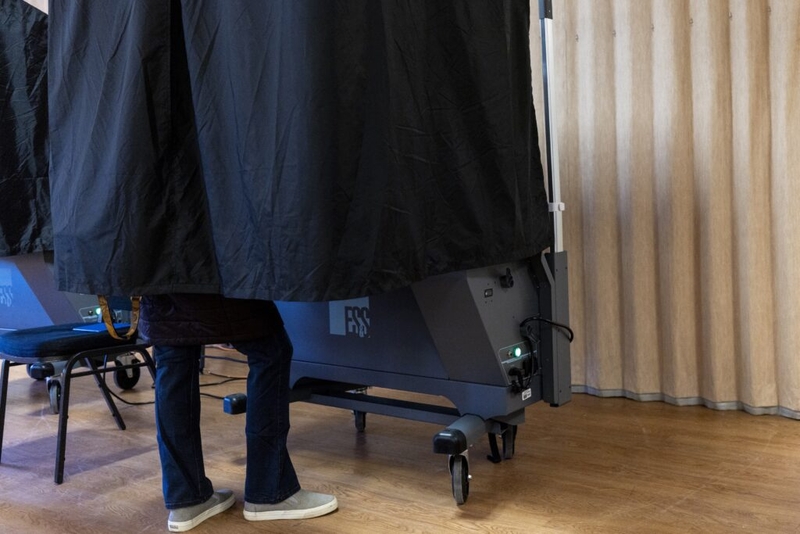
The Senate Judiciary Committee approved a voting rights bill Thursday that supporters said would counter changes to the federal Voting Rights Act. (Photo by Anne-Marie Caruso/New Jersey Monitor)
A New Jersey Senate panel approved a state-level voting rights bill for the first time since the proposal was raised in 2022, a step that moves the state one step closer to enacting voting protections that have been stripped from the proposal’s federal counterpart.
The bill would expand language access requirements beyond those in federal law, afford state courts broad powers to rewrite discriminatory election rules, and require the state attorney general’s approval for any changes to election procedure.
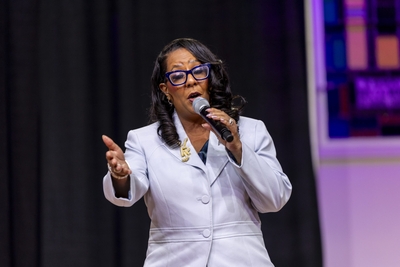
“This bill brings protection home to New Jersey, where we have the authority to enforce it,” said Assemblywoman Verlina Reynolds-Jackson (D-Mercer), the bill’s chief sponsor in the lower chamber.
The Senate Judiciary Committee approved the bill, called the John R. Lewis Voter Empowerment Act after the late congressman and civil rights figure, in a party-line vote with one abstention from Sen. Jon Bramnick (R-Union), a moderate who expressed concerns about litigation in jurisdictions with no discrimination.
Progressive advocates have long urged New Jersey to adopt its own voter protections after successive U.S. Supreme Court decisions denuding guardrails against voter discrimination and suppression in the federal Voting Rights Act of 1965.
“While new Jersey has taken important steps to improve and expand ballot access, far too many New Jerseyans still face serious obstacles when trying to vote,” said Alejandra Sorto, a campaign strategist for the American Civil Liberties Union of New Jersey. “This is why we need to pass the strongest possible version of the John R. Lewis Voter Empowerment Act of New Jersey, one that includes a New Jersey-specific preclearance system to prevent discrimination before it happens.”
The federal Voting Rights Act used to require states and localities with a history of racially discriminating voting practices to get federal approval for any changes in their election laws and policies or voting maps, a process known as preclearance.
The nation’s high court struck the preclearance provisions in 2013 and last month in Louisiana v. Callais gutted provisions that barred diluting the voting power of minority voters, setting off a wave of redistricting to eliminate districts in Republican states where a majority of voters are not white.
Supporters of the New Jersey bill said Thursday that state-level protections are needed, particularly as President Donald Trump and members of his administration raise questions about whether elections for federal office will continue to exist.
“When you think of it, we shouldn’t even have an election,” Trump told Reuters in January.
Civil rights activists on Thursday warned that threat should be taken seriously.
“We are not just dealing here with the question of voting rights. We are dealing today with the question of whether or not democracy will continue to exist in the United States. People are speaking openly, today, as to whether or not there will be midterm elections,” said Lawrence Hamm, a longtime civil rights activist who helms the People’s Organization for Progress.
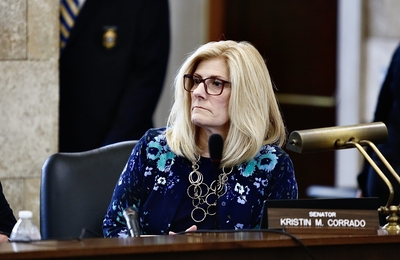
Sen. Kristin Corrado (R-Passaic), a former county clerk who voted against the bill alongside Sen. Michael Testsa (R-Cumberland), questioned the need for the legislation, arguing it could be misapplied to regular Election Day occurrences, like long lines at polling centers.
The attorney general was already available to assist election officials with voting disruptions, Corrado said, and the breadth of voting options available to New Jerseyans helped resolve others.
“I think it’s important to note, the incidents that you’re highlighting — we have addressed them in this state already. We do take the right to vote extremely seriously, and we’ve taken steps to proactively address that,” Corrado said.
Creed Pogue, the Democratic chairman of Atlantic County’s Board of Elections, cautioned the bill’s preclearance provisions could leave counties in the lurch in the days and weeks leading up to an election, when officials face tight timelines on ballot design and mailing, among others.
He noted a fire set at a county office in 2024 that affected a ballot drop box and required the board choose a new location where voters could cast mail-ballots. Preclearance provisions could have barred that move, Pogue said, although language would allow preclearance to be ignored during a declared state of emergency.
“The governor’s not going to declare a state of emergency because there’s some idiots who set part of a building on fire. We would not be able to put out the drop box,” he said.
A separate accidental fire required Atlantic County officials to relocate a different drop box in Pleasantville. They would have been unable to move that in time for the election under the bill’s preclearance rules, Pogue said.
Bramnick expressed worry about the law’s impact on litigation in New Jersey. He questioned how officials would determine whether politics or discrimination was behind candidate wins in local races with sizable minority populations.
The bill saw significant amendments Thursday, among which are changes that would lower preclearance lookback periods from 30 years to 15 and expand discrimination protections to sex, sexual orientation, gender identity and expression.
Other amendments removed language barring judges from considering a variety of factors — like, for example, the use of an identical voting practice in another jurisdiction — when weighing voting rights cases, and moved the bill’s authorities from a to-be-created division on voting rights to the state attorney general.
The bill must still clear a vote before the Senate Budget Committee before reaching the full chamber, and the amendments mean the Assembly will have to approve it again. The full lower chamber approved the older version of the bill in March.
Trenton, NJ