New ID requirement to message NJ inmates leads to data privacy fears
Sep 03, 2026 | 6:50 am ET
Description
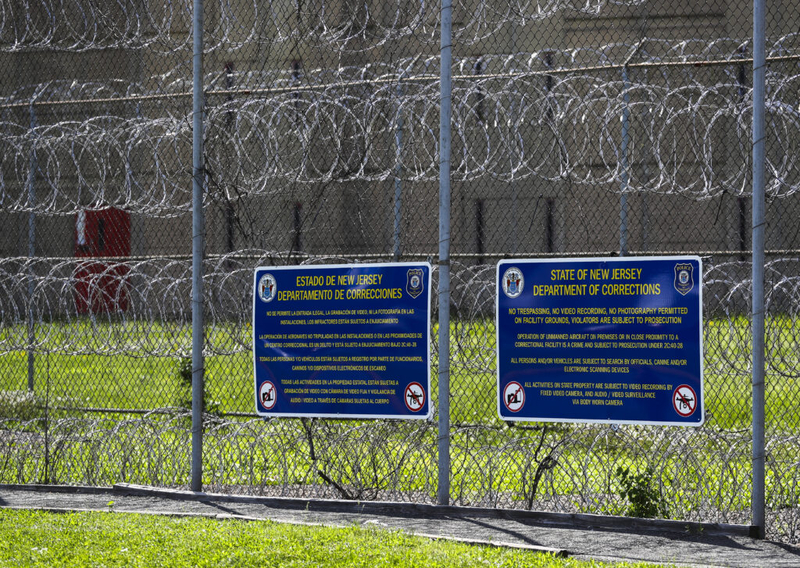
New Jersey prisons now require people to upload a passport or driver's license to message incarcerated loved ones. That's a barrier and data privacy risk, critics charge. (Photo by Dana DiFilippo/New Jersey Monitor)
New Jersey corrections officials have long surveilled prisoners’ calls, messages, and other communications to ensure they don’t plot something sinister during those interactions.
Now, the state is expanding its scrutiny to people outside prisons, requiring friends, relatives, and anyone else who tries to message those behind bars to verify their identity by uploading their driver’s license or passport to an online portal.
Chris Greeder, a Department of Corrections spokesman, described the new identification requirement as “an important public safety measure designed to protect victims, the public, and incarcerated individuals from fraud, extortion, harassment, and criminal coordination.” He did not offer any cases or data on such offenses but pointed to the State Commission of Investigation’s public hearing on organized crime in May.
“Law enforcement testimony detailed how organized crime syndicates and street gangs have increasingly adapted to modern technology, using electronic messaging and correctional devices to orchestrate illicit activity, intimidate witnesses, and direct criminal enterprises from inside correctional facilities,” Greeder said.
But critics warn the new identification requirement creates a barrier for people who don’t have passports or driver’s licenses to prove their identity, as well as anyone concerned about digital privacy risks.
“Anything that complicates or creates heightened requirements for people trying to be in communication with their loved ones is wrong, especially in the era of unclear boundaries between what is accessible and even mined by companies that are already working in collaboration with other sorts of surveillance,” said the Rev. J. Amos Caley, an organizer with New Jersey Prison Justice Watch and pastor at the Reformed Church of Highland Park. “We should be making access easier, not harder, for folks.”
The debate comes as the department wraps up a monthslong, systemwide transition to ViaPath from JPay, which had provided those services in New Jersey prisons since 2014 and did not require such identification verification. The for-profit companies, the two largest prison communications providers nationally, supply the technology and infrastructure needed for incarcerated people to make phone calls and video visits, send electronic messages, and otherwise communicate behind bars.
Greeder said the new requirement only applies to people who want to communicate with incarcerated loved ones through electronic messaging. Outsiders can still receive phone calls from inmates without showing photo identification, he added.
“NJDOC works with its vendors to ensure personal data collected for verification is handled securely and maintained strictly for authorized security and communication purposes,” he said.
ViaPath, though, has a history of data security problems.
The Federal Trade Commission found in 2023 that ViaPath failed to secure the sensitive data of hundreds of thousands of users that was stored in a cloud, failed to notify everyone impacted of the breach, and misrepresented their data security measures. The commission ordered the company in 2024 to reduce its data retention time, follow strict notification timelines, and take other remedial actions.
ViaPath spokespeople did not respond to the New Jersey Monitor’s request for comment.
William Sullivan, a correctional officer at East Jersey State Prison who heads the officers’ union, said the new identification verification requirement is worth the data privacy risks.
“You got to know who’s communicating,” Sullivan said. “People still run their gangs from inside the prisons. ViaPath is a tool that they use to communicate. Not everybody, but there’s people that’ll use it to communicate and run their nefarious activities from within the jail cells.”
Caley and other critics countered that most of those trying to communicate with people in prison are not criminals but instead family and friends, some of whom will not be able to meet the new requirement.
More than half of Americans don’t have passports, while about 30% of New Jersey adults don’t have driver’s licenses, federal and state data shows. Those more likely to lack such documents (or have outdated names or addresses that won’t pass verification tests) are already marginalized groups, such as low-income people, homeless people, those fresh out of prison, immigrants, and transgender people and others who changed their names.
“When people are inside, that lifeline, that connection to the outside, is what’s getting them through,” said Racquel Romans-Henry, director of policy and advocacy at Salvation and Social Justice. “Creating any kind of barrier that makes it hard for incarcerated people to access their support system is cruel and unusual.”
Identity verification, though, is becoming a common requirement by states and prison communications providers, along with other restrictions that have the effect of reducing prisoners’ interactions with the outside world, said Wanda Bertram of the Prison Policy Initiative.
She pointed to the federal Bureau of Prisons, which now prohibits outside communications beyond those an incarcerated person initiates, and other states that cap how many outsiders an inmate can correspond with. Besides families, such restrictions also impact prison-justice advocates and journalists who try to connect with folks inside prisons, she added.
“Prisons are increasingly demonizing people on the outside who want to communicate with incarcerated folks and instituting surveillance practices that impact everyone, which they justify by saying, ‘there are bad actors,’” Bertram said.
Prison staff often are implicated in leading or facilitating crime behind bars, Bertram added. Correctional officers in New Jersey have been disciplined and charged for crimes ranging from contraband smuggling and money laundering to accepting bribes.
Identification verification is just one of multiple “transformative technology” tools ViaPath has deployed in prisons in New Jersey and elsewhere.
The company also collects biometric data and uses artificial intelligence to analyze every call and communication, sharing its findings with law enforcement. Its contract with New Jersey includes six “investigative solutions” that can detect calls between incarcerated people, flag problematic keywords in calls and messaging, and identify the type of phone called, among other things.
The cost of such tech tools is listed as “included” in New Jersey’s contract with ViaPath, and Greeder told the New Jersey Monitor last spring that the contract didn’t cost state or taxpayers anything. Instead, incarcerated people and their loved ones pay for it, in the form of fees charged per service. They spent between $1.5 million and $3.2 million a year on calls, messaging, video visits, and other communications and recreational services since 2015.
As the surveillance and data-collection done during those interactions expand beyond prison walls, that means “families are now effectively paying for their own monitoring,” Bertram said.
“Incarcerated people are the most surveilled population in this country, and the communication technologies that allow them to talk to their loved ones on the outside also extend that surveillance to the people on the outside,” she said.
Families who object to New Jersey’s new identification verification requirement, or any other contract terms they deem exploitative or unfair, should push for change, she added.
“This is not some implacable, divine law. This is a line in a contract, and contracts are amended all the time,” Bertram said. “This is a misguided focus on incarcerated people and their families as being a threat or a safety risk when the vast majority of them are just trying to keep in touch with their loved ones. That’s good for everyone, including the public, when those family connections are fostered.”
Trenton, NJ