New Florida stormwater rules don’t fix our pollution problem
Oct 15, 2026 | 12:05 am ET
Description
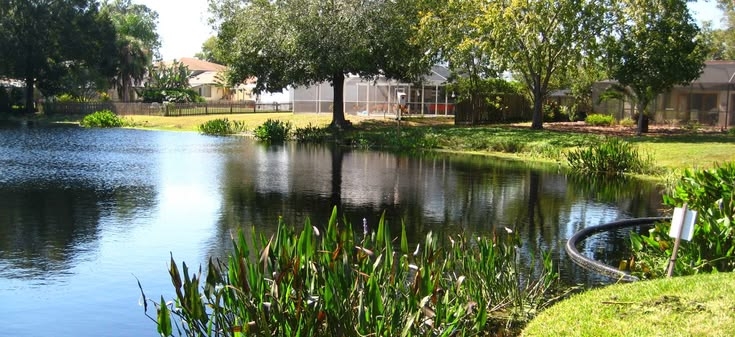
A typical stormwater retention pond in a Florida community is both a visual amenity and a poorly functioning pollution control device. New standards were supposed to make the stormwater system more effective, but the Florida DEP removed their teeth. (Photo via Southwest Florida Water Management DIstrict)
Do you have a favorite movie? Mine is “Singin’ in the Rain.” Maybe because I grew up in the rainiest city in Florida, Pensacola. I could identify with Gene Kelly splashing around in all those puddles.
You know what you never see in “Singin’ in the Rain”? Where all that rainwater goes. It swirls around the pavement, but you never see it slosh into a stormwater drain. It’s one clue Gene’s dancing on a Hollywood set, not a real street.

We Floridians know that stormwater never simply disappears. We try to drain it away as fast as possible, and it then flows into our canals, creeks, rivers, bays, estuaries, and oceans. Often, it’s carrying a load of pollution from fertilizer, cars, and leaking sewer plants.
The stormwater system originally set up under state law — drains, ditches, and retention ponds galore — has generally failed to clean up that flow. Instead, it’s fueled serious toxic algae blooms that have wiped out seagrass beds, starved manatees, and killed fish.
The Florida Legislature, to its credit (and my great surprise), took steps to clean up our stormwater runoff.
“But since then,” the Tampa Bay Times reported last week, “the state’s environmental agency has quietly taken the teeth out of another new program meant to help local governments and developers meet these stricter stormwater rules. It has raised concerns from environmentalists who say meaningful efforts against Florida’s water pollution are being undercut.”
You may read that and think, “Oh, those tree-huggers! They’re never satisfied.”
Wait until you see the very next paragraph.
“Even the companies working with developers are unhappy with the changes. Three businesses have formally challenged the rule, saying the environmental agency’s actions went beyond its authority.”
You know Florida’s pollution regulations are messed up when even the companies working with developers think the Florida Department of Environmental Protection isn’t actually, you know, protecting the environment.
“Clean water takes a back seat to the ‘need’ for Florida to keep growing at all costs,” said Gil Smart, executive director of Vote Water. “And with moves like this, the state is ensuring that cost will be high.”
A major source
We call ourselves the Sunshine State, but that’s just a lie we tell the tourists so they’ll come on down and spend their money.
The truth is, most of our cities get more annual rainfall than famously drizzly Seattle. Four show up on this list of the rainiest cities in America: Pensacola, Jacksonville, Miami, and Tallahassee.

We need the rain to refill our aquifer, where we get most of our drinking water as well as the wet stuff we sprinkle on our lawns, crops, and golf courses. (Don’t get me started about the water bottlers who pay the state a pittance to suck a lot of the public’s water out of the ground and sell it all over the world.)
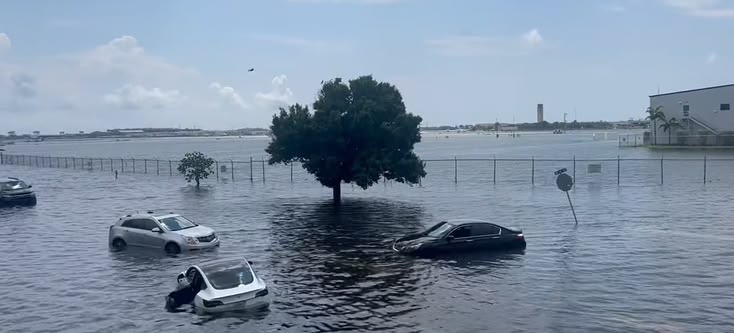
Thanks to climate change, the storms are becoming heavier. Three years ago, Fort Lauderdale got hit by what some people called “a rain-bomb” — 26 inches in 24 hours. That’s a level of precipitation that would make Noah n-n-nervous.
When you’re drenched by such a deluge, your stormwater infrastructure better be built to handle the load. A lot of Florida stormwater infrastructure is not, because it was built before we started seeing these larger quantities of liquid sunshine.
The first Florida rules for handling stormwater came out in the 1980s, but they ignored a lot of the pollutants we now know are important. Worse, they were based on rainfall data from the prior decade.
Yet regulators assumed that if you built everything the way they required, you’d clean up the pollution.
Those rules “did not sufficiently address water quality, and therefore, water quality continued to deteriorate,” a Florida Bar analysis says. “Additionally, there were no real maintenance requirements, so systems that were effective when permitted degraded over time.”
When the Times did a special report last year on water pollution, here’s what it found regarding stormwater runoff: “In 2007, regulators discovered the methods were a bust. Far more chemicals fouled the environment than officials originally believed. Florida leaders didn’t fix the problem. They let matters get worse.”
In 2010, state regulators drew up tougher new standards for storm runoff. But they never got beyond the draft stage. Their progress was stymied by opposition from big-money developers. It was like watching your favorite football team’s drive for a winning goal get stymied at the 5-yard line.
The results are about what you’d expect.
Take, for instance, the Miami River Canal, which WLRN-FM reported on in May. The canal, which the radio station described as “one of the backbones for South Florida’s drainage system,” begins at Lake Okeechobee and cuts 60 miles across three counties to deposit its tainted load into Biscayne Bay.
“It has repeatedly failed to meet limits for fecal coliform, the bacteria found in human and animal waste,” the radio station noted. “It contains nutrients, heavy metals and microplastics. Fish are loaded with mercury. The canal is also not unique. Canals across South Florida carry stormwater loaded with chemicals.”
Far be it from me to accuse the Legislature of dragging its feet about remedying this problem, but I’ve seen gopher tortoises that moved faster. Nevertheless, two years ago, our fine lawmakers passed a bill pushing for tighter rules.
“Stormwater is a major, major source of nutrient pollution in our waterways,” said Sen. Gayle Harrell, a Republican who runs a Stuart health strategies company and sponsored the 2024 bill, “These rules are in place to make sure that we are going to improve our natural waterways.”
But those good intentions didn’t go far enough.
Loosey-goosey
This year the Legislature passed a different stormwater bill, one sponsored by Sen. Keith Truenow, a sod grower from Mount Dora.
This bill allows the state to do something unusual. Rather than force every new development to cut pollution in its own stormwater runoff, the bill says the DEP can instead use a system similar to its wetland protection rules. The rules had to be in place by this month.

This is a system that I think you could best describe as “loosey-goosey.” It allows developers in one place to buy “credits” from people who are cleaning up pollution in another place.
Officially, this system is called “mitigation banking,” but I think of it as the Wimpy Evasion, based on what that character used to tell Popeye: “I will gladly pay you Tuesday for a hamburger today.”
You’ll have to excuse my skepticism about any mitigation banking scheme. In the early 2000s, I teamed up with another reporter to investigate Florida’s lucrative and growing wetland mitigation banking industry.
We found lots of problems. There were banks that counted dry land as if it were wet and banks that considered preserved wetlands as if they had been newly created. They employed the kind of creative accounting you’d see at a CPA firm called “Dewey, Cheatem & Howe.”
Which leads us to the Water Quality Enhancement Areas, or WQEAs for short.
Here’s how the Times explained WQEAs: These areas allow landowners “to earn credits for cleaning up pollutants — mainly nitrogen and phosphorus — on their property. Landowners can then sell credits to developers that need to curb stormwater pollution generated from projects like condominiums and commercial developments.”
This allows the developer to still pollute the nearest waterway while writing a check to someone who is cleaning up pollution on a different parcel.
These mitigation banking systems CAN work. But the key to making them effective is setting up checks and balances that would keep everyone honest.
“If you’re going to mitigate off-site, then you need to know if it’s working,” said Haley Moody, executive director of the Florida Springs Institute in High Springs.
But the DEP isn’t interested in making sure the system works.
The agency only cares about making it look good on paper.
Loopholes in the diet
Picture the new stormwater regulations as a way of putting all the developers on a really strict diet. The goal would be to trim the excess stuff they’re putting into the runoff.
Now picture the developers holding their big tummies, moaning and complaining that the diet is just too haaaaaaaaarrrrrrrrrrrrrrd! Oh, they’ll never be able to meet these requirements! Have mercy!
So, the DEP gave them some ways to get around the restrictions — like dieting but not dieting. Every day is Cheat Day!
“It’s just providing them an easy out,” Smart told me.
The DEP initially issued draft regulations that could have worked. But then the agency changed them to accommodate the whiners — er, excuse me, developers.
“Some of the really important language was removed,” Moody said.
And the agency did it in such a way that anyone who might object didn’t have much time to complain.

“The changes were made fairly late in the process,” said Kim Dinkins, policy and planning director of the smart-growth group 1000 Friends of Florida.
One change the DEP made eliminated any chance of ensuring the companies selling credits are actually reducing the pollution, she explained.
The agency decided it doesn’t need to measure the pollution that’s supposedly being eliminated between the inflow and outflow of the stormwater system, Dinkins said. There’s just a computer model for the system that may or may not prove accurate.
Given that this is the same agency that came up with a computer model for issuing water supply permits that’s got more holes than a Swiss cheese factory, I’m not holding my breath for the accuracy of this one.
Even worse, the DEP decided it would be OK to issue the “credits” for sale before checking whether the clean-up work has actually cleaned up anything, Dinkins told me. They’re giving credit before any such credit is earned.
Audubon Florida managed to get its objections to these provisions on the record before the DEP adopted them. The DEP’s response to these objections was … well, let’s just say it wasn’t warm and sunny.
“They essentially told us to pound sand,” an Audubon Florida representative told the Times. “Those companies got DEP to make changes, but after years of work on the rule, DEP really should explain why it added these provisions so late and did not give the public a fair chance to review them.”
I asked the DEP about this, and a spokeswoman replied: “The department reviewed and considered all comments that were received timely throughout each rulemaking step, and changes to draft rule language were made when deemed appropriate or necessary.”
There’s another big problem with the new DEP rules, Moody told me. They focus only on what’s happening above ground.
“There’s no mention of what happens under the surface,” she said.
All that pollution occurring on the surface can infiltrate the caverns deep underground where our aquifer flows, she explained. That’s a problem for our water supply.
It can also harm Florida’s spectacular springs, many of which are owned by us taxpayers as part of the state park system. But I’m not sure the people in charge care.
Tap-dancing as fast as they can
Recently, there have been some journalistic efforts at assessing Gov. Ron DeSantis’ environmental legacy once his eight years in office conclude. It’s not a pretty picture, considering this is the guy who built a tent city prison in the Everglades and tried to put golf courses in the state parks.
It’s especially icky when the topic is water quality.
As a candidate in 2018, DeSantis promised to fix our toxic algae bloom problem, but then disregarded what a panel of scientists told him to do.
Instead, he cut a deal with an Israeli company to dump a hydrogen peroxide mixture in waterways afflicted by the blooms. That’s only a temporary solution, like treating a broken arm with a Band-aid.
Given how much the guv hates rainbows, I guess it makes sense that he doesn’t care much about stormwater either. As a result, his DEP has been trying hard not to put its foot down in a way that would hurt the politically powerful development industry.
Instead, the agency has been desperately dodging accountability, tap-dancing faster than Gene Kelly in a flooded street scene.
I don’t know which candidate will take over from DeSantis next January, or what the top priorities will be. But in the interest of sheer honesty, we should consider changing the DEP’s name to something that more accurately reflects its performance. I’d propose “the Department of Enabling Polluters.”
Tallahassee, FL