Some people are just like that
Oct 14, 2026 | 7:16 pm ET
Description
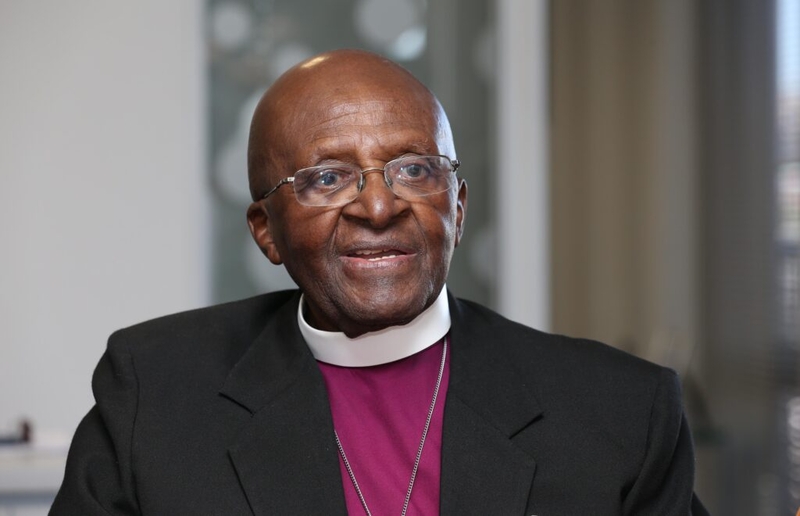
It was a visit from Archbishop Desmond Tutu, pictured here, that helped columnist Doug James better understand his father and Great Falls, the community in which he was raised. (Photo by Getty Images)
“Agent 86 reporting, sir.”
“What do you have to report, 86?”
I listened as 86 reported.
My father replied, “Thank you, 86. Carry on.”
It felt awkward. I knew that 86 was no agent.
I was walking down Central Avenue in Great Falls with my father. A middle-aged man approached. I recognized his coat. It had been my father’s. My father had given it to him. The man thought my father was still the Cascade County Attorney. He wanted to be helpful. My father was long removed from that job.
“Agent 86” and my father had a decades-long relationship.
I asked what was wrong with him.
My father replied, “Some people are just like that.”
No label. No judgment. Acceptance. “Some people are just like that.”
My father’s community extended well beyond our family and neighbors. It included Agent 86, whose perception of the world was different.
After that day, I always looked for 86 when I went downtown. I didn’t see him often, but I always felt better when I did.
My father was a lawyer, a former county attorney and a former member of the Board of Pardons and Parole.
I was home alone for a few days. I was 16. No, I didn’t party. My Dad suggested I have dinner with a man who had done serious time in Deer Lodge. He was a great chef. My father didn’t want me to be alone. He thought I should spend time with the chef. So, I had dinner with him and his wife. It was a memorable evening with amazing food and wonderful company.
At the time, this seemed ordinary. Normal.
Later, I understood that a person is more than the decision they made on the worst day of their life.
The labels society likes to use are another kind of incarceration. Labels are harmful. People have names. There is power in speaking a person’s name. It is affirming. It is not a label or a judgment. Speaking a person’s name creates connection.
In college, I spent time studying African history. It taught me something about my father. Yes, from African history.
I learned about an ancient southern African philosophy of our shared humanity, Ubuntu. It means that I am because we are. We are connected. Our humanity comes from our relationships; how we treat each other.
I am sure my father never heard about Ubuntu, but his life embodied the principle. All people matter.
Archbishop Desmond Tutu embodied that philosophy. He even came to Montana in 1990. He raised money in Helena for student scholarships. People paid to be there. During the dinner, Tutu walked around the room and thanked the wait staff. He went into the kitchen and thanked the cooks. He made a special effort to thank everyone who served; those whose labor made the evening enjoyable.
Through Tutu’s example, I better understood my father.
He made a point of thanking those whose labor made our lives better. The wait staff. The piano player. The host. The cook. Everyone who labored.
My study of African history gave me a word to explain what my father had been teaching me.
My father was a part of the criminal justice system. The people he met through his work were part of his community and part of his humanity.
Thousands of Montanans carry felony convictions, long after serving time. Today, more than 14,000 are under the supervision of the Department of Corrections. People in prison, on parole or probation, in a residential treatment center, an assessment center, or a pre-release center. They are part of our community. Part of our humanity.
When I walk around today, I still look for Agent 86.
Helena, MT