Alaska needs farmers. Farmers need farmland.
Oct 14, 2026 | 7:13 pm ET
Description
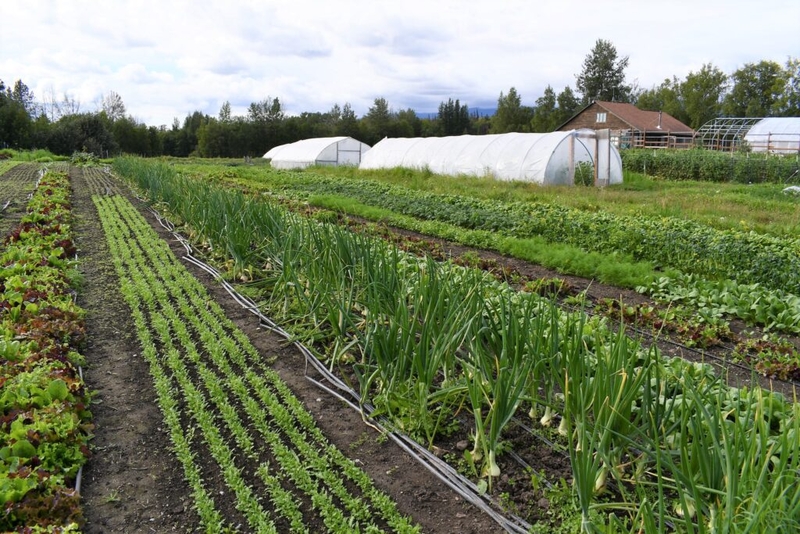
Sun Circle Farm is a 2.5-acre organic farm that produces vegetables, fruits and flowers for farmers markets and for a CSA service in Palmer, Alaska. (NRCS Alaska photo)
This summer, I stood with a landowner at the edge of a hayfield her parents cleared more than 60 years ago. Wisps of her grey hair caught in the wind, and her eyes narrowed as she looked out over her farmland ground, thinking about so many neighboring farms that have been converted to gravel pits and subdivisions.
“Converting this should be considered a sin,” she told me. “My parents would be sick to know what has happened to this valley. We need our farmers. We need our farmland.”
She’s right, and she’s only saying out loud what a lot of Alaskans feel. When we talk about strengthening our food system, we usually talk about farmers: getting more people into agriculture and making sure they have greenhouses, equipment, markets and workers. All of that matters. But every farmer needs one thing before any of it can matter, and that is land. Alaska has a limited supply of soil capable of reliably producing food, and once that land is fragmented or converted to other uses, we cannot create more of it. That should matter to every Alaskan, not just farmers.
Farmland is economic infrastructure
We tend to think of infrastructure as roads, ports, power systems and broadband. Productive agricultural land belongs on that list too, because it is the physical foundation an agricultural economy is built on. A farm doesn’t operate in isolation. Farmers buy fuel, seed, fertilizer and equipment. They hire contractors, accountants and employees. They sell to families, restaurants and institutions. When food is produced here, more of those dollars circulate here, and each working farm creates an opening for the next farmer and the next generation of Alaskans who want to make a living from the land.
Food security starts with land
Alaska imports the majority of the food we eat, which leaves us vulnerable to transportation and supply disruptions thousands of miles away. No one is suggesting Alaska needs to grow everything. We don’t. But if we want more Alaska grown food, we need somewhere to grow it, and that means treating farmland as part of our state’s long-term food infrastructure.
A parcel farmed today, like that hayfield, may eventually be developed. That is a legitimate choice for a landowner to make. But when enough productive land disappears, the cumulative effect is one we all feel: fewer opportunities for farmers, less agricultural production and a smaller foundation for a local food economy.
What role does government play?
State and local governments don’t farm the land, but they make decisions that either support or undermine the conditions agriculture needs to succeed. The state owns and manages agricultural land, decides how it is made available and shapes the policy environment farmers work in. Boroughs and municipalities influence the same outcome through comprehensive plans and subdivision rules.
None of this means the government should tell private landowners what to do with their property. It means recognizing that productive agricultural soil deserves weight when we make decisions about growth, the same way we have always weighed oil, minerals, timber and fisheries.
The questions that matter
That is why the conversation about Alaska agriculture needs to go beyond whether our leaders support farmers. The more revealing questions are about farmland. What is the long-term vision for Alaska’s agricultural economy? How will beginning farmers gain access to land they can afford? And will an Alaskan who wants to farm 20 years from now be able to find ground to do it on?
These aren’t questions about stopping development. Alaska will grow, and land will be developed. But we have choices about how we grow and whether agriculture has a place in that future. At the Alaska Farmland Trust, we believe it should.
I think about that landowner often now. I think about her parents, that hayfield and that farm’s future. I think about the young Alaskan who wants to start a farm someday and doesn’t know it yet, and the family that will want locally grown food in ten years and hasn’t found the farmers market yet. All of them will need land.
This land is your land. It is also the foundation of Alaska’s agricultural future.
Juneau