New $100 fee on Yellowstone, Grand Teton’s foreign visitors brings uncertain impacts
Nov 26, 2025 | 6:24 pm ET
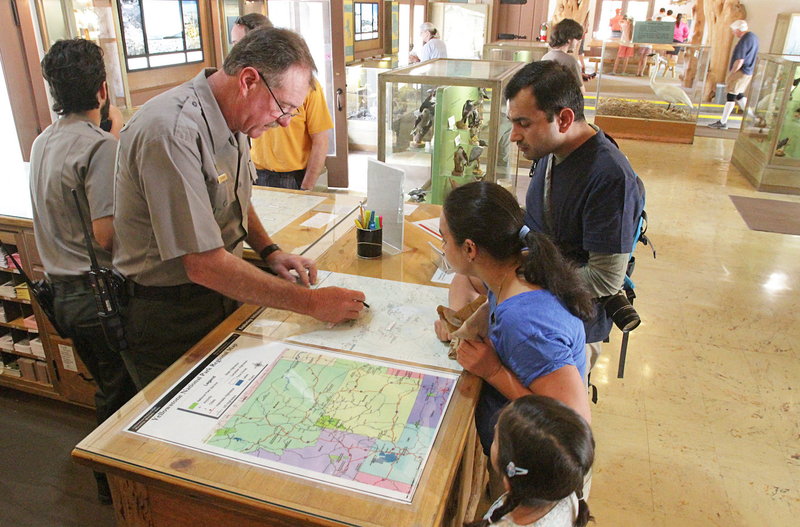
Description
Photo courtesy of WyoFile
A new $100 surcharge on foreign visitors at select national parks raises a suite of questions regarding how much revenue the fees will generate, an economic consultant in Jackson Hole said Wednesday.
The Department of Interior announced the new fee Tuesday, sparking speculation about how much money it will raise and whether it might further curtail international travel to the federal preserves and the gateway communities like Jackson and Cody whose economies run on tourism.
The fee will be imposed in 2026 on each foreign visitor to Yellowstone and Grand Teton national parks in Wyoming. The surcharge will also apply to Yosemite, Glacier, Rocky Mountain, Grand Canyon, Zion, Everglades, Acadia, Bryce Canyon and Sequoia & Kings Canyon national parks in other states.
Secretary of Interior Doug Burgum said the fees put American families first. Americans will continue to enjoy affordable access, he said in a statement, “while international visitors [will] contribute their fair share to maintaining and improving our parks for future generations.”
Yellowstone counted 4.7 million visitors in 2024, down from a high of 4.8 million in 2021.
What impact the surcharge will have on national parks’ revenues, which individual parks retain, is uncertain, especially in light of declining international visitation. Between 2018 and 2024, foreign visitation to Yellowstone dropped from about 30% of total visitors to 14.8%, according to the park’s statistics.
As President Donald Trump’s administration curtails visas, angers Canadians by proclaiming that country should become the 51st U.S. state, imposes tariffs and takes other actions, fewer tourists may want to visit the U.S., said Jonathan Schechter, an economic consultant and a member of the Jackson Town Council.
“We’re already seeing a big drop,” Schechter said, even before Trump took office. In 2018, Yellowstone attracted 1.2 million foreign visitors, he said, citing park figures. In 2024, that number was down to 712,089.
What’s going to happen, he mused about foreign tourists, if in 2026 “they’re not feeling welcome?”
$55 million for Yellowstone?
The fee, long touted by the Property and Environmental Research Council, a Montana-based nonprofit focused on environmental conservation, will boost Yellowstone’s revenues substantially, said Brian Yablonski, the organization’s CEO.
“A $100 international visitor surcharge could generate $55 million annually at Yellowstone National Park alone, more than quadrupling that park’s revenue to address deteriorating trails, failing wastewater systems, and crumbling bridges,” he said in a statement. He referenced a 2025 study by Stephen C. Newbold, an associate professor at the Department of Economics at the University of Wyoming.
“I calculated the relative changes in visits and revenues over a wide range of entrance fees using the averaged travel costs,” Newbold wrote, “which revealed that a surcharge would need to be increased beyond $200 per visitor before revenues would decline.”
The analysis probes visitors’ spending “elasticity,” which is their response to a price increase. Entrance fees make up a small portion of the money a foreign traveler will spend on a visit to America’s national parks, he notes.

Newbold wrote that his study has limitations because it used data from 2016 and 2018 and lacked critical information from a 2024 visitor survey. Also, the words “tariffs” and “visas” do not appear in Newbold’s 23-page paper titled “The price elasticity of the demand for visits to Yellowstone National Park.”
That suggests the research stopped short of accounting for overall international tourism trends to the U.S. Additional research could develop “more robust models of international visitor demand,” he wrote.
Today, it costs $35 per vehicle to enter Yellowstone for a week. The average vehicle carries between 2.1 and 2.8 passengers, according to Yellowstone statistics. The number varies according to entrance station and season, Yellowstone’s visitor use reporting and counting instructions state.
Shechter made some calculations using Yellowstone figures and some estimates. Those include an estimated 5% visitation growth from 2024-2026 and an average of 2.5 visitors per vehicle.
Under that scenario, if the percentage of foreign visitors to Yellowstone remains at 15%, the park would see foreign entrance fee revenues increase from $9.9 million a year to $85.2 million if the surcharges are factored in.
That’s an increase of $75.2 million.
He offered other scenarios. If international visitation in 2026 drops to 8% of all Yellowstone visitors (“all” being 5% more than the 2024 total visitation figure), the new fee would generate an additional $32.6 million.
If international visitation dropped to 1% of visitors in 2026, the park would receive $5.6 million from foreigners. That would be a drop of $4.2 million in foreign visitor entrance revenue compared to 2024.
Changing trends
Elasticity aside, the huge variable that remains is whether foreigners will be discouraged from visiting the U.S. because of the Trump administration’s foreign, immigration, visa and trade policies.
“To me the interesting question is what happened between 2018-2024 that cut international visitation,” Schechter said. “Why would international visitation fall in half?”
Was it COVID, he wondered, or a slow recovery from that pandemic? Will it be harder to get a visa to visit the U.S. in 2026? How will international visitors react to perceived American hostility toward some foreigners?
Things have changed.
Eight years ago, Schechter said, there were planeloads of visitors from Shanghai landing in Salt Lake City, loading buses and touring Grand Teton and Yellowstone national parks. It is much rarer to see a coach full of foreigners wending its way through Jackson, Grand Teton and Yellowstone roads today.
The affordable American national park vacation may be becoming less affordable too, Schechter said.
“Most of the consumer spending going on right now in the U.S. is coming from the ultra-wealthy,” he said. “People who are in the middle, lower [income strata] are not spending. Those are the bulk of the people visiting Yellowstone and Grand Teton.”
Lodging revenue “has been saving the bacon of the local taxable economy,” Schechter said. In Jackson, hotels have “raised their rates, and there hasn’t been pushback yet.”
If that trend continues “that just adds even more cost to the price of a vacation,” he said. “How’s that going to affect us?
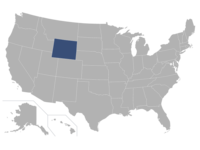
Cheyenne, WY