Nevada’s rail safety bill isn’t political. It’s personal.
Apr 21, 2025 | 7:57 am ET
Description
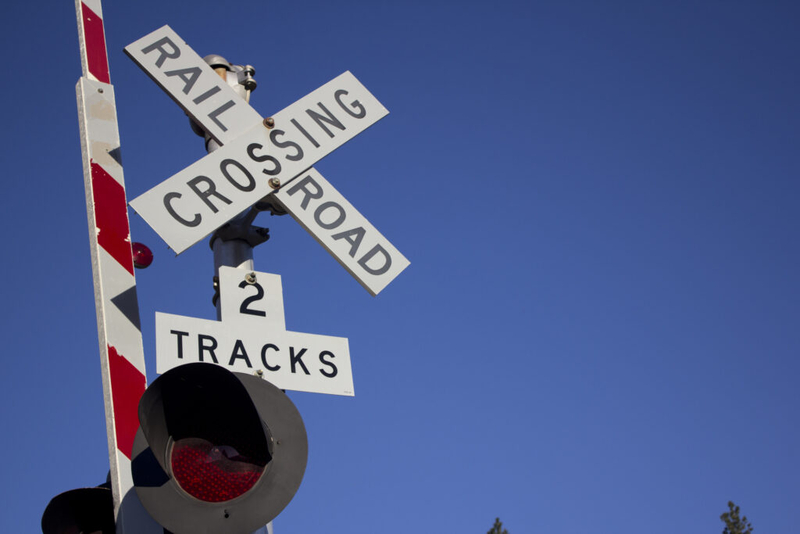
"This isn’t a union-versus-corporation fight. It’s about public safety, and it affects us all." (Photo: Getty Images)
Every time I go to work, I carry a radio, a rulebook, and the weight of knowing one mistake could cost someone their life. After more than 20 years working as a conductor for Union Pacific Railroad, I’ve learned this job isn’t just about moving freight. It’s about coming home safe and making sure everyone else does, too. That’s why I support Assembly Bill 446.
This bill isn’t an overreach. It’s not some abstract regulation dreamed up in a government office. It’s a reflection of what rail workers see and face every single day: blocked crossings that delay ambulances and fire crews, pitch-black yards where visibility is next to nothing, and trains so long they take twenty minutes to clear an intersection—if they clear it at all. These aren’t rare occurrences. This is daily life on the railroad. And it shouldn’t take a tragedy to decide it’s time to do better.
Assembly Bill 446 is a common-sense proposal rooted in firsthand experience. It puts basic safeguards in place, like requiring proper lighting in rail yards so workers aren’t fumbling in the dark with heavy equipment. It sets standards to prevent multiple mile-long trains from cutting off emergency services and splitting communities for hours. It addresses safety concerns with defect detectors, the trackside devices that flag potential failures, by ensuring their data isn’t kept hidden when something goes wrong. And it provides oversight over contract carriers who move rail crews to and from trains, because those folks deserve to get home safe too.
Critics will say this bill is unnecessary. That the railroads already follow federal rules and can police themselves. But ask the workers on the ground. Ask the folks in Caliente, Carlin, or Sparks who’ve watched crossings stay blocked while help sits on the wrong side of the tracks. Congressman Mark Amodei, a Republican, recently raised concerns about these very issues in his own district. This isn’t a union-versus-corporation fight. It’s about public safety, and it affects us all.
We’ve seen what happens when railroads are left to set their own limits. In the past decade, the major carriers have pushed longer and heavier trains onto the rails under a model called Precision Scheduled Railroading. It was designed not for safety or efficiency but for Wall Street. The result? Skeleton crews, overloaded trains, and delayed response times when emergencies strike. Safety has become a cost to cut, not a value to protect.
No one is saying railroads aren’t vital. They are. They move goods across this country every day and are the backbone of our economy. But with that responsibility comes the obligation to do it safely and to serve the communities they run through. Not just the shareholders they report to.
Some lobbyists will argue that state laws like AB 446 interfere with federal regulation. What they don’t say is that many of these same companies have spent years lobbying against national safety standards. They’ve defeated efforts to regulate train length, mandate two-person crews, or require timely data sharing on safety devices. And now, when states like Nevada step up to fill the gap, they cry foul.
If we wait for Washington to solve this, we’ll be waiting a long time. States have every right, and I would argue a duty, to protect their citizens when federal action falls short. AB 446 doesn’t replace federal law. It complements it by addressing the unique challenges our state faces, from remote rural towns to rapidly growing urban areas.
In the railroad industry, we often say that safety is no accident. But it can’t just be a slogan. It has to be a commitment backed by policy, training, investment, and yes, regulation. Because when things go wrong on the railroad, they go wrong fast and with consequences that ripple far beyond the tracks.
I don’t write this as a politician or a lobbyist. I write it as someone who’s walked the ballast in extreme weather conditions. As someone who’s crawled under rail cars in the dead of night. And as someone who’s had to explain to new hires that they’ll be riding in clunky passenger
vans on icy roads for 12 hours, because there’s no law saying their safety has to be taken seriously.
AB 446 is a step toward changing that. It says we see you, we hear you, and we’re going to do better. For the workers, yes. But also for the parents stuck behind blocked crossings, for the paramedics trying to save a life, and for the next generation who deserves to grow up in a state where safety isn’t optional.
It’s not radical. It’s responsible. And it’s long overdue.
At the end of the day, this bill isn’t just about trains. It’s about people.
Las Vegas, NV