Nessel releases report investigating sexual misconduct by clergy in the Grand Rapids Diocese
Dec 15, 2025 | 3:03 pm ET

Description
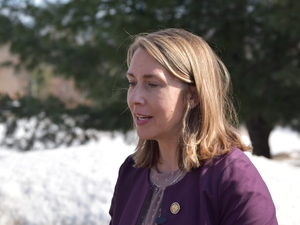
Michigan Attorney General Dana Nessel. Dec. 15, 2025 | Screenshot
Carrying forward an effort that began in 2018, Michigan Attorney General Dana Nessel on Monday released the latest report in a series detailing her office’s investigations into the seven dioceses of Michigan’s Catholic Church.
The latest report centers on the Grand Rapids Diocese, and examines allegations of sexual misconduct against children or adults brought after Jan. 1, 1950.
Of the 51 priests in the report, 38 were incardinated by the Diocese of Grand Rapids. Thirty seven of the priests in the report are known and presumed to be dead, while the other 14 who are living are not in active ministry within the Grand Rapids Diocese.
“Since taking office in 2019 I’ve pledged to use the resources of my department to ensure that cases of sexual abuse and assault are thoroughly reviewed, and that, whenever we are able to do so, we pursue criminal charges and we do so relentlessly and aggressively,” Nessel told reporters on Monday. “Our additional promise to the many victims throughout the clergy abuse investigation was to make the results of the investigation transparent at its completion, and to that end, this is the fifth of seven reports that we’re releasing.”
Diocese of Grand Rapids Report Dec 12 2025The Department of Attorney General’s previous reports focused on the diocese of Marquette, Gaylord, Kalamazoo and Lansing. Danielle Hagaman-Clark, chief of the Department of Attorney General’s criminal justice bureau, said they expect to release the next report on the Diocese of Saginaw in spring 2026, and the report on the Detroit diocese will be released before the end of Nessel’s term in December 2026.
The Grand Rapids report compiles information obtained by the Department of Attorney General domestic violence, sexual assault and human trafficking hotline, victim interviews, police investigations, documents seized from the diocese alongside reports of allegations the diocese shared with the department.
“The Diocese of Grand Rapids agreed to provide reports of abuse directly to the Department of Attorney General,” Nessel said. “Victims often reach out to their faith leaders to share stories of abuse and the willingness and cooperation from the Diocese of Grand Rapids to provide this information was instrumental in the compilation of this report.”
While the department’s investigations have led to criminal charges in 11 cases and criminal convictions in nine, none of the individuals named in the report have been charged as a result of the attorney general’s investigation, though Shauman Beas was previously convicted of child sexually abusive activity and criminal sexual conduct, and Dennis Wagner, was convicted of assault and battery.
Nessel and Hagaman-Clark explained that their decision not to bring additional criminal charges was due to a combination of factors, including the priest being deceased, or the statute of limitation to bring criminal charges expiring.
Prior to 2001, the statute of limitations for first degree criminal sexual conduct was six years from the date of the incident, or the victim’s 18th birthday. While that statute of limitations was eliminated, the Attorney General cannot bring charges against individuals when the statute of limitations has already expired, Hagaman-Clark explained.
Hagaman-Clark noted that while some cases were within the statute of limitations, the survivors were not interested in moving forward with a criminal case. The Department of Attorney General also could not pursue criminal charges against Rev. Peter Omogo as they did not have the evidence needed to prove a crime beyond a reasonable doubt.
Nessel offered her thanks to the survivors who were willing to come forward and share their stories.
“We truly hope that this report provides a voice to those who have suffered in silence for so long, and shines a light on those alleged offenders whose actions allowed them to evade true accountability,” Nessel said.
In 25 years of working with sexual assault survivors, Hagaman-Clark said survivors often step forward into the criminal justice system to ensure that what happened to them does not happen to somebody else.
“I think for some survivors, particularly those that were not able to move forward on a criminal case, to have the ability to be involved in a report where their offender is going to be named is really important to them and really significant to serve as a warning to those who still may have loyalties to those people,” Hagaman-Clark said, noting that these individuals are often dismissed due to authority an offender may hold.
Nessel and Hagaman-Clark advised anyone with information about abuse in the Catholic church to contact the department’s tip line at 844-324-3374, with Hagaman-Clark noting that they can help to connect survivors who may be struggling with local resources.
“We start by believing,” Hagaman-Clark said. “And we want to listen, we want to hear, and we want to be able to take that information, and if we can move forward with the criminal case, then that is something that we’ve shown that we’re willing to do.”
Lansing, MI