Nebraska auditor criticizes $23K ‘waste of money’ for resigning retirement director
Oct 06, 2026 | 3:42 pm ET
Description
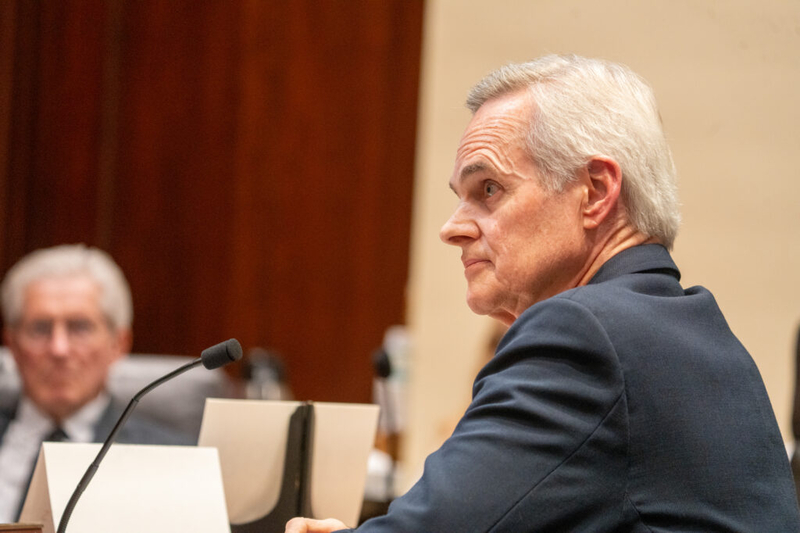
Nebraska Auditor of Public Accounts Mike Foley testifies before the Legislature's Government, Military and Veterans Affairs Committee. Feb. 5, 2026. (Zach Wendling/Nebraska Examiner)
LINCOLN — Nebraska State Auditor Mike Foley raised concerns over the Nebraska Public Employees Retirement System reportedly paying its departing executive director over $23,000 in salary and benefits for roughly five weeks of unperformed work.
In a Tuesday press release, Foley criticized the retirement board’s response to executive director Thomas Pfeifle’s resignation. Pfeifle submitted his resignation letter on Sept. 21, as Foley put it, “walking off the job and ceasing all further interactions with the agency that day — presumably returning to his home state of Colorado.”
Though he apparently left the agency in September, turning in his state cellphone, keys, laptop and identification — according to Foley’s report — Pfeifle’s resignation letter stated his last day with the agency was Oct. 31. Foley surmised this to be “an apparently successful attempt to collect another five weeks of full pay and benefits.”
“Halloween is still weeks away, but it appears the former executive director has ghosted NPERS,” Foley wrote. “The agency got the trick, he got the treat, Nebraskans have been left holding the bag, and I am not amused.”
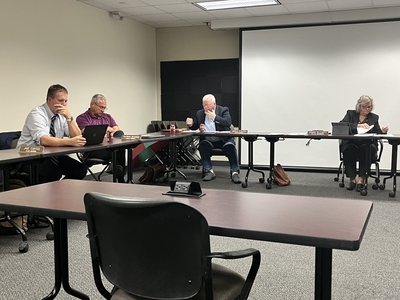
The retirement board accepted Pfeifle’s resignation at a special meeting Sept. 30, as first reported in the Examiner. At the time, questions were raised about him being paid despite his absence, but those questions went unanswered. Tag Herbek, NPERS legal counsel, said the board couldn’t comment on employee personnel details.
Herbek did not immediately respond to a request for comment on Foley’s report.
Pfeifle started working for NPERS in mid-June, earning an annual salary of $205,000, equivalent to about $98 per hour, according to Foley. His employment ended an 18-month stretch of NPERS being without an executive director after the resignation of John Murante in December 2024.
Foley noted that NPERS paid a national executive search firm, Ford Webb Associates, just under $50,000 to identify Pfeifle as a candidate for the job. Foley said if the cost had been $50,000 or more, the contract would have required a competitive bid under state law.
“In addition to rewarding the former executive director to the tune of some $23,000 for not even bothering to show up for work during the last five weeks of his less-than-stellar stint, NPERS paid slightly under $50,000 to find that ‘prize hire,’ who lasted under four months with the agency,” Foley wrote.
Foley said his staff attempted to reach out to Pfeifle with no response.
Foley called it “mind-boggling” that the retirement board would be “so cavalier about spending the public money entrusted to it” given the state’s ongoing budget woes. Gov. Jim Pillen has asked all agencies to cut at least 5% from its annual spending as a result of continued projected state budget deficits.
State Budget Director Neil Sullivan did not return a request for comment.
Per Pfeifle’s employment agreement, Foley said, the board holds authority to end his payment immediately, citing this language: “This offer of employment is not a guaranty of employment for a specified period of time. Your employment may be terminated at any time by the PERB in accordance with state law.”
“It should go without saying,” Foley wrote, “that if you don’t show up for work, you lose your job. You certainly don’t get paid for playing hooky for five weeks.”
The decision to continue paying Pfeifle raised questions about the legality of his payment plan, but also had Foley questioning whether board members were following state law. Foley said the law requires board members to “act as fiduciaries when administering the retirement systems,” and tasks members “specifically with defraying only reasonable expenses.”
“How does paying an absentee official his full – albeit plainly unearned – salary comport with this explicit statutory mandate?” Foley wrote.
Foley recommended the board reconsider their decision to continue paying Pfeifle through Oct. 31. Herbek told the Examiner that the board planned to address further leadership succession issues at its next regular meeting Oct. 19.
“It’s not too late to fix this debacle and I will be watching to see if they do,” Foley wrote.
Lincoln, NE