Republicans are making a campaign issue out of the projected budget gap
Oct 06, 2026 | 4:05 pm ET
Description
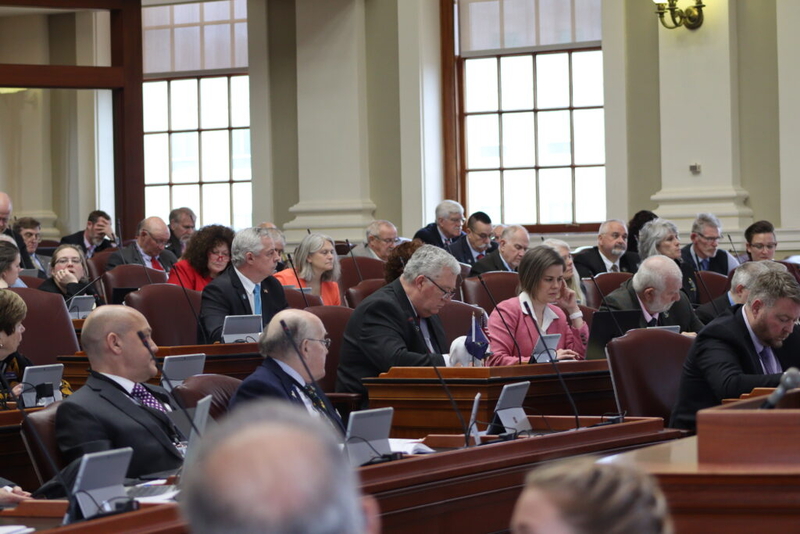
Lawmakers gather for session in the Maine House of Representatives in Augusta on March 12, 2026. (By Emma Davis/ Maine Morning Star)
As Mainers begin casting votes to determine who will control state government next, a $1 billion projected budget gap has become political fodder.
The Maine Department of Administrative and Financial Services’ Bureau of the Budget last week projected a structural gap in the general fund of $1.085 billion for the 2028-2029 biennium, the first two-year budget the next governor and Legislature will be tasked to craft. Maine also has a separate highway fund, for which the bureau projected a $256.7 million gap.
It is not uncommon for these reports to predict structural gaps, said Sharon Huntley, communications director for DAFS. Aside from 2022, after federal relief from the COVID-19 pandemic, every report from the past decade has projected a structural gap, Huntley said.
The latest gap projection is about the same average rate as the structural gaps over those eight other bienniums. However, the number itself is larger, corresponding with how Maine’s budget has grown during Gov. Janet Mills’ two terms in office.
“They’ve grown the budget from $7 billion dollars to $12 billion, so it’s easy to see how you can spend ahead of your means,” said House Minority Leader Billy Bob Faulkingham (R-Winter Harbor) during a press conference in Augusta Tuesday.
Democrats have pushed back, noting that budget growth has corresponded with the state finally meeting its statutory obligations. Under Mills, the state met its responsibilities for municipal revenue sharing to lower tax rates and funding 55% of education, as well as reduced the number of uninsured people at record levels — all growing expenses. Inflation has been another factor.
“I’m seeing a lot of ridiculous, dishonest, politically opportunistic posts from Maine Republicans who frankly seem desperate as Election Day approaches,” Rep. Drew Gattine (D-Westbrook), who co-chairs the Legislature’s budget committee, wrote in a lengthy rebuttal on Facebook.
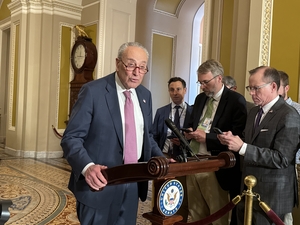
Legislative Republicans are hoping the gap leads Mainers to elect them into office on Nov. 3. During the Tuesday press conference, several raised concern about the growing cost of MaineCare, the state’s Medicaid program, and broad goals to cut waste and fraud.
“Unless we change how these programs are managed, we’ll be standing here again with another shortfall, another emergency,” said Assistant Senate Minority Leader Matthew Harrington (R-York), standing behind a podium with a sign that read, “No new taxes. Period.”
Two years ago, when the state faced a MaineCare budget gap, the minority party refused to fund the cost increase without structural changes to the program.
The next governor, and Legislature, could opt to adjust program spending or raise taxes in light of the latest projections, which are how much revenue is estimated to fall short of what current law requires the state to spend. State revenue projections in December could also alter estimates.
The three gubernatorial candidates have proposed various plans to lower property taxes and the cost of housing — costs not accounted for in the projections.
In the end, Maine’s constitution requires a balanced budget.
“Budgets are balanced when Republicans have control and budgets are balanced when Democrats have control,” Gattine wrote. “The distinction lies in how they are balanced.”
Augusta, ME