Nearly half of Iowa corn acres harvested
Oct 26, 2026 | 6:30 pm ET
Description
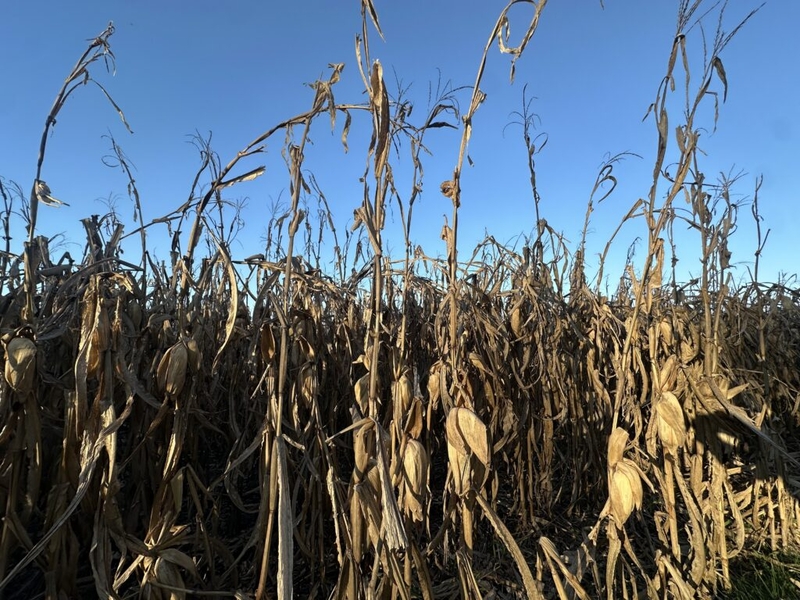
A corn field in Johnston, Iowa on Oct. 20, 2026. (Photo by Cami Koons/Iowa Capital Dispatch)
Soybean harvest across Iowa has picked up after a slow start to harvest season and is now 6 percentage points behind the five-year average harvest, according to the latest crop progress and condition report from the U.S. Department of Agriculture.
Seventy-eight percent of soybeans have been harvested and slightly less than half, 47%, of corn acres have been harvested in Iowa, which is about 20 percentage points behind the five-year average. According to the report for the Oct. 19 through Oct. 25 reporting period, corn condition rated 73% good to excellent.
Farmers had 6.4 days suitable for field work during the reporting period as conditions were mostly dry throughout the week. State Climatologist Justin Glisan said portions of northwest and southwest Iowa were the only regions to report any measurable rainfall during the reporting period.
While the statewide average precipitation for the week, at 0.02 inch, was significantly below the normal precipitation average, the statewide average temperature for the period, at 59.7 degrees Fahrenheit, was more than 5 degrees above the normal.
According to Glisan, northern Iowa had temperatures nearly 15 degrees above the normal during the reporting period.
Soil temperature guidelines for fall fertilizer
As the temperatures remain warmer than normal, Iowa Secretary of Agriculture Mike Naig and the Iowa Department of Natural Resources are reminding farmers to wait for soil temperatures that are below 50 degrees before applying fall fertilizers.
Research has shown that waiting for cooler soil temperatures can help to limit nitrification in the soil and therefore reduce the amount of nitrate that can run off of agricultural fields.
“Iowa has experienced unseasonably warm temperatures this fall,” Naig said in a statement. “As farmers continue fall field work, it’s important to time nutrient applications based on ’50-and-falling’ best practices instead of dates on the calendar, especially with a warmer and wetter weather pattern setting up as we head into November.”
Agronomists with Iowa State University have predicted that the super El Niño weather pattern and wetter soil will cause warmer soil temperatures to persist longer than normal.
According to the Iowa Environmental Mesonet, 4-inch soil temperatures across the state were in the upper 50s and lower 60s as of Sunday. Soil temperature forecasts from the mesonet predict soil temperatures will drop to the low 50s and below around Nov. 3.
A news release from DNR also reminded producers to “monitor soil temperatures rather than calendar dates” as they plan applications. DNR and ISU agronomists have promoted the use of nitrification inhibitors to help limit nutrient run off from fall fertilizers.
DNR also urged producers and manure applicators to reduce the risk of spilling into streams by slowing down, being diligent and avoiding water. The department has reported multiple manure spills this month.
Des Moines, IA