NC Republican legislators have veto overrides on immigration, guns, DEI in their sights
Apr 20, 2026 | 6:18 pm ET
Description
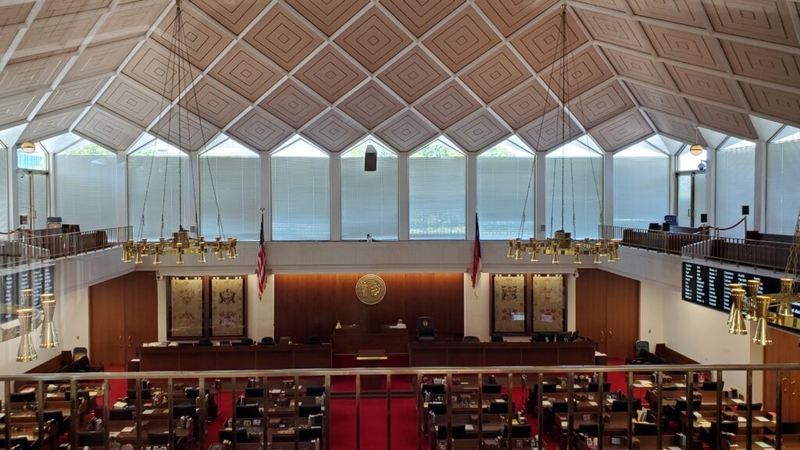
NC House chamber (Photo: Clayton Henkel)
The slate of unfinished business greeting North Carolina legislators when they return to work Tuesday could include consideration of vetoes Republicans want to override.
Vetoed bills in the override queue span issues from immigration to diversity to guns.
Overrides are easier in the Senate, where Republicans hold a veto-proof majority. But both the House and Senate must vote to override a veto in order for a bill to become law.
House Republicans are one vote short of a veto-proof majority, so they’ve had to rely on at least one Democrat voting with them to short-circuit Democratic Gov. Josh Stein’s rejection of bills.
NC lawmakers override Stein’s vetoes, as key House Democrats defect
Last year, the legislature overrode eight Stein vetoes with help from House Democrats who later went on to lose their primaries. Reps. Carla Cunningham and Nasif Majeed, both of Mecklenburg, and Rep. Shelly Willingham of Edgecombe each voted to override Stein at least twice.
Another House Democrat who joined Republicans in two successful override votes, former Rep. Cecil Brockman of High Point, resigned from the legislature last year after being charged with child sex crimes. Brockman has denied any wrongdoing.
The House has six overrides on its Tuesday agenda, but Republican leaders will only take them up for debate them if they believe they have enough votes. Otherwise, they will postpone them, which they’ve done many times over the past six months.
Four of those bills began in the state Senate, which voted on party lines last July to override Stein’s vetoes of all of them. If the House succeeds in overriding them as well, they become law over the governor’s objection.
Senate Bill 153 would allow state law enforcement officers to enforce federal immigration laws and require them to work with ICE. State agencies would be required to make sure that non-citizens are not receiving state-supported health or housing benefits.
“Let them be worried:” NC Dem Carla Cunningham on the upcoming legislative short session.
Cunningham is a potential swing vote for an override. She has voted for other immigration enforcement bills. She provided the crucial vote to override a bill on sheriffs’ cooperation with ICE, introducing that vote with a controversial floor speech.
Senate Bill 50 would allow adults to carry concealed handguns without permits. The House passed the bill 59-48 back in June with no Democrats voting for it, and two Republicans voting against it. The two Republicans who opposed the bill, Reps. Ted Davis of New Hanover and Bill Brisson of Bladen County, are retiring at the end of the session.
Senate Bill 227 targets diversity, equity, and inclusion in K-12 public schools with a ban on teaching “divisive concepts” concerning race or sex.
Senate Bill 558 would impose the same teaching bans as Senate Bill 227 at UNC system universities, schools and community colleges. The UNC Board of Governors repealed the system’s diversity, equity and inclusion policy in May 2024.
Two other vetoed bills began in the House, so the House must vote first to override the vetoes before they go to the Senate.
House Bill 171 bans diversity, equity and inclusion programs in state and local government and would allow employees or former employees to sue other employees for alleged violations.
House Bill 87 would have the state participate in a federal tax credit where taxpayers would be able to deduct up to $1,700 in donations to nonprofits that offer private school scholarships. When Stein vetoed the bill, he wrote that he was waiting to see if the federal government allows the money to also be used for public school programs.
A seventh vetoed bill in the pipeline doesn’t appear to be up for consideration Tuesday.
House Bill 96 would make it easier for property owners to remove squatters from homes. Stein said he vetoed the bill because of a late addition that limits local government regulation of pet shops. He wrote that the provision would make it easier for puppy mills to operate. The House sent this bill back to its Rules Committee in August, 2025.
Raleigh, NC