NC lawmakers hammer state, county officials following ‘horrific’ abuse death of six-year-old
Jun 04, 2026 | 6:35 pm ET

Description
The North Carolina Legislative Building (Photo by Clayton Henkel/NC Newsline)
When six-year-old Dominique Moody died in December 2025, she weighed 27 pounds. Investigators say she was found in a dog crate after having suffered years of abuse and starvation while living in Charlotte.
Dominique’s legal guardian and two other caregivers face multiple charges, including felony child abuse and first-degree murder.
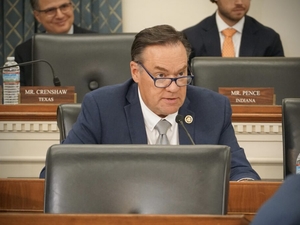
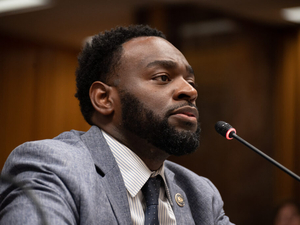
In a daylong hearing Thursday, members of the N.C. House Oversight Committee said the level of abuse Moody endured raises serious questions about Mecklenburg County’s child welfare system.
Officials with that system acknowledged to lawmakers that 13 allegations of abuse or neglect of the child had been reported over the years, and at one point, a caseworker who documented signs of abuse recommended the girl’s removal from the household. But the caseworker was overruled by a supervisor, and referrals to other agencies were never followed up on.
Rep. Allen Chesser, a foster parent himself, was visibly angry.

“There’s a pattern here. A child dies and the Department of Health and Human Services investigates, finds a lack of oversight, poor decision-making, and poor management,” said Chesser (R-Nash). “The local Child Protective Services Office is put on a corrective action plan and the state takes over for a little while, but fundamentally, nothing changes.”
Lisa Tucker Cauley, the NC Department of Health and Human Services Director for Child and Family Support, told legislators the review of Dominique’s case revealed serious problems within Mecklenburg County’s Department of Social Services child welfare practice, including numerous violations of state law, rule and policy.
A larger review of 58 sample cases in Mecklenburg County found that in 52% of cases reviewed, intake workers did not ask sufficient questions to explore alleged maltreatment. In 36% of cases that contained allegations that met the criminal definition of child abuse, case files did not contain notification to law enforcement or the district attorney’s office. And in 45% of the cases sampled, workers did not document or show efforts to conduct separate, individual interviews with the children regarding their safety.
In a system under stress, technology may catch what humans miss

“Looking more broadly across North Carolina, there are statewide challenges within the child welfare system that impact outcomes for children every day,” said Cauley. “We hear from counties across the state regularly that they have difficulty in recruiting and retaining the adequate workforce. Rapid turnover has led to overall inexperience, less experienced staff and loss of institutional knowledge in local agencies across the state.”
NCDHHS launched the Partnership and Technology Hub for North Carolina in June 2025 to modernize the administration of child welfare services. The $65 million initiative is intended to provide clearer data and decision-making tools for a more responsive child welfare system.
Separate from PATH NC, Dr. Emily Putnam-Hornstein with the UNC School of Social Work told the House oversight committee, predictive risk models can help with decision-making, especially in helping social service workers assess the possibility of future maltreatment.
Horstein said algorithmic tools can be useful in connecting the dots, something humans aren’t always good at.
“The most common failure I see behind serious child injuries and deaths is this: We had information that we realize only in retrospect was critical to understanding the danger a child was in,” said Hornstein. “Too often we miss small but important details at each contact. We fail to ask the right questions. We’re too incurious and sometimes we’re simply too kind.”
Legislators repeatedly questioned NCDHHS about the amount of training child protective service workers and their supervisors receive.
Cauley said while the training is uniform, caseloads can vary widely and be “unmanageably high,” particularly in under-resourced counties. She added that the complexity of child welfare cases continues to increase due to the prevalence of unmet behavioral health needs, substance use, and domestic violence.
Warning signs missed in Mecklenburg
In separate panels, the oversight panel also wanted to know why law enforcement had not intervened in the case of Dominique Moody after being called to the home dozens of times.
NC Rep. Cunningham introduces bill to increase child welfare oversight in wake of child’s death
Mecklenburg County Sheriff Garry McFadden said his officers had not interacted with anyone in the home since December 2023.
“We first have to have knowledge of something before we take ownership of it,” said McFadden. “I wish we had the opportunity to help this young lady, but we did not have any knowledge.”
Charlotte Police Chief Estella Patterson testified that a criminal referral made by social services was later screened out by social service workers after a visit to the home.
“Collectively, there could have been more communication,” Patterson said.
Rep. Mike Schietzelt (R-Wake) said decisions were made by intake workers without the complete facts, and it seemed like witnesses were now “circling the wagon.”
“There were flashing red signs that should have tipped people off that something was not right there,” said Schietzelt.
Mecklenburg County Manager Mike Bryant said disciplinary action has been taken in the case, and he is recommending 22 new positions be added to the county social service agency. Twelve people were placed on administrative review.

Letecia Loadholt, Mecklenburg’s interim DSS director, wasn’t in charge at the time of Moody’s death. The director at the time, Kim Henderson, resigned in March as outrage grew over Moody’s case.
Loadholt told lawmakers her office has 94 investigators handling 1,021 open investigations with 654 new cases. Investigators are averaging 17 cases each. In a perfect world, they would have no more than eight cases, said Loadholt.
Loadholt said 6% of cases are now randomly audited to check for proper review of mistreatment allegations.
Rep. Grant Campbell (R-Cabarrus) said the work culture within the department may be to blame for its failure to protect children from abuse and neglect.
“How many times did someone visually lay eyes on Dominique Moody in Mecklenburg County?” asked Rep. Cunningham (U-Mecklenburg).
Loadholt could not answer that, but said it was documented.
“Dominique Moody was never enrolled in school. Why wasn’t that picked up?” Cunningham pressed on.
Loadholt said Moody was not yet seven, the compulsory school age in North Carolina.
Cunningham said it was troubling that referrals were never followed up on.

Last month, Cunningham introduced House Bill 1144, the “Dominique Moody Safety Act,” to establish a child welfare case escalation team of representatives for each regional social services department. Each regional team would be tasked with assessing when to escalate cases where minors have repeatedly been the subject of child protective services reports.
After eight hours of questioning, Rep. Chesser said the county could not prove that its workers had even laid eyes on the six-year-old victim more than once.
“You are hiding behind the law while violating the law,” said Chesser.
Rep. Brenden Jones (R-Columbus), a funeral director, arrived in the final hour of the hearing to tell the Mecklenburg County panel they were responsible.
“If you had hands on this, if you knew about it in anyway whatsoever, I think you ought to be in the jailhouse yourself,” said Jones. “How many more babies have to die before you say ‘Maybe I’m in the wrong role, maybe I’m incompetent?'”
Chesser said he was too angry to read his own closing statement.
But if the top leaders were unwilling to refer employees who failed to do their job to the district attorney, Chesser said, he would call on Mecklenburg District Attorney Spencer Merriweather to investigate discrepancies.
“That’s the problem — the inaction,” said Chesser. “That’s the ultimate failure here, it’s the doing of nothing when the doing of something is required.”
Raleigh, NC