Idaho legislators approve language for ballot measures on marijuana, English as official language
Jun 04, 2026 | 7:26 pm ET
Description
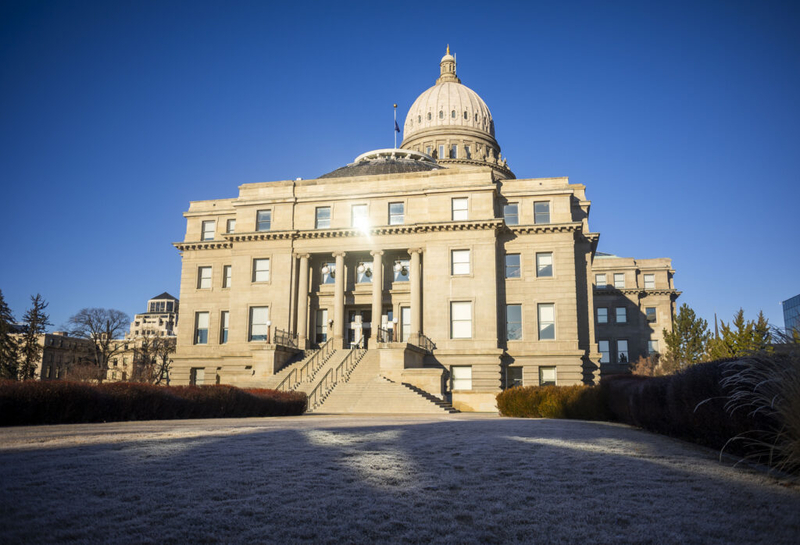
The Idaho State Capitol Building in Boise shines in the sunlight on Jan. 7, 2025. (Pat Sutphin for the Idaho Capital Sun)
Members of the Idaho Legislature’s Legislative Council on Thursday approved the language that will be used to describe two proposed amendments to the Idaho Constitution that will go before voters during the November general election.
The Legislative Council is a powerful group of Republican and Democratic leaders of the Idaho Legislature that is responsible for overseeing the management responsibilities of the Legislature.
The Legislative Council approved the ballot language for two proposed amendments that were put forward by Republican legislators.
- House Joint Resolution 4 would amend the Idaho Constitution so that only the Idaho Legislature has the authority to legalize marijuana and other narcotics.
- House Joint Resolution 6 would amend the Idaho Constitution so that English would be the official state language of Idaho.
It would take a simple majority of votes in the November general election to approve either proposed amendment to the Idaho Constitution.
What does the new ballot language say?
The ballot language for House Joint Resolution 4 states:
Statement FOR the Proposed Amendment
“Drugs destroy lives, tear apart families, and threaten the safety of our communities. Decisions about legalizing marijuana, narcotics, and other psychoactive substances are too important to be made lightly. The proposed amendment would ensure that any proposal to legalize these dangerous substances would go through the legislative process. Public hearings would be held on the proposal, where law enforcement and people whose lives have been damaged by drugs would be able to testify. Legislators would carefully consider each proposal and would be publicly accountable for their votes.”
Statement AGAINST the Proposed Amendment
“The Idaho Constitution says that all political power belongs to the people. But the proposed amendment would take power away from the people by getting rid of their ability to pass drug legalization laws on their own through ballot initiatives. The people are as capable of making good, careful decisions about drug policy as legislators are. The amendment is also unnecessary because if the people did ever pass a poorly considered law legalizing drugs, the Legislature would have the power to amend or repeal it.”
The ballot language for House Joint Resolution 6 states:
Statements FOR the Proposed Amendment
“The amendment could encourage non-English speakers to learn English to be able to better participate in public life. This could promote unity and create a stronger sense of community and shared identity. Non-English speakers would still have language assistance for critical government services, because that is required by federal law. The amendment could promote social cohesion without endangering anyone. The amendment could promote cost-efficient government by limiting the resources spent on communications in languages other than English.”
Statements AGAINST the Proposed Amendment
“The amendment is unnecessary because state law already makes English the official state language. The existing law is better than the amendment because the existing law is much more detailed. For example, the law allows public schools to teach foreign languages to interested students. The amendment, by requiring that all public instruction be conducted in English, might not allow this. The amendment could create social division by signaling to non-English speakers that they are unwelcome in the state and their communities.”
Republicans changed some of the ballot language Democrats supported
Some Democrats objected to the language the Legislative Council approved, but were overruled by Republicans.
House Minority Leader Ilana Rubel, D-Boise, wanted to use the original language developed by the Idaho Legislative Services Office to describe the opposition House Joint Resolution 4.

“I have concerns about this amendment,” Rubel said during Thursday’s meeting. “It stripped out a tremendous amount of pretty substantive material that it sounds like was reflective of a substantial amount of public input received by (the Legislative Services Office), and I would strongly prefer that we remain with the original version as drafted by (the Legislative Services Office).”
The language in opposition that was cut read, in part, “While legislators are supposed to represent the public, they don’t always pass laws reflective of public opinion. The initiative allows the public to bypass the Legislature and is therefore an important check on the Legislature’s power. However, the proposed amendment would give the Legislature total power over drug legalization.”
Rep. Josh Tanner, R-Eagle, made a successful substitute motion to go use the amended language that Rubel opposed.
Senate Minority Leader Melissa Wintrow, D-Boise, also objected to making changes to the language used to describe the proposed constitutional amendments.
“My deepest concern today is that the amount of wordsmithing that was done is a clear indication there was some fear about the truth of what the language was,” Wintrow said in a phone interview.
Both proposed constitutional amendments will appear on Idaho ballots for the Nov. 3 general election.
Idaho Legislature’s Legislative Council meets on short notice, meeting not recorded
State officials gave – at most – 48 hours of advance public notice that the Legislative Council would meet Thursday morning.
And unlike almost all other meetings of the Idaho Legislature, Thursday’s meeting was not recorded or archived, multiple state officials told the Idaho Capital Sun.
The Legislative Council is a group of Republican and Democratic legislative leaders who are responsible for overseeing the management responsibilities of the Legislature.
Thursday’s agenda included multiple action items and policy discussions on topics ranging from the language describing proposed amendments to the Idaho Constitution, to a state budget update to an update on an audit of the Idaho Division of Vocational Rehabilitation.
Idaho Legislative Services Office Director Terri Kondeff told the Capital Sun that notice of the meeting was posted on the Legislature’s website Tuesday.
Kondeff also said that Legislative Council meetings are not recorded and not publicly archived on the Legislature’s website.
That is a departure from nearly all other meetings of the Idaho Legislature, legislative committees and interim committees, which are recorded and archived for the public online.
Senate Minority Leader Melissa Wintrow, D-Boise, said she knew about Thursday’s meeting for weeks and doesn’t understand why state officials didn’t post notice of the meeting before Tuesday.
“We are doing the people’s business; we need to be transparent,” Wintrow said in a phone interview Thursday afternoon. “In particular, the conversation today was about the language that goes on the ballot in the fall. That felt pretty significant.”
Reached Thursday afternoon, House Speaker Mike Moyle, R-Star, said the Legislative Council meetings have never been recorded, which he said is a decision and practice that predates his service as a legislative leader.
“Back then, the minutes (of the meeting) were the meeting,” Moyle said.

When an Idaho Capital Sun reporter asked Moyle on Thursday if he would push to record and archive future Legislative Council meetings, Moyle said “I don’t think I have a problem either way.”
“It’s one of those things where I always defer to the whole (Legislature),” Moyle said. “What does the whole want to do? And the public can tape them when they’re being aired now if they want to archive them. It’s never been an issue.”
Moyle said everything important discussed Thursday had already been documented in another public meeting or been subject to a public comment period.
The Idaho Open Meeting Law requires almost all other government bodies in Idaho – city councils, school boards, county commissions and more – to publicly post notice of regular upcoming meetings no less than five calendar days before the meeting, and to post an agenda notice no less than 48 hours before the meeting. However, the Idaho Legislature itself is not subject to those same public notice requirements.
Boise, ID