Missouri Gov. Kehoe signs controversial ‘born-alive’ abortion bill into law
Jul 13, 2026 | 4:59 pm ET
Description
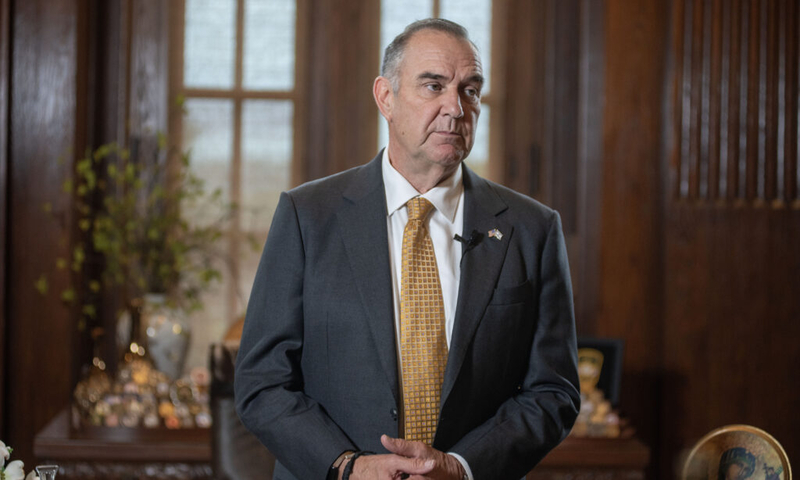
Gov. Mike Kehoe speaks to reporters after signing three bills in his office April 23. On Monday, July 13, 2026, he signed several additional pieces of legislation into law (Annelise Hanshaw/Missouri Independent).
On Monday, Missouri Gov. Mike Kehoe signed into law the only significant anti-abortion bill Republicans were able to pass this session as they faced heated debates with Democrats and fractured opinions over what to include in the final pared-down version of the bill.
Under the ‘Born-Alive Abortion Survivors Protection Act,’ any healthcare provider who “knowingly performs or attempts to perform an overt act that kills a child born alive” can be charged with first-degree murder, and could face the death penalty.
Most Democrats opposed the legislation, some accusing Republicans of using the bill to win the favor of constituents in an election year. Democrats argued the law is unnecessary because state law already prohibits infanticide, but that it could create a chilling effect for providers who want to practice in Missouri.
Other critics of the bill, including doctors who provided testimony, raised concerns about how the legislation could affect families who choose to induce early labor following a fatal fetal diagnosis — a procedure which falls under the definition of abortion in the medical field — and the providers caring for them.
“The last minute scramble by anti-abortion politicians to pass this blatantly unconstitutional and medically nonsensical policy right under the gun of the end of legislative session makes clear that they know they are about to lose their abortion bans at the ballot box––again,” Maggie Olivia, director of policy and external affairs at Abortion Action Missouri, said Monday.
The Missouri Constitution protects the right to abortion up to the point of fetal viability, which is the point in pregnancy at which the baby can survive without extraordinary medical interventions. Missourians will again vote on abortion in November after lawmakers placed a proposed amendment on the ballot that would again ban nearly all abortions, with limited exceptions for medical emergencies and for survivors of rape and incest.
The bill’s sponsors have said the legislation isn’t intended to affect palliative care, but rather acts as a safeguard in the exceedingly rare instance that a baby is born during a failed abortion. They say the protections of the federal Born-Alive Infants Protection Act of 2002 don’t go far enough.
An earlier version of the legislation sought to open the door for lawsuits against anyone involved in an illegal abortion, including self-induced abortions, if abortion were to again become outlawed in Missouri.
That language was cut from the bill after Senate Democrats persuaded the sponsor, Republican state Sen. Brad Hudson of Cape Fair, to remove the liability provisions and to add other provisions related to vulnerable people.
State Sen. Mary Elizabeth Coleman, a Republican from Arnold and a leading anti-abortion lawmaker, voted against the changes, saying of the final version that “the heart of the bill was gutted.” She was among a handful of Republican lawmakers and anti-abortion activists to raise concerns with the constitutionality of the bill, saying they worried it violated the Missouri Constitution’s single subject requirement.
“I think this is a bill that’s going to waste resources in the attorney general’s office and is going to distract from the pro-life work that needs to be done in order to make people feel better about voting in favor of a pro-life bill this year,” she said on the Senate floor in May. “I don’t think performance is what we should be doing. I think we should be making laws, and so therefore I’m regretfully voting no.”
Missouri governor signs wide-ranging bipartisan healthcare bill into law
The amended bill incorporated language expanding the state’s maternal mortality review board to include studying the state’s maternal healthcare deserts, tracking the level of prenatal and postnatal care given to women who die in childbirth or postpartum and making recommendations to combat racial inequities in maternal deaths.
Republican leadership also agreed to tack on a provision that allows victims to seek orders of protection against cyberstalkers and establishes the offense of “cyberharassment” and “cyberstalking.”

Jefferson City, MO