Michigan Supreme Court declines to take up case on 9 bills in limbo, withheld from the governor
Jul 10, 2026 | 11:08 am ET
Description
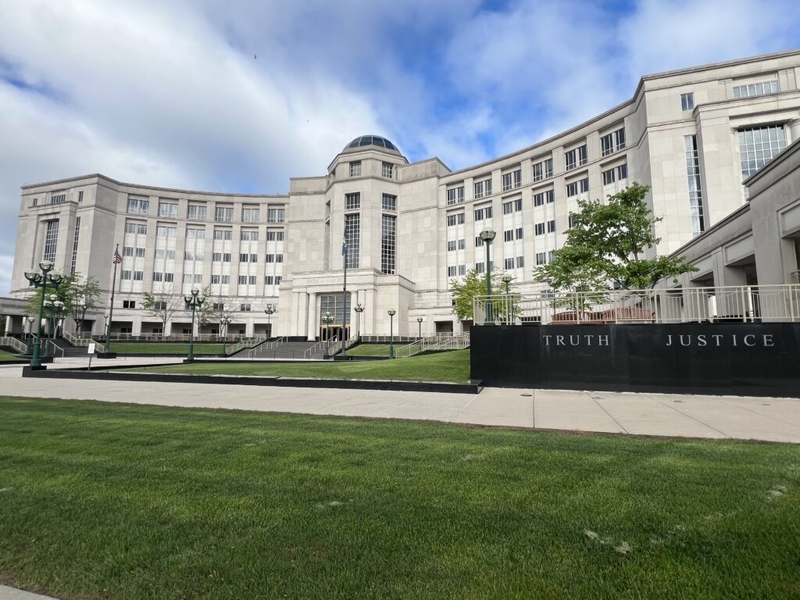
Michigan Supreme Court / Hall of Justice | Photo by Jon King
The Michigan Supreme Court ruled Friday morning that it would not decide the fate of nine bills left in limbo from the 2023-24 session.
In an unsigned order issued Friday, the court’s Democratic-nominated majority ruled that it was not persuaded to issue a decision as to whether the clerk of the state House of Representatives, its former Speaker Joe Tate (D-Detroit), and current House Speaker Matt Hall (R-Richland Township) had a duty to present the bills to Gov. Gretchen Whitmer at the end of the 2024 legislative session. However, in a surprise twist, Whitmer vetoed the bills several hours later.
The bench heard oral arguments in the case in May. Inaction from the court on Friday sets the bills up to be presented to Whitmer because choosing to do nothing lets an earlier Court of Appeals decision stand, which said the bills should be presented to the governor.

Justice Brian Zahra, the lone Republican-nominated voice on the court, dissented and called the decision an “error that may have longstanding implications damaging the balance of power between this Court and the Legislature.”
“The Court of Appeals glossed over several consequential and troublesome questions to impose, under unprecedented circumstances, the very rare and heavy-handed remedy of mandamus,” Zahra wrote. “Its decision will foster future political gamesmanship and adversely affect the interaction between the two chambers of our Legislature. I would grant the parties’ applications for leave to appeal. Regardless of the outcome, our Legislature, an equal branch of our state government, deserves this Court’s full consideration of the weighty issues presented in this matter. For these reasons and others developed in this dissenting statement, I dissent from the denial of the applications for leave to appeal.”
Michigan Senate v. Michigan House saw the upper chamber of the Michigan Legislature and its Majority Leader Winnie Brinks (D-Grand Rapids) sue the lower chamber and Hall.
The case involves nine bills that originated in the House and were passed by both chambers before the 102nd Legislature ended in late 2024. The bills, however, were not presented to Whitmer before the end of the session or immediately afterward. At that time, the House was controlled by Democrats and led by Tate.
When the Republican caucus took over the chamber’s majority in the following 103rd Legislature, and Hall became speaker, the new majority refused to present them. Some of the bills were Democratic priorities and involved issues important to the labor movement. Hall has maintained that he did not have a duty to present bills that originated in a previous legislative session. Brinks scoffed at that argument, noting her and the Senate’s belief that bills must be presented after they are passed by both chambers.
The Court of Claims dismissed the complaint and a request for mandamus relief — or rather, a request for the court to compel action from the House — against the wishes of the Senate. The lower court, however quixotically, offered no guidance on whether the bills should have been presented, citing the separation of powers in the Michigan Constitution. The Court of Appeals then ruled that the lower court should have granted mandamus relief for the Senate.
Hall appealed, and the issue came before the high court.
With the high court deciding to stay out of it, and with the Court of Appeals ordering that the bills have to be presented, the decision is one that seemingly sets several legal precedents, most especially on the issue of presentment.
“By letting the Court of Appeals’ decision stand, the Michigan Supreme Court has now issued a third clear victory in our long-fought legal battle on behalf of educators, first responders, and the many dedicated individuals whose hard work sustains our communities and who have advocated tirelessly for this legislation for years,” Brinks said in a statement. “Today’s win is about more than specific bills. The Supreme Court is reminding everyone who plays a role in our democracy that they are not above the law, and the Michigan Constitution must be followed. At a time when too many in our national politics are playing fast and loose with power, this is a resounding win for the people who demand better, and it’s a stern warning to those who cheat under the guise of service.”

Ron Bieber, president of the Michigan AFL-CIO, said that the Michigan Supreme Court’s inaction was, in essence, a sign of its agreement with the Court of Appeals ruling, and that Hall had no choice but to send the bills to Whitmer immediately.
“We thank the Michigan Supreme Court, Senate Majority Leader Winnie Brinks, Senate Democrats, and attorney Mark Brewer for defending our Constitution, fighting for hard-working Michiganders and bringing this case to court,” Bieber said in a statement. “Every day that Matt Hall refuses to do his job is a day that healthcare costs stay high for teachers, firefighters and public servants, and retirements are put at risk for our corrections and other public safety officers. We are calling on Speaker Matt Hall and the House Clerk to transmit the bills immediately; and for Governor Whitmer to finish the job and cement her legacy as a pro-worker governor and sign them into law.”
However, Whitmer’s veto made that a moot point.
The House had argued against the Senate’s standing in the case. The lower courts ruled that the Senate did have standing to sue its legislative counterpart over presentment issues. There had been past cases before the state courts where it was determined that legislators couldn’t bring lawsuits similar to the nine bills controversy, but the decision on Friday potentially calls that calculus into question.
The House’s argument that it was a political issue to be ferreted out only by the legislative chambers, and not the courts, was also set aside with Friday’s decision. The Senate received mandamus relief, a direct order from the court to compel the clerk of the House to present the bills.
There is established precedent — People ex rel. Sutherland v. Governor — limiting the court’s ability to compel the governor to act in a certain way. The case, from 1874, saw the Michigan Supreme Court rule that the courts cannot issue a writ of mandamus to compel the governor to perform any discretionary or executive duties, with the courts labeling it as interference between the co-equal branches. But there was nothing in case law regarding the constitutional duty of either chamber to present bills to the governor — until now.
The precedent-setting nature of the case was something Hall had warned about if the case didn’t go the House’s way.
- 3:01 pmThis story was updated to note that Gov. Whitmer later vetoed the bills.
- 2:08 pmThis story was updated to include a comment from Michigan AFL-CIO President Ron Bieber.
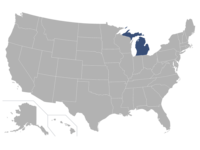
Lansing, MI