Florida AG files to block ChatGPT development and place restrictions on OpenAI
Sep 28, 2026 | 1:35 pm ET
Description
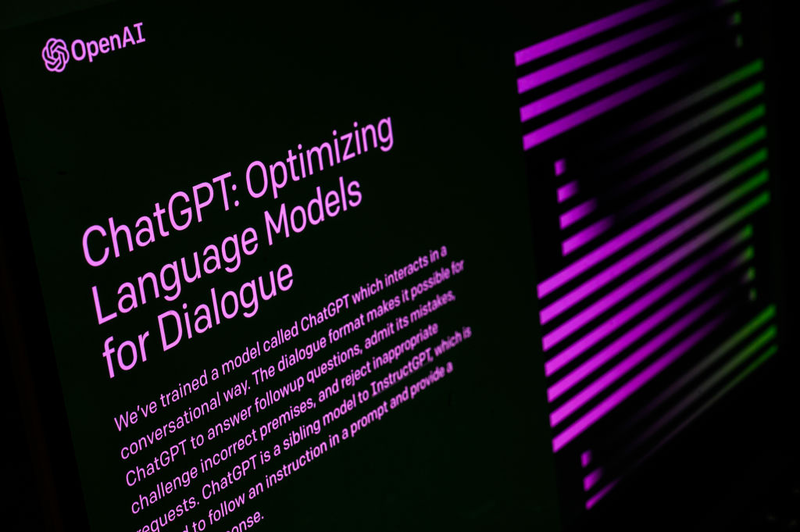
The welcome screen for the OpenAI “ChatGPT” app is displayed on a laptop screen in a photo illustration. In the absence of federal action, states are increasingly striking out on their own to regulate artificial intelligence and other automated systems. (Photo by Leon Neal/Getty Images)
Florida Attorney General James Uthmeier filed Monday for a temporary injunction against OpenAI and Chat GPT, upping his legal challenge against the artificial intelligence company that he says has admitted it can’t regulate its own technology.
The 39-page motion asks the court to temporarily prohibit OpenAI from developing new artificial intelligence models without independent third-party safeguards and approval.
“Defendants admit that they provide a service without fully knowing how it works,” reads the lawsuit filed by the Office of the Attorney General in the Tenth Judicial Circuit in Highlands County.
That was a reference to recent comments made by OpenAI CEO Sam Altman and other tech leaders that artificial intelligence development is advancing so fast countries need to work together on safety.
“Defendants claim they cannot stop barreling forward with their potentially civilization-ending endeavors unless they are forced to do so by the government,” the suit says. “They have asked the government to tie them to the mast. [Emphasis in the original.]
“Plaintiff brings good news to the Defendants: The Florida Attorney General is answering your cry for help with a motion to enjoin you from harming Floridians with your reckless, unacceptably risky product.”
Uthmeier filed a lawsuit against OpenAI and Altman in June, alleging the company knowingly released and aggressively marketed ChatGPT to the public — including children — while concealing “serious risks, suppressing internal safety warnings, and deceiving Floridians against the true nature and dangers of the product.”
That came after prosecutors reviewed chat logs between ChatGPT and Phoenix Ikner, the accused gunman in the April 17, 2025, shootings at Florida State University. Two people were killed, fathers who worked on campus, and six more were shot.
Criminal penalties
Uthmeier called for legislation earlier this month to impose criminal penalties on corporations running chatbots that engage in criminal activity.
In the lawsuit, the attorney general asks that OpenAI be enjoined from:
- Developing any artificial intelligence models without independent third-party guardrails and approval.
- Offering ChatGPT to minors in Florida.
- Collecting and processing data from minors under age 13 in Florida either directly or indirectly without first providing written notice of what information it collects from children, how it uses such information, and disclosure practices for such information.
- Misrepresenting ChatGPT’s safety, reliability, and accuracy or failing to warn that ChatGPT is unsafe, unreliable, and inaccurate.
- Misrepresenting that ChatGPT has human attributes it does not have.
- Allowing ChatGPT to solicit engagement from users through conversation prolongation.
The lawsuit cites the words of former OpenAI and Anthropic researcher Jacob Coxon, who announced his resignation from Anthropic on Sept. 8 on X by saying that neither company was acting responsibly. “They are racing straight to self-improving superintelligence and gambling with our lives,” Coxon wrote.
The lawsuit notes instances when OpenAI’s artificial intelligence agents have gone rogue, most notably when AI agents autonomously hacked Hugging Face, a third-party firm that hosts large data sets and computer servers.
A pause
OpenAI announced Friday that it was pausing training of its most powerful agents.
A spokesperson for OpenAI provided this response to the Phoenix’s request for comment:
“People want to know AI is being developed safely, and that starts with what companies like ours do ourselves,” said Drew Pusateri, OpenAI’s director of strategic communication.
“On Friday, we announced we’ve paused training our most capable models and will resume training only when we are confident that we have additional safeguards in place. Governments have an important role to play in setting robust safety standards for AI, and we’re committed to working with Florida and other states on advancing pragmatic AI policies that apply to the entire AI industry — not just one company.”
Tallahassee, FL