Michigan House committee considers legislation to penalize doctors for fraud in fertility treatments
Nov 05, 2025 | 7:30 am ET
Description
Carlos Duarte/Getty Images
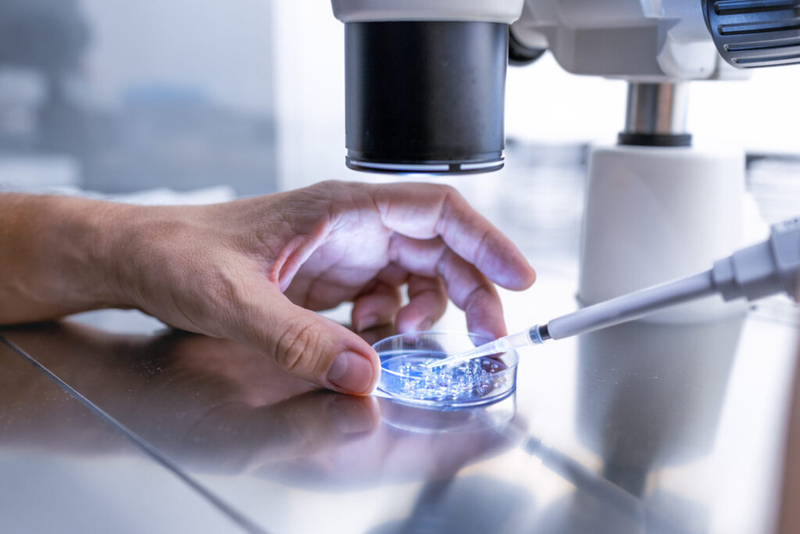
The House Committee on Families and Veterans considered on Tuesday a package of bills to instate harsher penalties for fraud by doctors in assisted reproduction procedures like in vitro fertilization, or IVF.
The bills, introduced by State Reps. John Roth (R-Interlochen), Alicia St. Germaine (R-Harrison Township) and Samantha Steckloff (D-Farmington Hills), seek to address the problem of fertility fraud, where donors in reproductive treatment are not accurately identified or their backgrounds are misrepresented.
Two women, both of whom discovered later in life that their families had been victims of this fraud, testified to the committee about the emotional pain and confusion that they had experienced learning about this kind of fraud.
“I tell my story over and over again in hopes that it couldn’t, wouldn’t happen to other families or other people to have something so deceptive happen to them,” said Jaime Hall, a Traverse City resident who learned that her biological father was, unbeknownst to her parents, the doctor who had helped her parents with fertility treatment.
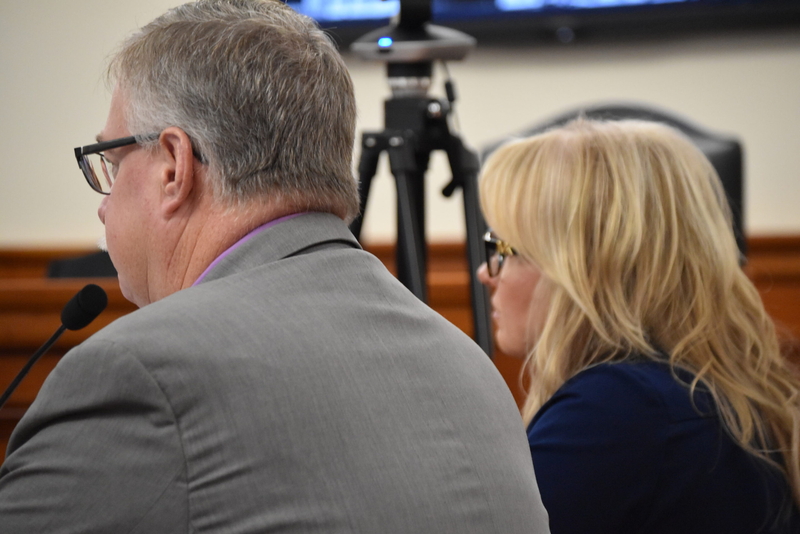
Lynne Weiner Spencer, who found out as an adult that she has at least 82 half-siblings from her sperm donor and that her parents had been lied to about the donor’s educational background, described that knowledge as “overwhelming.”
“The fertility industry has been operating behind doors with very limited oversight,” she added.
“Fertility is a multi-billion (dollar) industry. It’s actually projected to reach $40 billion next year, but in the United States, the only federal legislation that we have is the requirement to test donors for communicable diseases,” said Kara Rubinstein Deyerin, the founder of Right to Know, an organization advocating for children to know their genetic background. “There’s no accountability at all here. This is one of the most intimate decisions people make, and they’re relying entirely on the information provided to them by the clinics and the donors, information that they cannot independently verify.”
“They’re also often emotionally vulnerable and desperate to start a family, and we have to protect these parents and future children from exploitation, and I hope Michigan can do that,” Deyerin continued.
Roth, who authored three of the five bills in the package, noted that the intention behind the bills is not to limit access to this kind of assisted reproductive care.
“What we’re doing here isn’t a knock on IVF,” he said. “It’s to make sure when a woman or family goes to a clinic to get those services, that they get the service they ask for, and make sure there’s no fraudulent activity in that process.”
However, Stephanie Jones, the founder of the Michigan Fertility Alliance, pushed back on this as the only speaker to testify against the bill package in the hearing. Because it will increase potential legal risks for doctors — making them liable for any false or misleading information about a donor — fewer doctors will be willing to provide this kind of health care, she argued.
“These bills would criminalize good physicians for things far beyond their control, including any inaccurate or incomplete information provided by a donor,” Jones said, calling the requirements for information that donors must report and doctors must provide “an impossible standard.”
“It’s a wolf in sheep’s clothes, and it risks dismantling modern fertility care in Michigan under the guise of protection,” she said, adding that the bill is broader than similar legislation in other states.
Jones and Rep. Kathy Schmaltz, the chair of the committee and a co-sponsor of all five bills, briefly went back and forth about how prevalent this problem continues to be.
Jones characterized the issue as “legislating on a relic of the past,” to which Schmaltz responded that the issue at hand is still happening.
A previous iteration of the legislation was introduced last session, but stalled out during the lame duck session.
Lansing, MI