Indiana death row inmate seeks execution delay for brain scans ahead of clemency hearings
Oct 13, 2026 | 9:57 am ET
Description
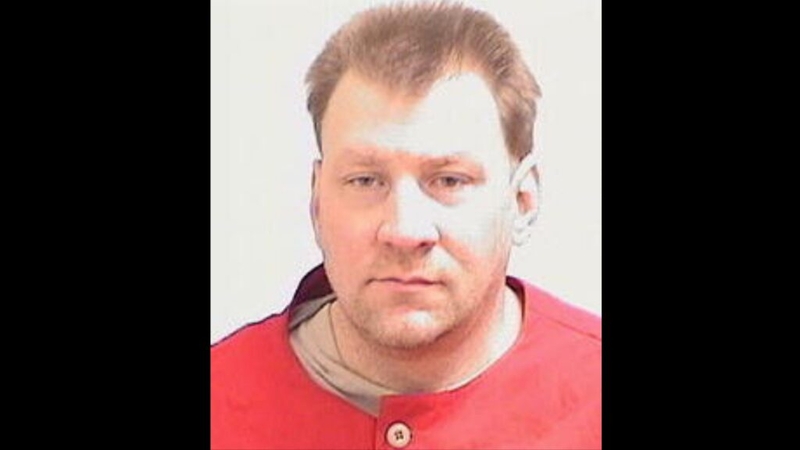
Jeffrey Weisheit’s attorneys are seeking a two-week delay of his Nov. 5 execution to obtain brain scans and present additional evidence in his clemency case. (Mugshot provided by the Indiana Department of Correction)
Indiana death row inmate Jeffrey Weisheit is asking the state’s highest court to move his execution from Nov. 5 to Nov. 19 so experts can analyze brain scans his attorneys say would give Gov. Mike Braun a fuller account of his impairments before deciding clemency.
A federal judge approved funding for the testing but ruled she lacked authority to order prison officials to transport him for the scans.
In two emergency motions filed Monday with the Indiana Supreme Court, the lawyers asked the justices to direct Indiana State Prison officials to transport him to a nearby medical imaging center and postpone his execution and clemency proceedings by two weeks. The Indiana Parole Board is scheduled to interview Weisheit on Friday and hear public testimony Monday.
The Indiana Department of Correction did not immediately respond before publication.
The requests come days before an Oct. 15 deadline for written clemency materials. His attorneys contend that additional imaging and expert analysis could help establish that brain injuries affecting his behavior preceded the 2010 murders of 8-year-old Alyssa Lynch and her 5-year-old brother, Caleb.
Weisheit was convicted in 2013 of killing the children in a fire at their Evansville home. The Indiana Supreme Court set his execution in August, after the U.S. Supreme Court declined to review his case in June.
His attorneys argue that evidence about his brain injuries, mental illness and childhood trauma was not adequately developed or presented during his trial and appeals. They are now seeking that evidence for Gov. Mike Braun, who will decide whether to grant clemency after receiving the parole board’s recommendation.
“A 14-day extension would realistically afford a narrow but sufficient window — far short of the years available in prior recent cases — for Mr. Weisheit to develop this critical evidence,” the attorneys wrote in their motion to reschedule the proceedings.
The motions were filed by Joseph C. Welling, an attorney with the nonprofit law practice Phillips Black, and Indiana Public Defender Amy E. Karozos, who represent Weisheit.
The Indiana Supreme Court in 2018 previously rejected Weisheit’s challenge to his sentence based on the brain-injury evidence presented during post-conviction proceedings.
Weisheit’s attorneys said their request for more time to obtain brain scans is separate from an anticipated challenge to the execution method and a separate stay request tied to further post-conviction proceedings.
Funding approved — but transportation denied
Weisheit’s lawyers emphasized that the immediate obstacle is getting him from Indiana State Prison to the nearby Franciscan Health Diagnostic Imaging Center in Michigan City for magnetic resonance imaging, or MRI, and positron emission tomography, or PET, scans.
U.S. District Judge Sarah Evans Barker authorized funding for defense investigative services Sept. 16. According to the defense filings, that authorization included brain imaging and expert analysis.
Story continues below.
The lawyers initially requested a federal transportation order Sept. 21 and filed a revised, public version of the request Sept. 25.
Attorneys from Indiana Attorney General Todd Rokita’s office opposed the request, arguing that the federal court’s authority to fund clemency work did not give it authority to compel prison officials to transport Weisheit. His federal challenge to his convictions and sentence had already ended, they said.
“This Court has no authority to order transportation in this closed case,” the state wrote in its Oct. 5 response. “Nothing in (federal law) provides the authority for a district court to order anything beyond money for reasonably necessary investigative or expert services.”
Barker denied the transportation request Oct. 7. She distinguished the court’s authority to approve funding from its authority to direct state officials to help obtain evidence for a state clemency proceeding.
“In an abundance of caution, the Court did pre-approve Mr. Weisheit’s request for funding for potential new brain scans and other matters … ,” Barker wrote. “However, that order does not require the Court to issue a subsequent order compelling a state official to take certain action to ensure that the scans take place.”
Her ruling cited decisions limiting federal courts’ authority to order evidence gathering for state clemency cases. She also noted that Weisheit had not suggested he intended to use the new scans to support a claim that he lacks the mental capacity to be executed.
Mr. Weisheit seeks the opportunity to present relevant information to the parole board. Absent a transport order to secure the brain imaging, this reporting would be unavailable.
The defense has now turned to the Indiana Supreme Court, arguing that a transportation order would allow Weisheit to present relevant information through the state’s clemency process.
“Mr. Weisheit seeks the opportunity to present relevant information to the parole board,” his attorneys wrote. “Absent a transport order to secure the brain imaging, this reporting would be unavailable.”
They asked the justices to require transportation within five days of an order, at a time coordinated between the prison and imaging facility. The center has indicated appointments could be arranged on approximately three days’ notice, according to the motion.
The request also specifies that metal restraints cannot be used in the scanning room because of the equipment’s powerful magnets.
Dispute over earlier brain injuries
The proposed testing concerns a longstanding dispute over the extent and timing of Weisheit’s brain injuries.
His attorneys contend that he experienced repeated head injuries during childhood and early adulthood, along with mental illness and abuse. They argue that those impairments affected his behavior long before the killings and were compounded by another head injury during his arrest.
Earlier MRI and PET scans were performed in 2012, according to Barker’s order. The defense is seeking new imaging and more detailed analysis to evaluate damage that might not be apparent through a visual reading of the scans alone.
Monday’s filings include a 2021 declaration from Ruben Gur, a University of Pennsylvania professor whose work focuses on brain function and behavior.
Indiana plans to proceed with execution after botched Tennessee attempt
Gur said quantitative analysis can identify abnormalities that are not readily visible and compare them with a database of other brains. Combined with neuropsychological testing and a person’s history, he said, the analysis could help distinguish older injuries from damage sustained during Weisheit’s arrest.
“There is a substantial likelihood that this data, including the Quantitative Analysis will show that Mr. Weisheit’s brain abnormalities pre-dated his arrest,” Gur wrote in the declaration.
He also explained how the imaging could be assessed alongside other evidence.
“Such integration can provide strong evidence of correlations between behavior exhibited throughout the person’s life history and the documented brain abnormalities,” Gur continued.
A 2018 Indiana Supreme Court opinion questioned how reliably Gur’s testimony established earlier concussions or lasting injuries. It also cited a state expert’s opinion that medical evidence did not establish traumatic brain injuries other than the injury during Weisheit’s arrest.
The defense argues that additional analysis could address those concerns. Gur said in his declaration that earlier testimony describing potential results as speculative reflected uncertainty about what testing would reveal before it had been conducted.
Hearings approaching
Under the current clemency schedule, the parole board is set to interview Weisheit at Indiana State Prison on Friday at 10:30 a.m. Central, or 11:30 a.m. Eastern.
Public testimony is scheduled for Monday, Oct. 19, at the Indiana Government Center in Indianapolis, with supporters of clemency appearing in the morning and opponents in the afternoon.
The defense wants the deadline for written materials moved to Oct. 29 and the public hearing moved to Nov. 2, along with the requested Nov. 19 execution date.
The parole board’s notice to Weisheit says hearing dates will not change unless the execution is stayed or rescheduled.
Braun has the final say on clemency. He denied requests from Benjamin Ritchie and Roy Lee Ward before their executions last year. Weisheit’s execution would be Indiana’s fourth since the state resumed carrying out death sentences in December 2024 after a 15-year pause.
The new requests also come amid separate, mounting questions about Indiana’s lethal injection preparations.
Indiana prison officials said earlier this month that they intended to proceed with Weisheit’s execution — even after Tennessee halted an attempted execution using pentobarbital, the same drug Indiana has used in its three most recent executions.
Indiana officials said the state has purchased but not yet acquired drugs for Weisheit’s execution.
This story will be updated.
Indianapolis, IN