McKee narrows gap but still trails Foulkes by 15 points in new WPRI poll
Aug 25, 2026 | 5:00 pm ET

Description
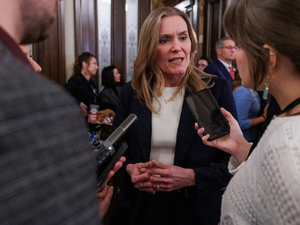
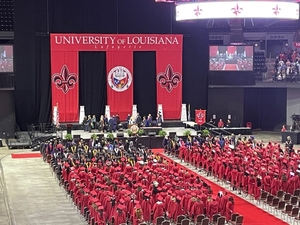
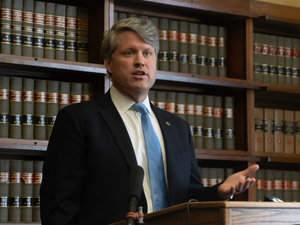
Democratic gubernatorial candidate Helena Buonanno Foulkes, upper left, leads Gov. Dan McKee in almost every demographic category in a new WPRI poll released Tuesday, Aug. 25, 2026, with 15 days to go before the primary. Foulkes' record on opioids while leading CVS Pharmacy and McKee's troubles launching the Washington Bridge rebuild weigh heavily on voters' minds, the poll shows. (Photos clockwise from upper left by Michael Salerno, CVS, Nancy Lavin and Alexander Castro)
Gov. Dan McKee is finally gaining ground among Democratic primary voters, but remains 15 points behind challenger Helena Buonanno Foulkes, according to a new WPRI-TV 12 poll published Tuesday.
The survey of 1,000 likely voters, conducted Aug. 21 and Aug. 22 by Emerson College Polling, marks the first public poll this year in which the gap between the two gubernatorial rivals is less than 20 percentage points.
But while McKee drew support from 30% of the 522 primary voters, up 10 points from when WPRI conducted a poll in May, Foulkes also boosted her backing, from 40% to 45%. The credibility interval — similar to a margin of error but reliant on a different statistical formula — for Democratic primary-specific questions was 4.2%, and 3% overall.
And with early voting underway for the Sept. 9 primary, McKee doesn’t have much time to make up the difference, said Joe Fleming, a political analyst for WPRI-TV 12.
“He still has a long way to go, and she’s picking up closer to the 50% mark,” Fleming said in an interview Tuesday.
McKee’s odds worsened after the 25% of undecided primary voters were asked to choose between the two candidates, widening Foulkes’ lead to 22 points over McKee.
Foulkes leads in almost every demographic category: among registered Democrats and independents, all age groups and both genders. And while McKee has gained traction among union members and their families compared with WPRI’s May poll, he still trails Foulkes by 1 point among labor-affiliated primary voters.
“For all the things he’s done for union members, he needs to be a lot higher,” Fleming said.
Two days before the survey began, McKee threw his weight behind a top union priority that would allow government workers and teachers to retire earlier, collecting full pension benefits without penalty. McKee’s verbal promise to include the “Rule of 90” in his fiscal 2028 budget, announced on the first day of early voting, drew criticism from Foulkes, who denounced the pledge as a campaign strategy.
McKee has already been endorsed by top labor groups, including both state teachers’ unions and Rhode Island Council 94. But the Rhode Island AFL-CIO declined to endorse in the primary — the first time in decades the 80,000-member labor federation has not backed an incumbent Democratic governor seeking reelection.
McKee has repeatedly framed his candidacy as one representing working families and laborers, while attacking Foulkes for her corporate resume, including as former president of CVS Pharmacy during a period when the pharmacy giant was allegedly filling fake prescriptions for opioids, according to a federal investigation unsealed in late 2024.
Back to opioids
The Department of Justice complaint never names Foulkes directly, but McKee’s messaging linking her to the opioid crisis has broken through to voters.
Nearly half of the 1,000 likely voters surveyed by WPRI disapproved of her handling of the opioid crisis during her time at CVS, including 4 in 10 Democrats. By contrast, 15% of voters approved of Foulkes’ record on opioids, which she has defended by touting CVS’ work to cut off pill mill doctors and participate in drug takeback programs. A Rhode Island Current investigation found her campaign messaging on CVS relies on inflated statistics or actions that did not directly involve her.
“I don’t know how clear a picture voters have on what she’s done with opioids, but it’s had some traction,” Fleming said of the poll results.
Not as much as the Washington Bridge, which remains a prominent source of aggravation for motorists and residents. Nearly two-thirds of voters surveyed disapproved of McKee’s handling of the highway closure and rebuild, while 18% approved, according to the poll.
“This has been his albatross for the last couple years,” Fleming said.
Foulkes has seized on this frustration, accusing McKee of a botched bidding process in the rush to complete the new highway before the election. The first request for proposals drew no bidders, requiring a second go-round and a fresh timeline that now puts the completion date in November 2028.
Yet McKee insists the project is progressing ahead of schedule, refusing to acknowledge during an Aug. 18 WPRI-TV debate that original state projections called for the new bridge to be finished two years earlier, in September 2026.
Fleming characterized McKee’s debate performance as “decent,” noting his forcefulness compared with his demeanor in two prior debates.
Relative unpopularity
McKee remains just as unpopular coming out of the debate as he did when the WPRI survey was last conducted in May, with 6 in 10 voters viewing him unfavorably. Nearly half of registered Democrats disapproved of the governor, according to the survey.
Foulkes was also slightly more unfavorable than favorable with voters, with 37% disapproving compared with a 34% approval rating. But nearly half of Democrats viewed her favorably, compared with 27% who viewed her unfavorably.
Fewer voters, just 4%, said they had not heard of Foulkes, compared with when the survey was last conducted in May.
“With all the money she spent on TV, that has a big impact on people knowing who you are,” Fleming said.
Foulkes has spent more than $1.7 million on various commercials across local broadcast stations since May, according to filings with federal regulators. McKee spent just over $600,000 in the same time frame.
The survey also considered results of a hypothetical general election matchup between either Democratic gubernatorial candidate, an unnamed Republican, and the three independents: Ken Block, Jay Gotra and C.D. Reynolds.
In both scenarios, the Democratic candidate emerged the winner. Foulkes took 45% of the vote, 24 points ahead of Block, who was closely followed by the GOP candidate. McKee’s victory margin was smaller, with 36% support to Block’s 26%, again followed by the GOP nominee.
While this matches the outcome of WPRI’s previous survey, a July poll by the University of New Hampshire Survey Center showed McKee and Block neck and neck in a general election.
UNH is expected to release another poll surveying voters on the gubernatorial candidates, as well as those for lieutenant governor and attorney general, later this week.
WPRI’s poll also included questions about the lieutenant governor and attorney general’s races, as well as favorability for members of Rhode Island’s congressional delegation. Results from those questions will be released on air WPRI-TV at 10 p.m.
This story will be updated.
Reporter Christopher Shea contributed to this story.
Providence, RI