Maine legal groups back state’s refusal to issue covert license plates to federal agents
Aug 04, 2026 | 4:30 pm ET
Description
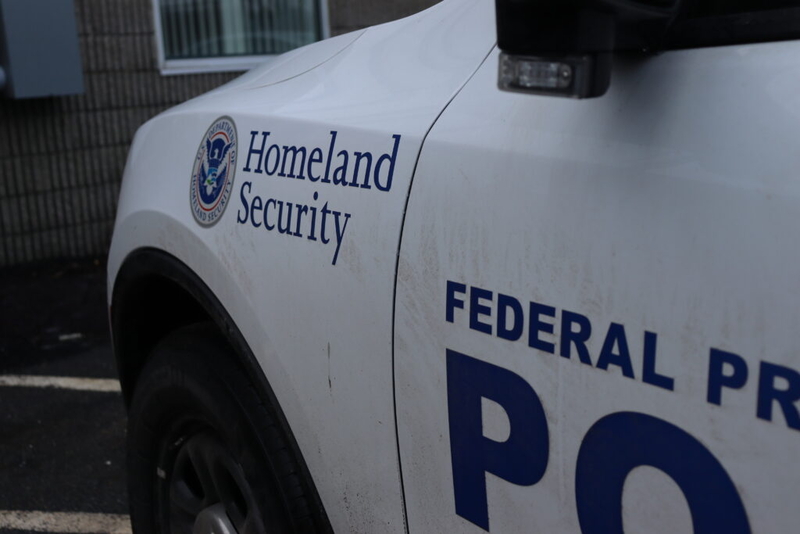
A U.S. Department of Homeland Security vehicle parked outside the Immigration and Customs Enforcement field office in Scarborough on Jan. 15, 2026. (By Emma Davis/ Maine Morning Star)
A coalition of Maine-based attorneys and legal nonprofits are arguing that the state had the right to deny federal immigration agents covert license plates and that the lawsuit filed by President Donald Trump’s administration should be dismissed.
In a friend of the court brief filed in U.S. District Court on Tuesday, the coalition argues that under the anticommandeering doctrine established by the U.S. Supreme Court, the federal government cannot “commandeer” state regulatory processes by ordering states to enact or administer a federal regulatory program, citing the 1992 ruling that expanded the power of the states established in the Tenth Amendment.
“As a dual sovereign with the federal government, the State of Maine has authority to allocate its resources according to its own priorities and cannot be forced to issue undercover Maine license plates to immigration officials,” reads the brief.
Emma Bond, a staff attorney with the American Civil Liberties Union of Maine, which is among the groups included in the brief, said in a statement, “The federal government cannot force Maine officials to support immigration operations that many Mainers view as tyranny and abuse.”
“The U.S. Constitution incorporates principles of dual sovereignty that prevent the federal government from conscripting states to assist in the enforcement of federal programs, including immigration enforcement,” Bond continued. “These constitutional protections ensure that the State of Maine can remain responsive to its residents and voters in their outcry against abusive, violent, and deadly immigration operations.”
In addition to the ACLU, the group includes the Immigrant Legal Advocacy Project and Pine Tree Legal Assistance, along with Anna Welch, University of Maine School of Law professor and founding director of the school’s Refugee and Human Rights Clinic, and Erica Schair-Cardona, an adjunct professor who also serves as outreach and advocacy attorney for the clinic.
Maine Secretary of State Shenna Bellows, who is named in the lawsuit along with Gov. Janet Mills, received a request from federal authorities for undercover license plates a week before the large-scale U.S. Immigration and Customs Enforcement operation began in January, amid a major surge in Minnesota where federal agents shot and killed U.S citizens.
Citing the need for assurance that Maine plates wouldn’t be used for lawless purposes, Bellows denied the agents covert plates, a decision that’s up to her discretion under state law that was defended by Maine Attorney General Aaron Frey.
Bellows then updated the state’s policy to require that applications include assurances that covert plates wouldn’t be used for civil immigration enforcement.
The Trump administration subsequently sued in May, arguing that the state had discriminated against federal immigration agencies, following similar lawsuits against Massachusetts, Oregon and Washington.
Last month, a federal immigration officer shot and killed 25-year-old Johan Sebastián Durán Guerrero of Biddeford, ramping up calls for state officials to do more to protect Maine residents from federal immigration operations. Federal authorities confirmed that Guerrero, a Colombian national, was not the target of a July 13 ICE operation that had brought agents to the area.
Several new laws that prevent local resources and agencies from being used to support mass deportation efforts took effect last week.
Augusta, ME