Maine begins task force to address property tax burden
Sep 12, 2025 | 5:00 pm ET
Description
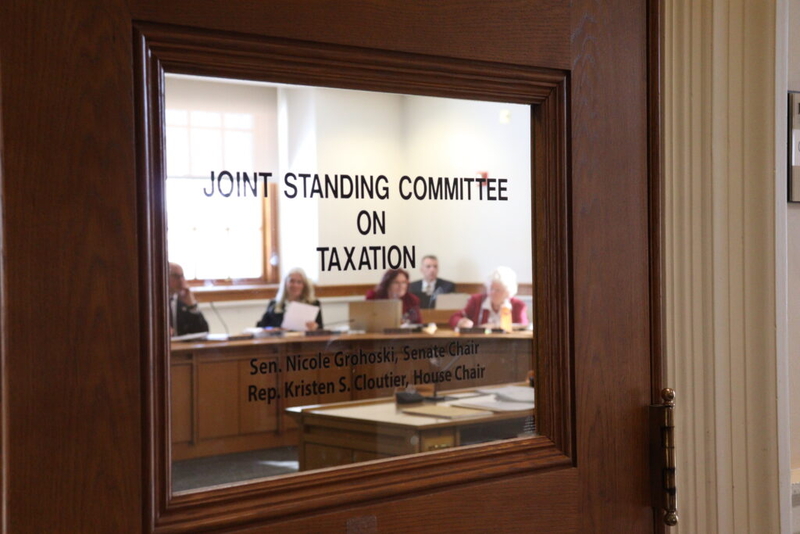
The Legislature's Taxation Committee hears public feedback on bill proposals in Augusta. (Emma Davis/ Maine Morning Star)
Lawmakers, economists and community leaders met in Augusta on Friday to begin a new approach to address Maine’s property tax burden.
While there is bipartisan agreement that the burden is too high, the Legislature held off on any substantial reform this past session to first convene a task force to holistically study the issue.
The initial meeting of what will ultimately be a two-year study largely consisted of an overview of the current property tax structure and assistance programs. However, discussions already indicated a range of ideas, such as reevaluating current non-taxable properties and exemptions as well as looking to other states for possible answers.
For example, Rhode Island added a tax on non-owner-occupied properties assessed at $1 million or more, what is being referred to by some as the “Taylor Swift tax” because the singer has a vacation home on Watch Hill, said Michael Allen, associate commissioner for tax policy for the Department of Administrative and Financial Services and a nonvoting member of the task force.
Republican Sen. Bruce Bickford of Androscoggin pointed to the Florida Constitution authorizing its Legislature to allow counties and municipalities to grant exemptions to certain people who are 65 years old or over.
The ultimate goal of the Real Estate Property Tax Relief Task Force — which has 13 voting and two nonvoting members — is to determine the source of the problems with the current system of property taxation, identify who is most negatively affected and how those people are impacted.
An interim report detailing preliminary findings and recommendations is due to the Legislature’s Taxation Committee by Jan. 15. A final report, including suggested legislation, is due by Dec. 15, 2026. The group has to meet at least four times but no more than eight, though that doesn’t include subcommittee meetings. The next meeting has yet to be determined.
Legislators suggest task force tackle challenge of property tax reform
What’s been tried?
The state has made several changes to try to address the property tax burden over the years.
The state budget has taken on a lot of that responsibility, Allen said, pointing to Maine only recently meeting its requirement to fund 55% of K-12 municipal costs, which have been rising.
The state has also added new assistance programs, though some not for long.
In 2024, lawmakers expanded eligibility to the Property Tax Fairness Credit — which provides refunds for property taxes or rent paid. The cost of this credit to the state has gone from $15 million in 2018 to a projected $100 million in this fiscal year, according to Allen.
That expansion, as well as the creation of a Property Tax Deferral Program, in 2024 was meant to soften the blow from the short-lived Property Tax Stabilization Program that allowed older Mainers to freeze their property taxes.
The Legislature repealed that program after just one year in effect, following skyrocketing cost projections, concern about wealthy property owners taking advantage due to a lack of income restrictions and the administrative burden it left on municipalities.
Lawmakers considered a host of changes earlier this year, including several Republican proposals to reinstate the stabilization program, which were ultimately rejected. Proposals to collect extra taxes on short-term rentals also failed.
Other bills are being carried over into the next session, which begins in January. Some of those plans include expanding the Property Tax Fairness Credit, expanding property tax assistance for veterans and their survivors and increasing the state’s tax exemption for homeowners.
Many of these suggestions would tweak existing programs, such as the Homestead Property Tax Exemption, which provides a reduction for property tax purposes of up to $25,000 from the value of a home for those eligible.
“Are those programs achieving the aims that they originally set out to?” asked task force member Vinnie Caliendo, president of the wholesaler Native Maine Produce and Specialty Foods. “Are any of them being either abused and not benefiting the right parties in the way that was the original intention or, conversely, are they and could they be enhanced so they do so better?”
Bipartisan efforts to expand property tax exemptions face pushback from Mills administration
Current factors
Property taxes have long been a concern in Northeast states, which tend to rely more significantly on them for revenue to fund public institutions such as schools. But Allen said during the Friday meeting that the burden of such taxes has become more of an issue across the country since the COVID-19 pandemic.
“It’s not just that the value is going up,” Allen said. “It’s that the value on residential is increasing [while] commercial property values were declining, so more of the burden of the taxes is being pushed onto residential properties.”
Maine was hit harder than some other states because a lot of people moved into the state during the pandemic, he added.
Allen also provided context to recent reports that have ranked Maine as a state with the highest property tax burden.
If all property taxes in the state are divided by the population, Maine lands around the tail end of the top ten. If all property taxes are divided by personal income, that rank moves up. Allen says the latter is problematic because Maine residents don’t pay all property taxes. That calculation doesn’t factor in wealthy people who have second homes in the state.
Historically Maine has topped census lists of the percentage of housing units vacant because they are used as second homes, with northern New England neighbors closely following.
“We’re an outlier, and again, if you’re just going to take those total properties and divide them by our personal income — this is one reason why we’re going to be number one,” Allen said. “We’re Vacationland.”
But Allen clarified, that doesn’t mean Maine doesn’t have high property taxes.
Right now, possible increases in valuations are worrying many across the state.
“The thing that seems to get people that I’ve talked to in my community wound up is the change in value,” said task force member Robert Nutting, the Republican representative of Oakland.
Many towns are now getting caught back up with delayed revaluations that reflect post-pandemic jumps in residential property value.
Increased assessments don’t necessarily mean higher property taxes, rather they determine the proportion each property owner pays of a town’s taxes. Typically this means while some residents will see higher taxes, others will see them lowered, and some will see them remain the same.
How are property taxes determined in Maine?
Property taxes are how municipalities in Maine raise money. The money mostly goes toward three buckets: county, schools and municipal expenses. In most towns, schools constitute the majority.
If a town wants to raise money, assessment changes must be approved by a public vote. Tax rate is then determined by dividing the amount to be raised by total taxable value.
Under the Maine Constitution, property tax must be assessed at its “just value,” which courts have interpreted to mean fair market value. This just value clause is one of the most consequential provisions in the property tax world, according to Peter Lacy, director of the property tax division in Maine Revenue Services and a non-voting task force member.
“There is a fair amount of discretion for assessors in determining what just value means,” Lacey said, “but it is, at least in theory, a somewhat stable value.”
Municipalities must also follow the assessing standards outlined in state law. For example, one requirement is that the total local valuation of taxable property can’t fall below 70% of fair market value.
If the state Legislature passes a statutory exemption, the state is on the hook to reimburse at least 50% of the tax loss. If the Legislature requires additional municipal work for a new program, then the state is required to reimburse municipalities for at least 90% of the cost of that additional work.
Those will have to be among the many factors the task force considers in determining its recommendations.
Augusta, ME